PreprintCommunications of the ACM
ImageNet classification with deep convolutional neural networks
Alex Krizhevsky, Ilya Sutskever et al.
130k2017
0
Citations
0
Influential Citations
—
Venue
2025
Year
Enhances response diversity in language models by selecting preference pairs based on both reward and a diversity criterion. Instead of contrasting the highest and lowest rewarded responses, DivPO contrasts the most diverse response above a reward threshold with the least diverse response below the threshold, promoting a wider range of high-quality outputs.
Large language models (LLMs) fine-tuned with reinforcement learning from human feedback (RLHF) often suffer from a collapse in output diversity. Standard RLHF concentrates probability mass on the highest-reward responses, even when multiple high-quality options exist. This leads to repetitive, homogenous generations that fail to capture the richness of language. Diverse Preference Optimization (DivPO) directly tackles this problem by rethinking how preference pairs are selected during training. Instead of contrasting the best and worst responses, DivPO chooses the most diverse high-quality response as the chosen example and the least diverse low-quality response as the rejected example. This simple shift encourages the model to explore a broader set of high-reward outputs, preserving diversity without sacrificing quality.

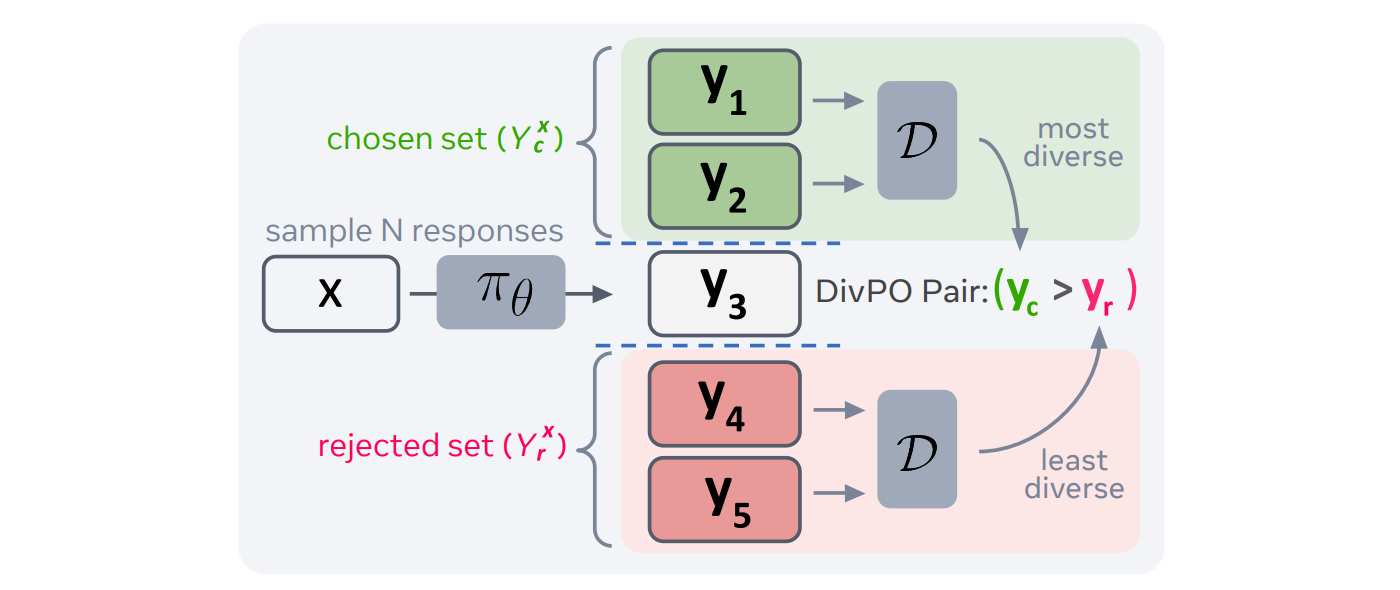
DivPO operates in an online optimization loop. For each prompt, the model generates a pool of responses. A reward model scores each response, and a diversity criterion measures how different each response is from the others. The key innovation is in pair selection: the chosen response is the most diverse among those above a reward threshold ρ, while the rejected response is the least diverse among those below ρ. This ensures the model learns to favor rare, high-quality outputs over common, low-quality ones.
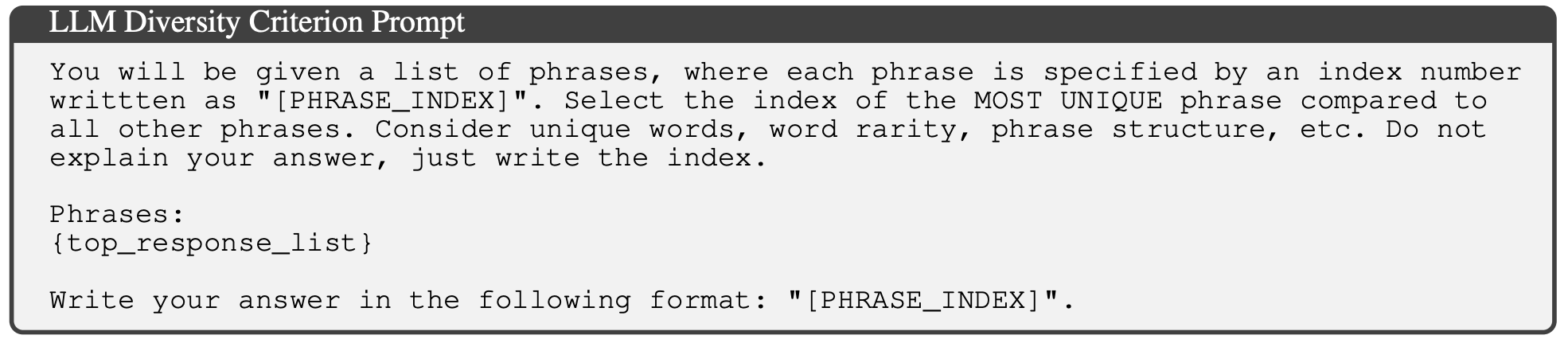
Three diversity criteria are proposed:

The reward threshold ρ is a hyperparameter that controls the trade-off between diversity and quality. A low ρ allows more responses into the chosen set, potentially increasing diversity but risking quality drops. A high ρ restricts to only the highest-reward responses, reducing diversity. The authors use β=0.1 to regularize against the reference model.
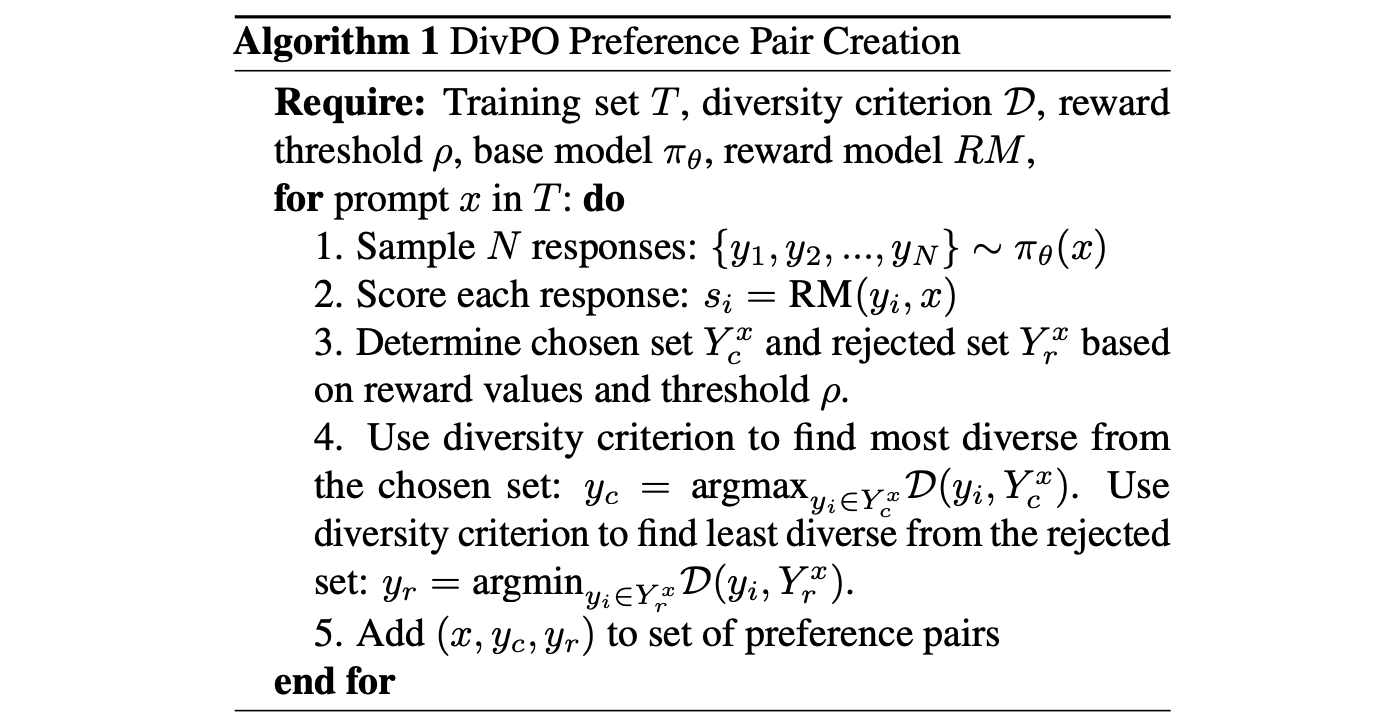
DivPO can be used in both offline and online settings. Online training is more prone to collapse in standard methods because the model's generations become less diverse over time, but DivPO's diversity-aware pair selection mitigates this.
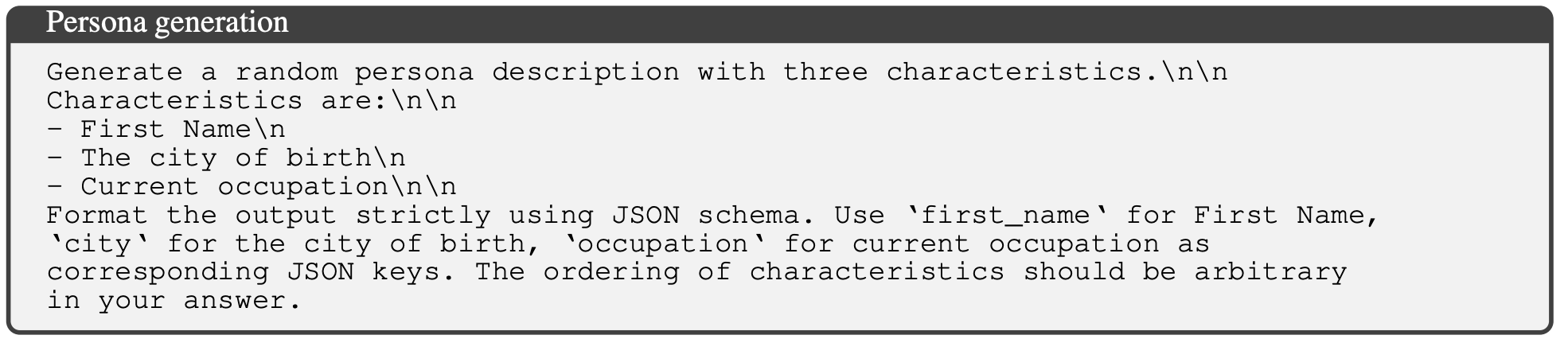
In the Persona Generation Task, DivPO significantly improves diversity (measured by unique attributes and distribution uniformity) compared to SFT, DPO, and even strong baselines like Llama-3.1-8B-Instruct and GPT-4o. Online DivPO achieves up to 30% diversity improvement over Instruct and 45.6% over online DPO, while maintaining or improving quality.
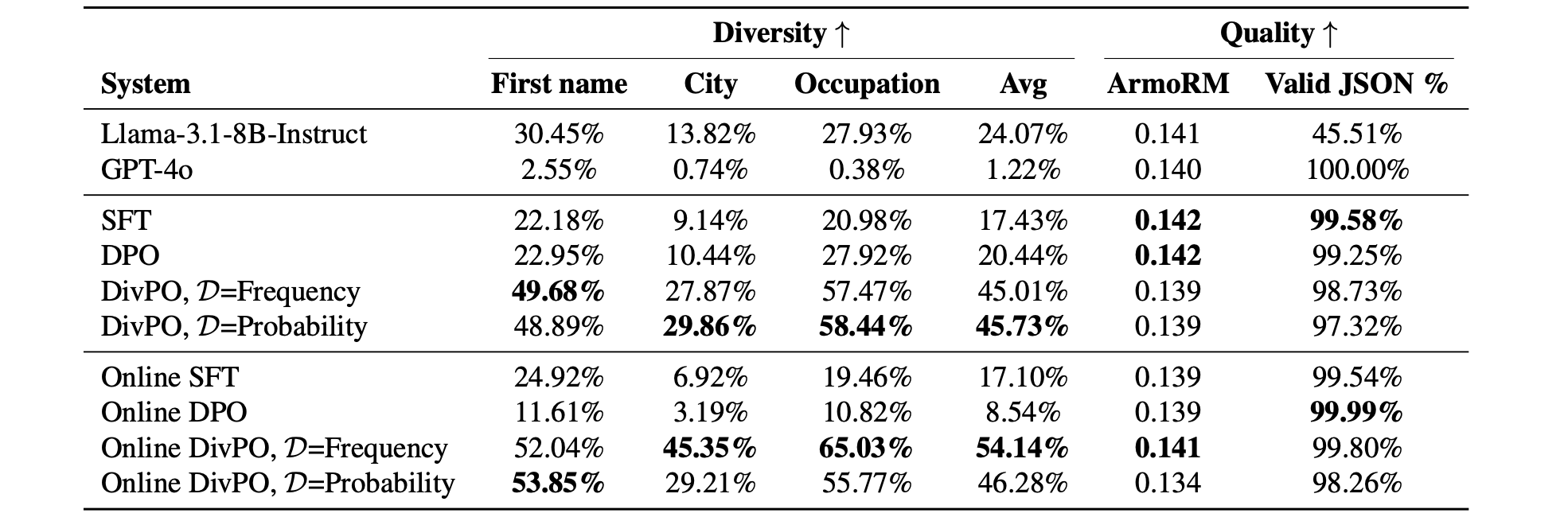
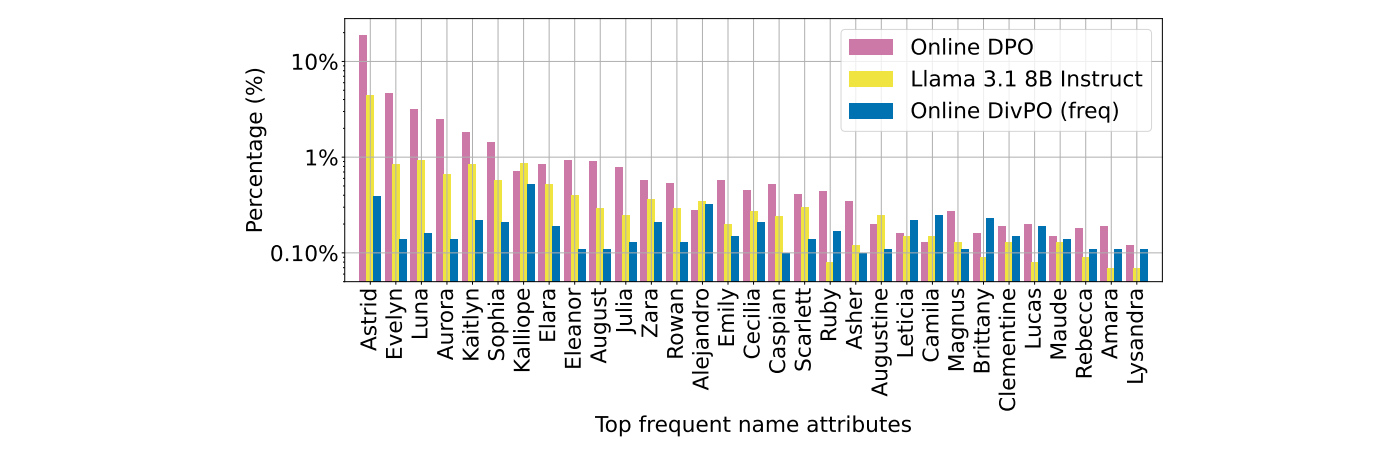
In the Keyword Story Generation Task, DivPO again outperforms baselines across all diversity criteria. The ρ parameter allows fine-grained control over the diversity-quality trade-off.

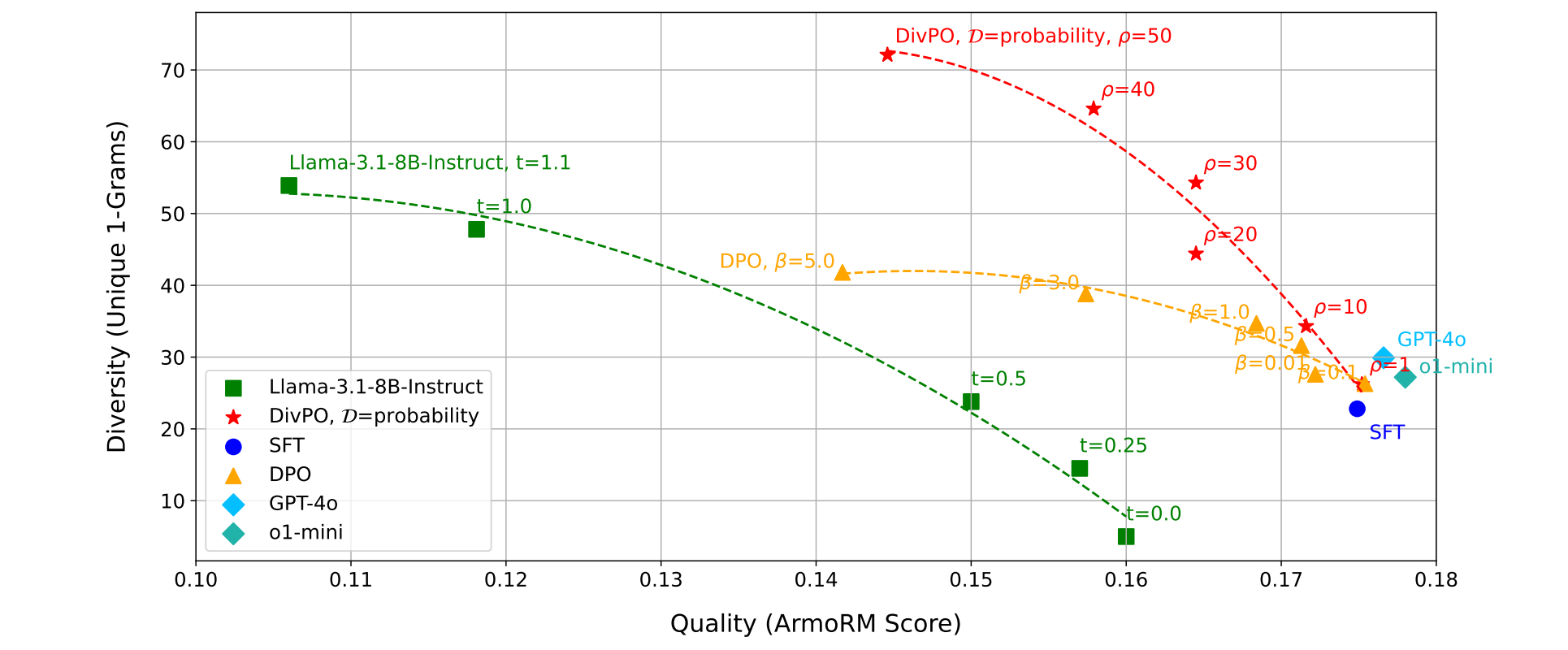
In the Full Story Generation Task, similar trends hold. At ρ=10, DivPO matches SFT quality but with higher diversity. Larger ρ values further boost diversity with a slight quality drop.

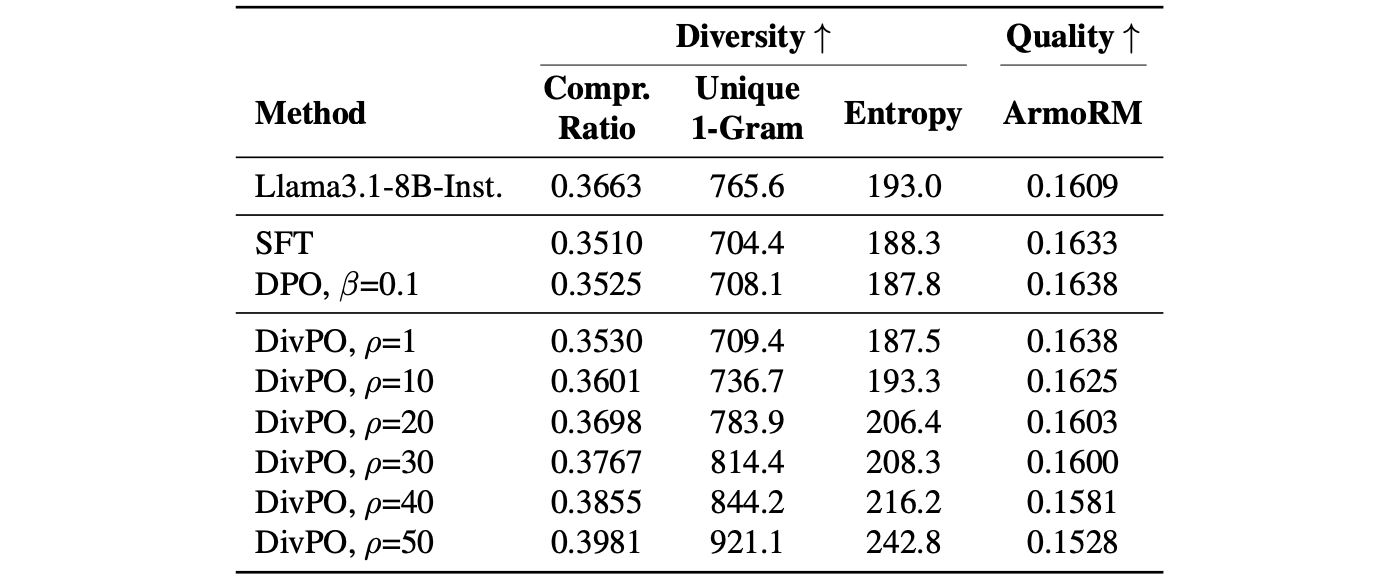
DivPO addresses a fundamental limitation of RLHF: the tendency to collapse to a narrow set of high-reward outputs. By explicitly incorporating diversity into the preference pair selection, DivPO enables LLMs to generate a wider range of high-quality responses. This is particularly valuable for creative tasks like story generation, persona creation, and any application where variety is as important as quality. The method is simple to implement on top of existing RLHF pipelines and offers controllable trade-offs via the ρ hyperparameter. Future work could explore adaptive ρ schedules or more sophisticated diversity metrics. DivPO represents a practical step toward more versatile and less homogenized AI systems.
Alex Krizhevsky, Ilya Sutskever et al.
Ashish Vaswani, Noam Shazeer et al.
Douglas M. Bates, Martin Mächler et al.
Diederik P. Kingma, Jimmy Ba