PreprintCommunications of the ACM
ImageNet classification with deep convolutional neural networks
Alex Krizhevsky, Ilya Sutskever et al.
130k2017
0
Citations
0
Influential Citations
—
Venue
2023
Year
Successor of PALM, trained on a mixture of different pre-training objectives in order to understand different aspects of language.
PaLM 2 represents a significant step forward in large language model development, particularly for multilingual and code generation tasks. By training on a more diverse dataset with a mixture of objectives, it achieves stronger performance than its predecessor PaLM across a wide range of benchmarks, often rivaling or surpassing GPT-4. This paper is crucial for AI practitioners seeking to build more capable, efficient, and globally useful language models.
PaLM 2 is the successor to PaLM, designed to be more compute-efficient and to leverage a richer training mixture. The training data includes a higher percentage of non-English text, as well as parallel data (source-target pairs) covering hundreds of languages, often with English on one side. This multilingual focus is a key differentiator.
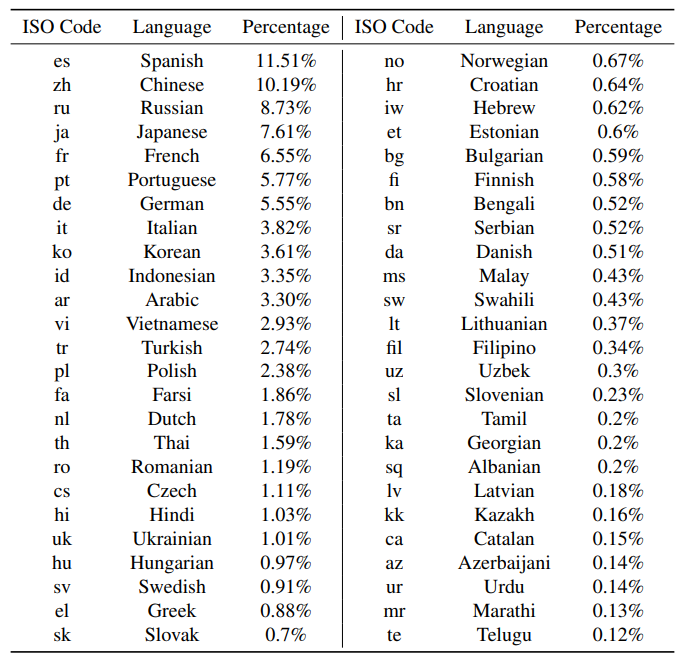
The model is trained with a combination of pre-training objectives, each targeting different aspects of language understanding. This multi-objective approach helps PaLM 2 grasp syntax, semantics, and reasoning more effectively than single-objective models.
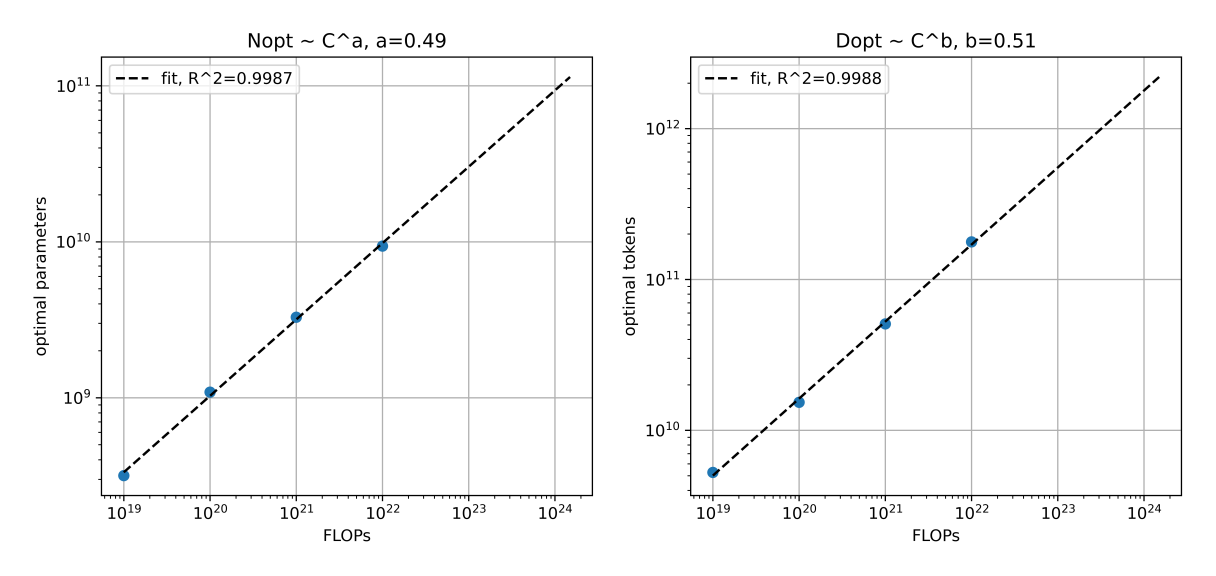
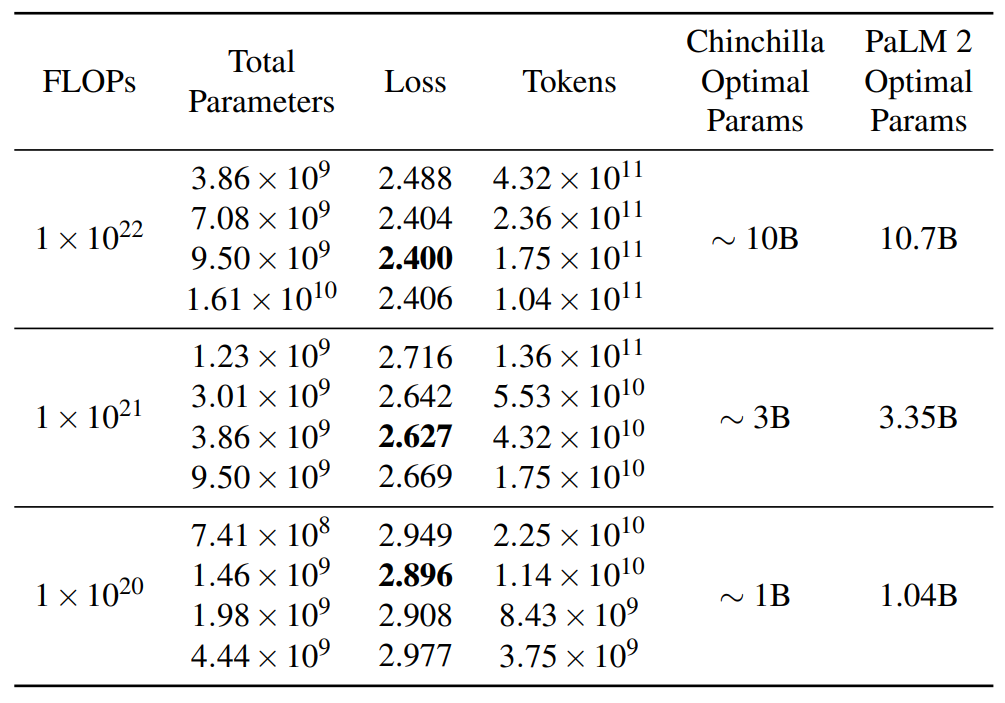
Scaling law experiments were conducted to determine the optimal allocation of compute between model size and data. The results indicate that as the FLOP budget increases, both the amount of training data (D) and model size (N) should grow proportionally for best performance.
PaLM 2 demonstrates substantial improvements over PaLM in nearly every evaluated category:
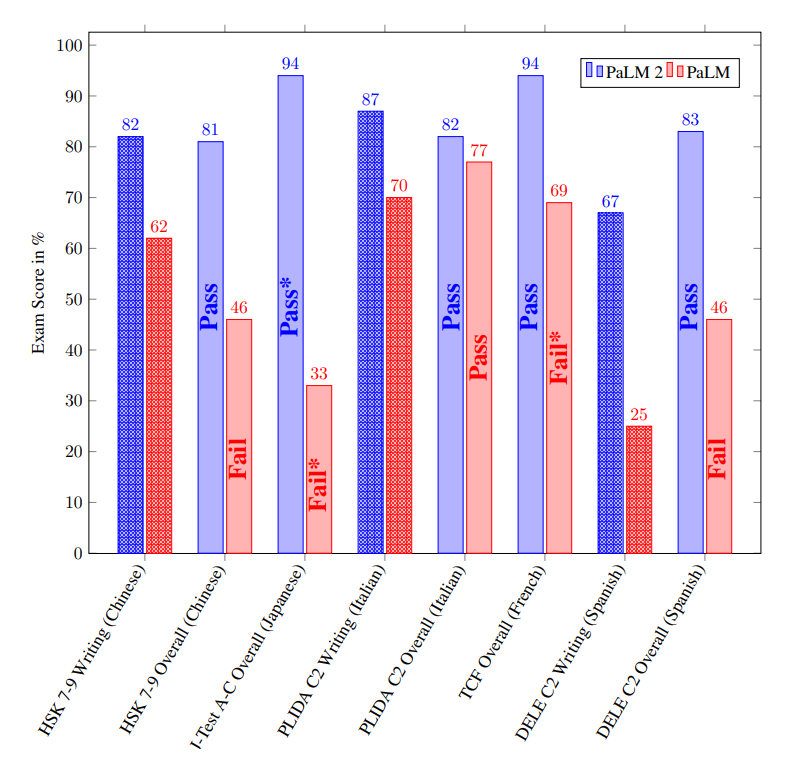
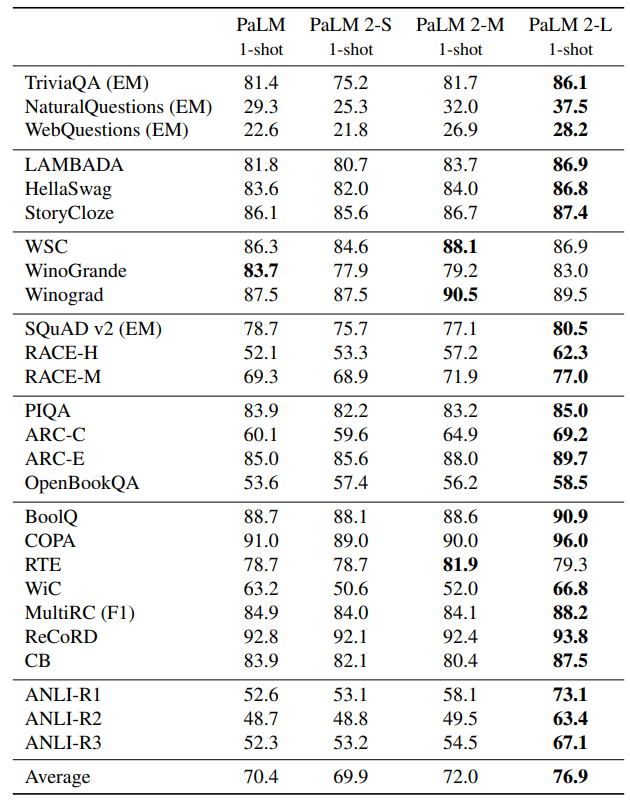
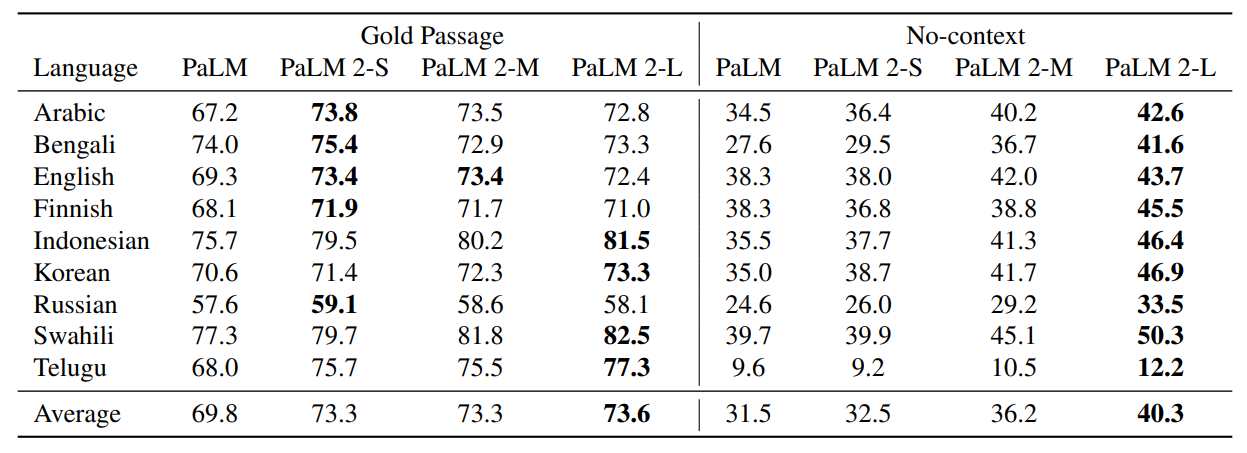
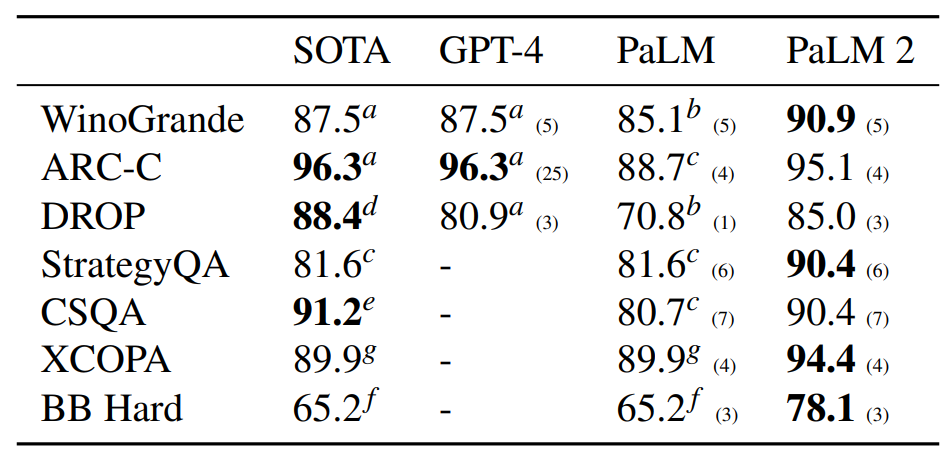

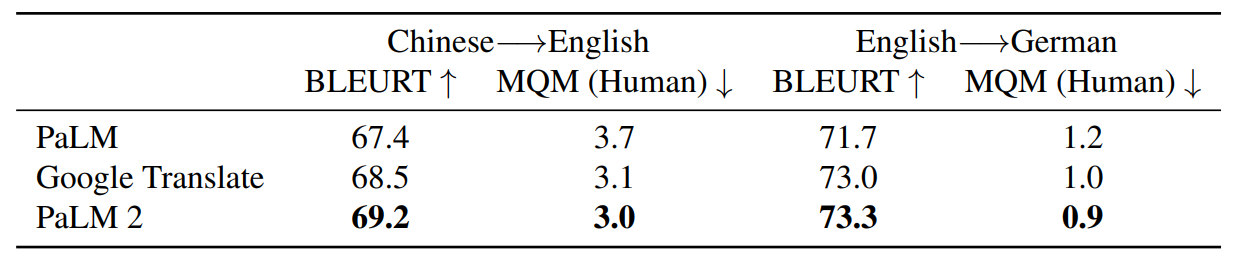
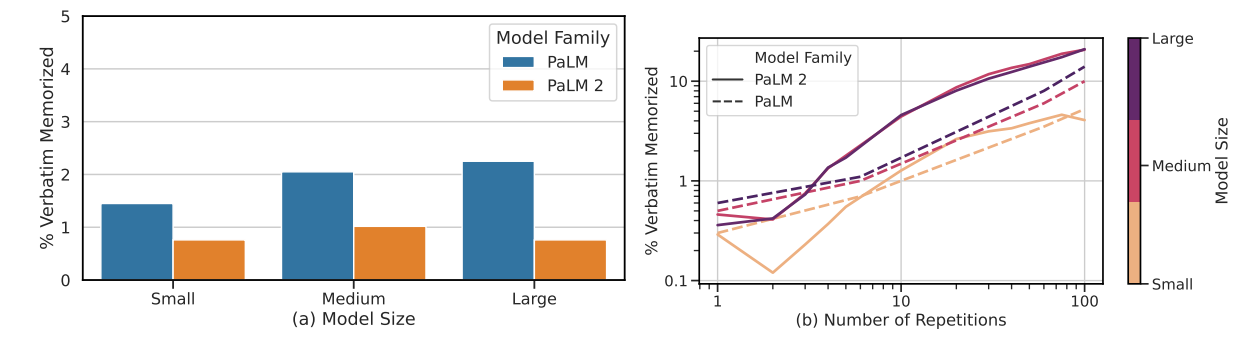
PaLM 2's success underscores the value of diverse, multilingual training data and multi-objective learning. For practitioners, it demonstrates that smaller, task-specific models (like PaLM 2-S*) can achieve high performance with lower latency and cost. The memorization analysis provides actionable insights for building more privacy-preserving LLMs. Overall, PaLM 2 sets a new standard for multilingual and code-capable language models, pushing the frontier of what is achievable with efficient training.
Alex Krizhevsky, Ilya Sutskever et al.
Ashish Vaswani, Noam Shazeer et al.
Douglas M. Bates, Martin Mächler et al.
Diederik P. Kingma, Jimmy Ba