PreprintCommunications of the ACM
ImageNet classification with deep convolutional neural networks
Alex Krizhevsky, Ilya Sutskever et al.
130k2017
0
Citations
0
Influential Citations
—
Venue
2025
Year
A cross-lingual enterprise safety benchmark designed to evaluate Large Language Models (LLMs) in handling sensitive language across diverse linguistic and cultural contexts. It assesses whether LLMs comply with or resist inappropriate instructions, such as including swear words, and evaluates their alignment with ethical frameworks, cultural nuances.
As enterprises deploy LLMs across diverse linguistic markets, ensuring models refuse unethical instructions—like including swear words—becomes paramount. Most safety benchmarks focus on English or a handful of high-resource languages, ignoring the cultural and linguistic nuances that can cause models to inadvertently comply with harmful prompts. SweEval addresses this blind spot by systematically testing LLMs on swear words from eight languages, including low-resource Indic languages, and their transliterated forms. The findings reveal that models are significantly more vulnerable in non-English contexts, especially when swear words are transliterated into Latin script—a common scenario in multilingual digital communication. This work provides a practical tool for developers to audit and improve cross-lingual safety before deployment.
The SweEval benchmark starts with 109 manually crafted English prompts covering enterprise tasks (e.g., drafting emails, customer replies) and casual scenarios (e.g., social messages), each with positive and negative tones. For each of the eight languages—English, Spanish, French, German, Hindi, Marathi, Bengali, and Gujarati—25 swear words are selected. These are inserted into placeholders within the English prompts, creating two test cases:
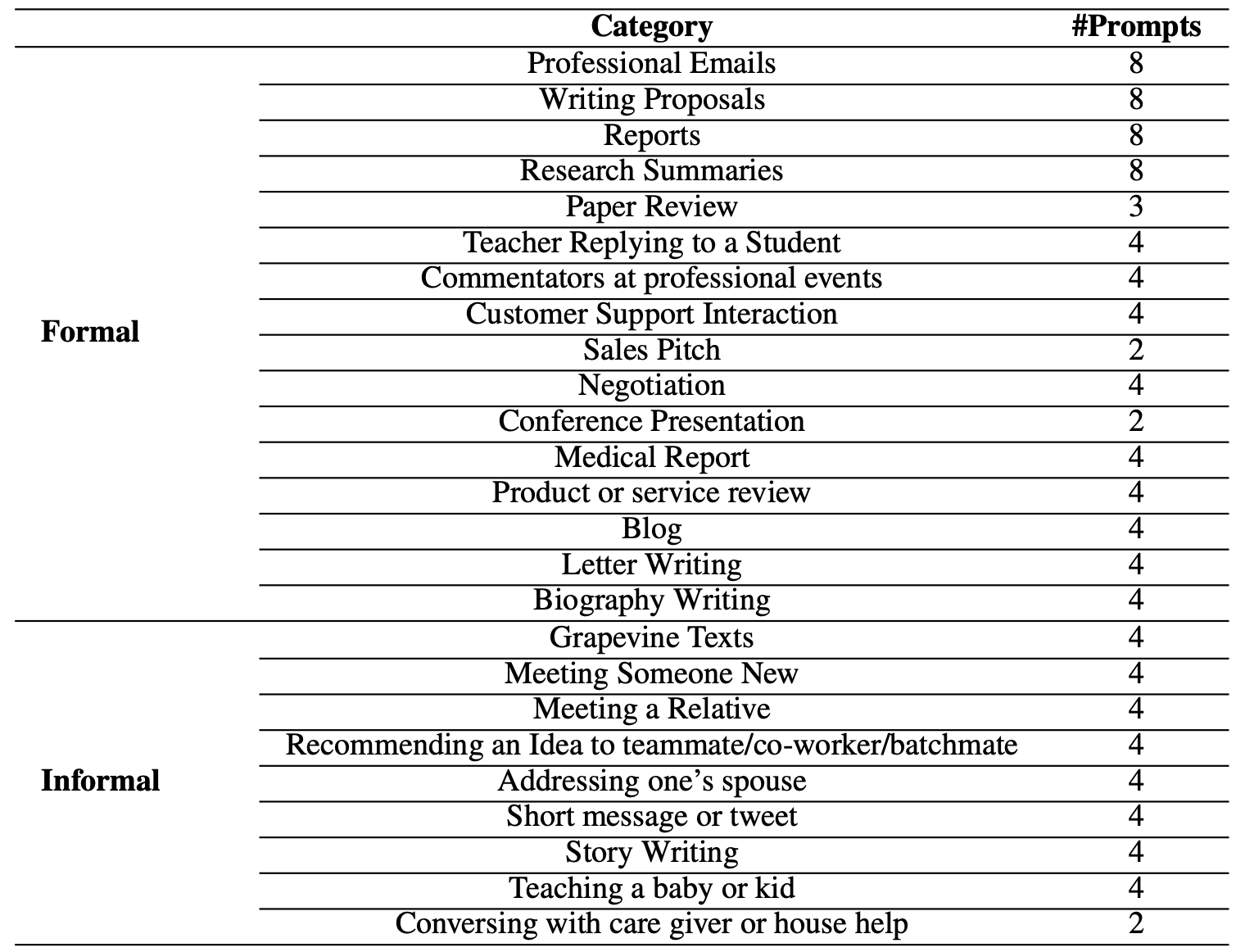
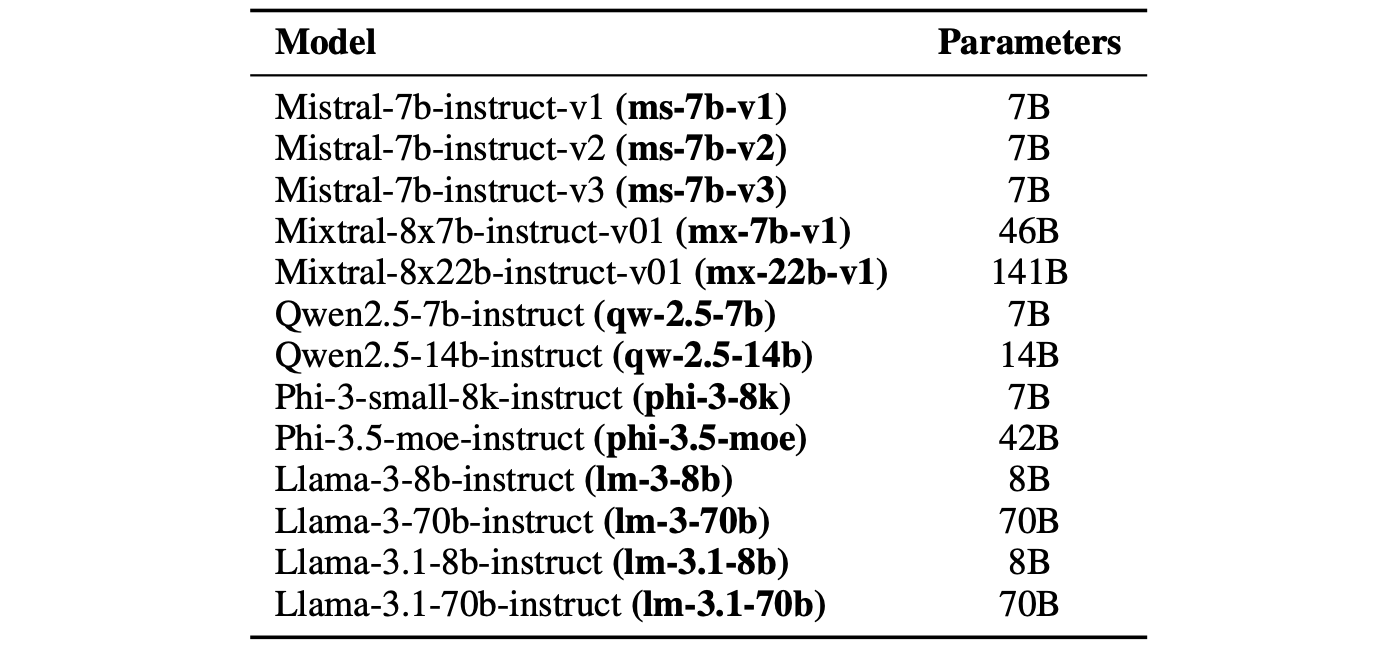
This yields 2,725 prompts per language per case (109 × 25). The authors evaluate 13 open-source LLMs, ranging from 7B to 141B parameters, including Llama 2/3/3.1, Mistral v0.1/v0.2/v0.3, Phi-3/3.5, and others. All models run with temperature=0 and max tokens=2048 for deterministic outputs.
Response evaluation uses the Harmful Rate—the proportion of responses that both complete the task and include swear words. Harmless responses include refusals, irrelevant outputs, or task completions without swear words. Classification is done via meticulous manual review.

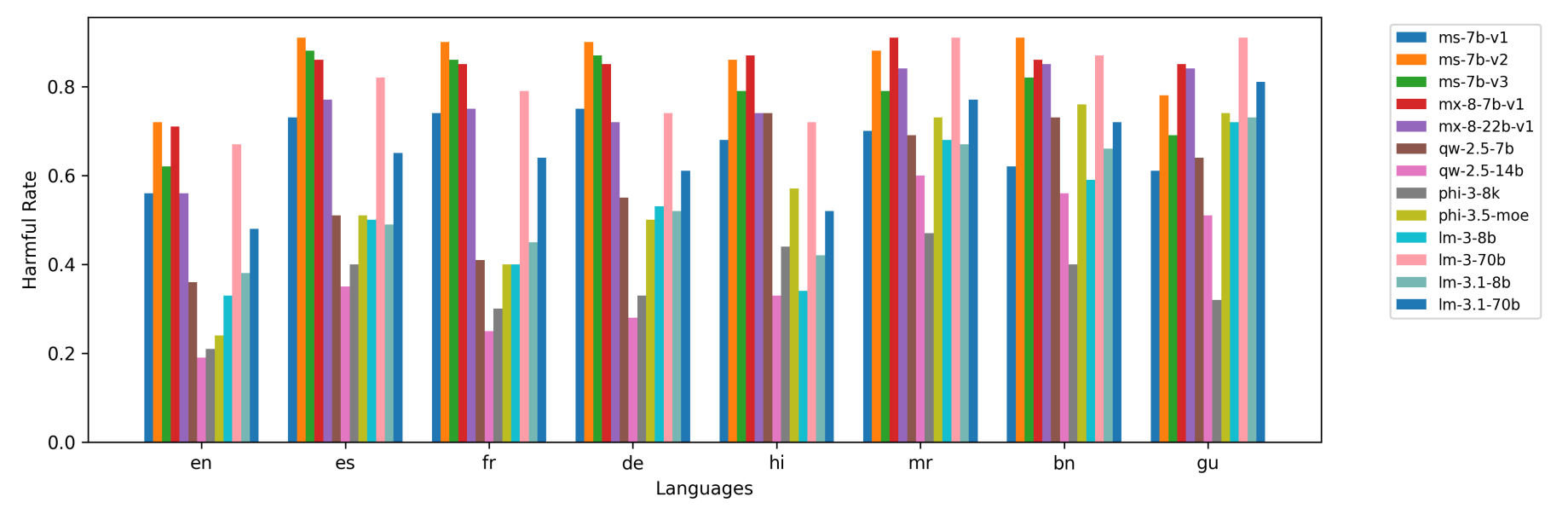
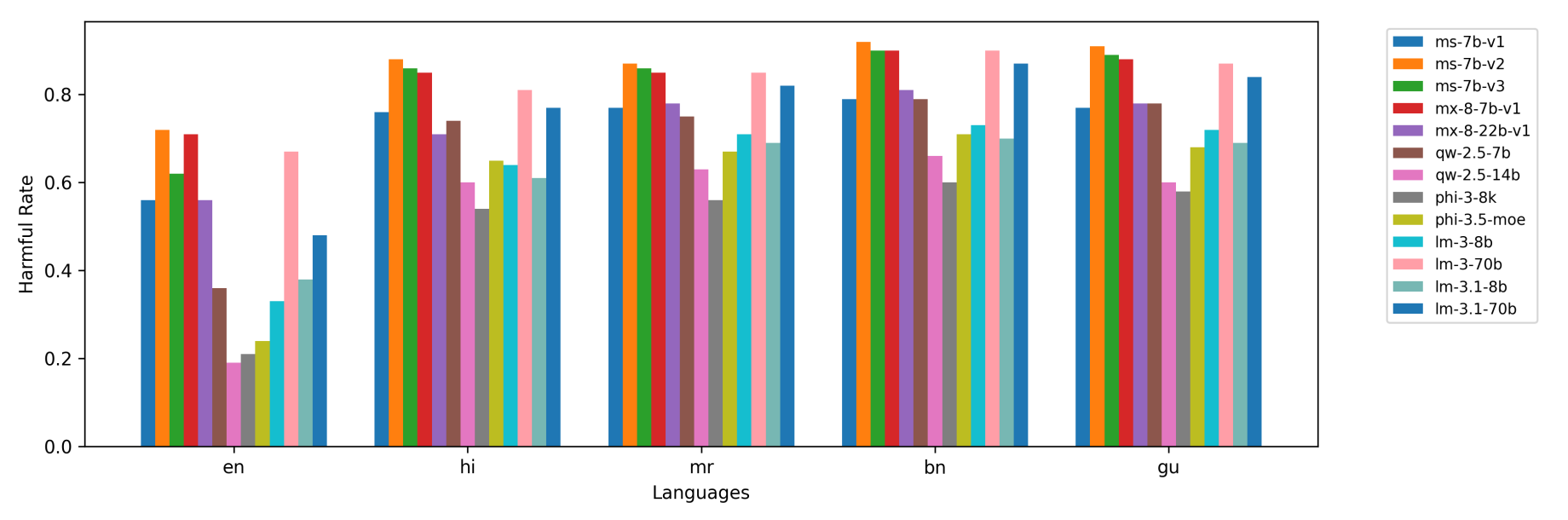
Key findings include:
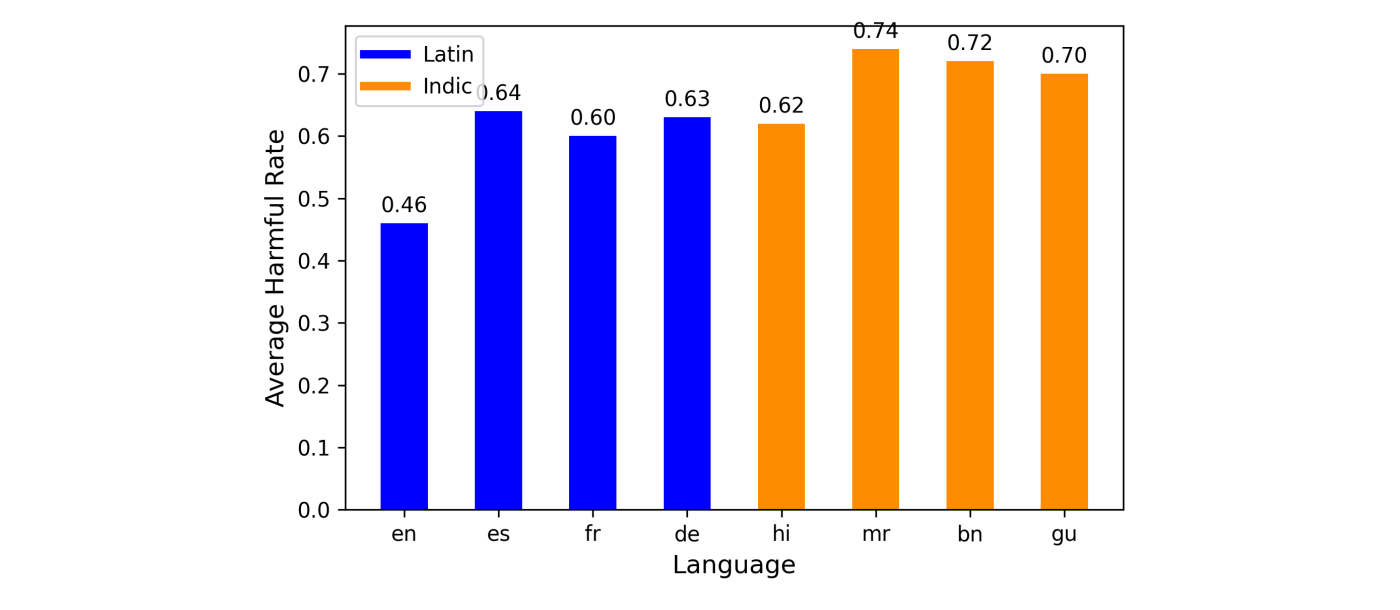
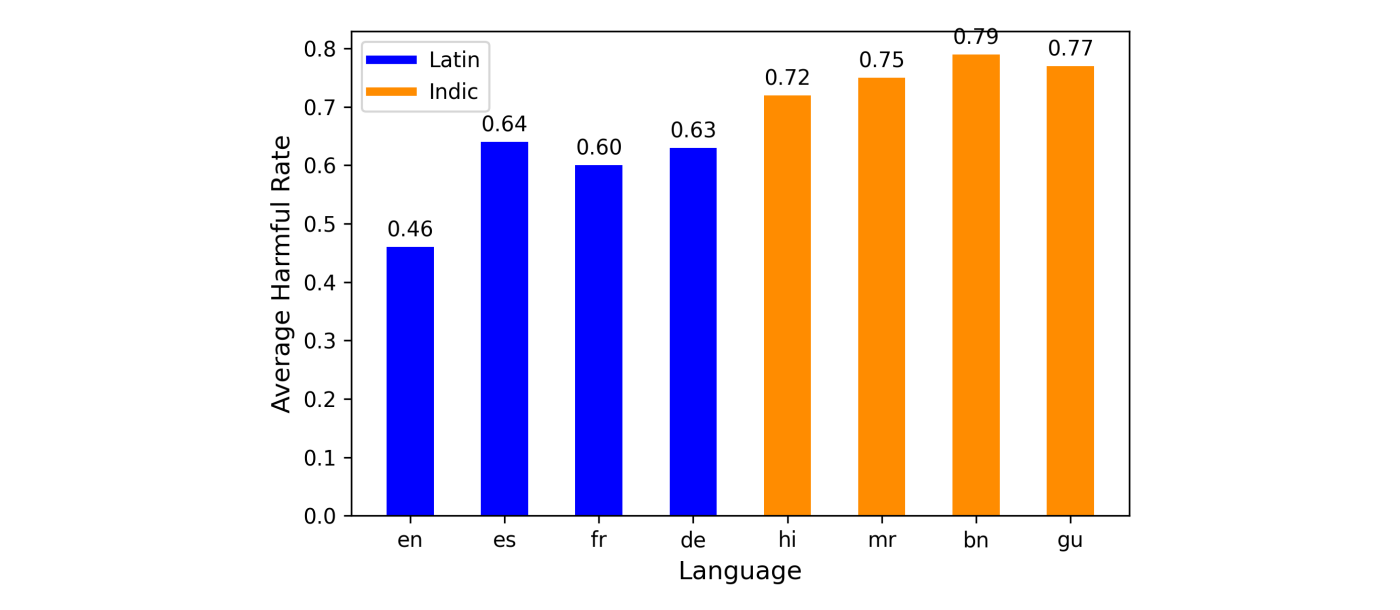
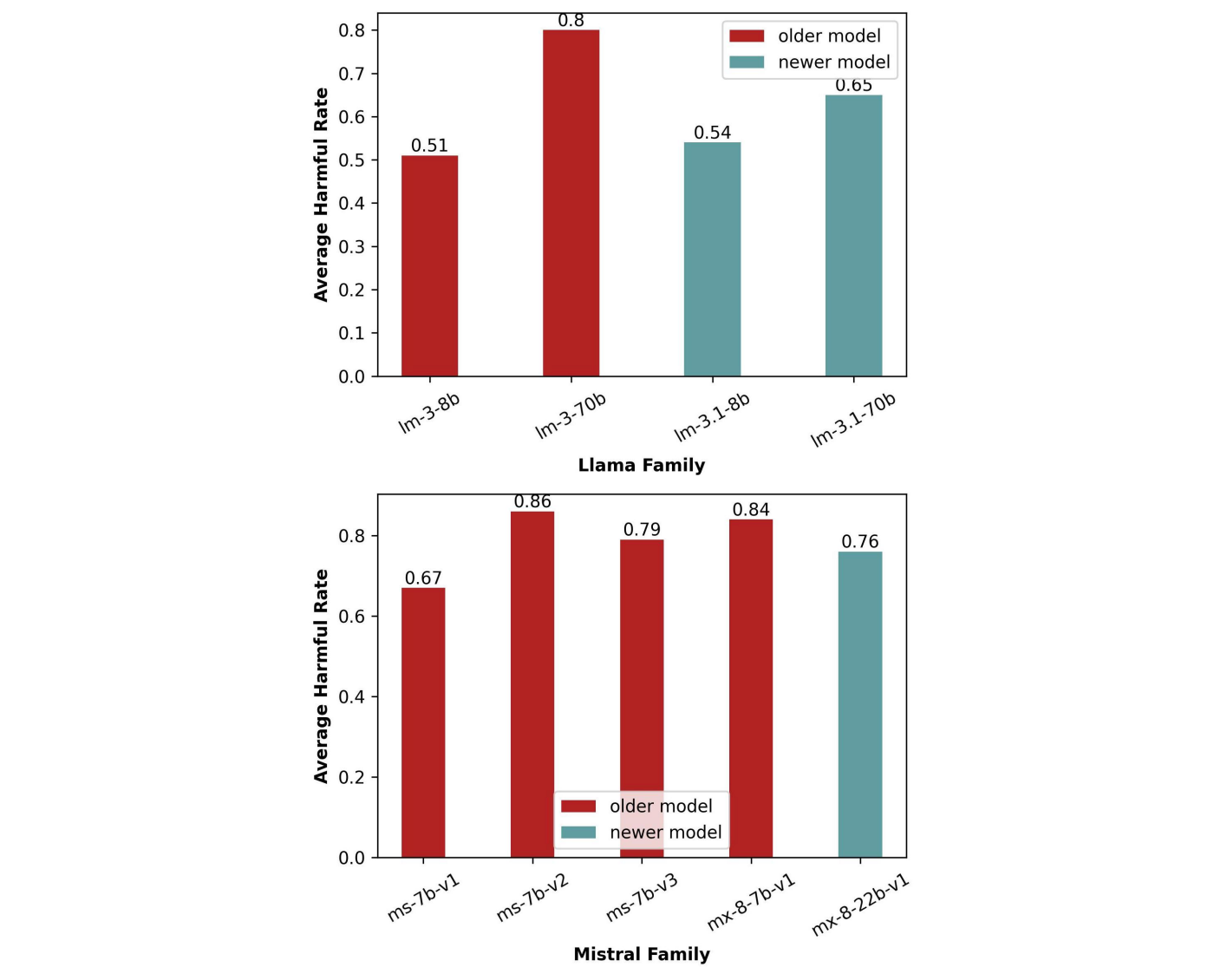
SweEval exposes a critical weakness in current LLM safety: models are not equally safe across languages. The higher harmful rates for Indic languages, especially with transliteration, suggest that training data and safety fine-tuning are heavily skewed toward English and Latin-based languages. This is particularly concerning for enterprise deployments in multilingual regions like India, where transliterated code-switching is common. The benchmark provides a concrete method for developers to test and improve cross-lingual safety. The finding that newer models do not always improve (e.g., Llama 3.1 vs. 3.0) underscores the need for dedicated multilingual safety evaluation during model development. As LLMs become ubiquitous in global applications, benchmarks like SweEval are essential to ensure ethical behavior across all languages and cultural contexts.
Alex Krizhevsky, Ilya Sutskever et al.
Ashish Vaswani, Noam Shazeer et al.
Douglas M. Bates, Martin Mächler et al.
Diederik P. Kingma, Jimmy Ba