

Meta AI
FreemiumEnhances machine learning, NLP, and computer vision capabilities.
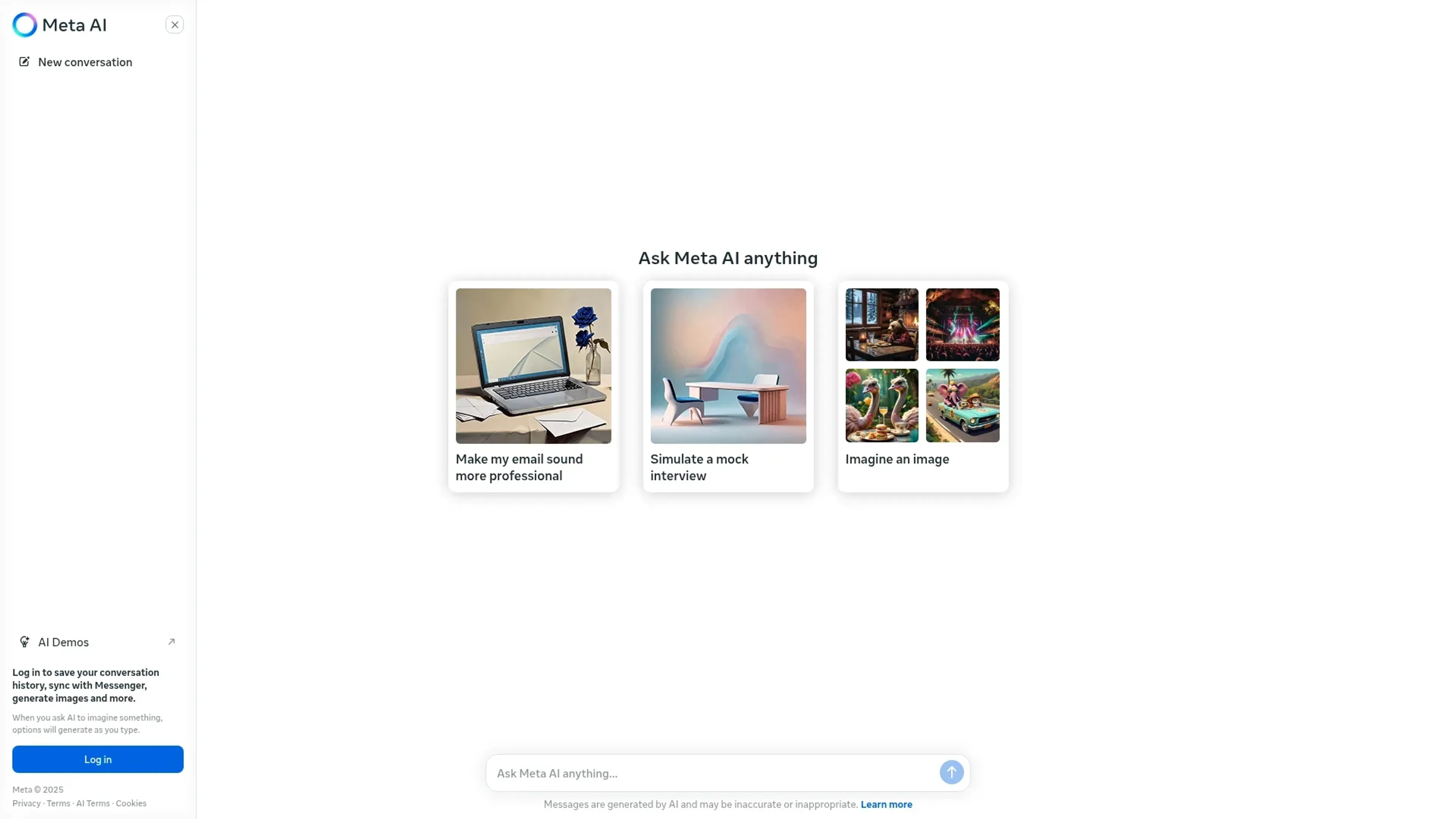
About Meta AI
Meta AI is a cutting-edge artificial intelligence initiative from Meta, the company formerly known as Facebook. This ambitious project aims to advance the state of AI research and development, focusing on creating technologies that can understand and interact with the world more like humans do. Designed for researchers, developers, and businesses, Meta AI simplifies complex tasks by offering tools that enhance machine learning capabilities, natural language processing, and computer vision.
Key Features
- Advanced Machine Learning Models: Meta AI leverages sophisticated algorithms to train models that can predict and adapt to various data inputs, improving accuracy over time.
- Natural Language Processing (NLP): With robust NLP capabilities, Meta AI can understand and generate human-like text, making it ideal for chatbots and virtual assistants.
- Computer Vision: Utilizing state-of-the-art image recognition technology, Meta AI can analyze and interpret visual data effectively.
- AI Research Tools: Offers a suite of tools and resources to support AI research and development, fostering innovation in the AI community.
Pros
- Innovative Research: Meta AI is at the forefront of AI research, continuously pushing the boundaries of what AI can achieve.
- Comprehensive Toolset: Provides a wide range of tools for different AI applications, from NLP to computer vision.
- Community Engagement: Actively engages with the AI community, offering open-source projects and collaboration opportunities.
- Scalable Solutions: Designed to scale with the needs of businesses, from small startups to large enterprises.
Cons
- Complexity for Beginners: The advanced nature of Meta AI's tools can present a steep learning curve for those new to AI.
- Resource Intensive: Requires significant computational resources, which may not be accessible to all users.
- Limited to Meta Ecosystem: Some tools and features may integrate best within the Meta platform, potentially limiting cross-platform usability.
Use Cases
- Tech Companies: Utilizing Meta AI for developing innovative AI-driven products and services.
- Academic Researchers: Employing the platform for cutting-edge AI research and experiments.
- Healthcare Providers: Leveraging AI for improved patient diagnosis and treatment plans.
- Retail Businesses: Using AI to enhance customer experiences and optimize supply chains.
- Uncommon Use Cases: Adopted by environmental organizations for wildlife monitoring; Used by artists to create AI-generated artworks.
Pricing
Open Access: Meta AI offers many of its tools and resources freely to the public, supporting open-source collaboration and innovation. Disclaimer: Pricing and access details may vary. For the most accurate and current information, refer to the official Meta AI website.
What Makes It Unique
Meta AI stands out with its commitment to open-source AI research and development, a game-changer for fostering innovation and collaboration across the industry. Its ability to integrate cutting-edge research with practical applications in social media, healthcare, and beyond sets it apart, making it a versatile tool for a wide range of applications.
Ratings
Accuracy and Reliability: 4.8/5 Ease of Use: 3.9/5 Functionality and Features: 4.7/5 Performance and Speed: 4.5/5 Customization and Flexibility: 4.3/5 Data Privacy and Security: 4.6/5 Support and Resources: 4.2/5 Cost-Efficiency: 4.0/5 Integration Capabilities: 4.1/5 Overall Score: 4.4/5
Key Features
Pros & Cons
- Innovative Research: Meta AI is at the forefront of AI research, continuously pushing the boundaries of what AI can achieve.
- Comprehensive Toolset: Provides a wide range of tools for different AI applications, from NLP to computer vision.
- Community Engagement: Actively engages with the AI community, offering open-source projects and collaboration opportunities.
- Scalable Solutions: Designed to scale with the needs of businesses, from small startups to large enterprises.
- Complexity for Beginners: The advanced nature of Meta AI's tools can present a steep learning curve for those new to AI.
- Resource Intensive: Requires significant computational resources, which may not be accessible to all users.
- Limited to Meta Ecosystem: Some tools and features may integrate best within the Meta platform, potentially limiting cross-platform usability.
Best For
Alternatives to Meta AI
AiCogni
Unleash the Power of AI Communication with AiCogni
Aiwizard
Automate customer conversations, improve satisfaction, and analyze performance with AI-powered chatbot agents.
BrightBot
Versatile Chatbot Solution for Seamless Customer Interaction
KITT By LiveKit
KITT by LiveKit: Real‑time multimodal AI for live voice, video, and text
AI.LS
Master AI and ML with AI Learning Studio!
Olympia
Empower Your Business with Olympia's AI-Powered Consultants