

Paxton AI
FreemiumPaxton AI is a cutting-edge legal assistant powered by Generative AI, designed to keep businesses ahead of regulatory changes
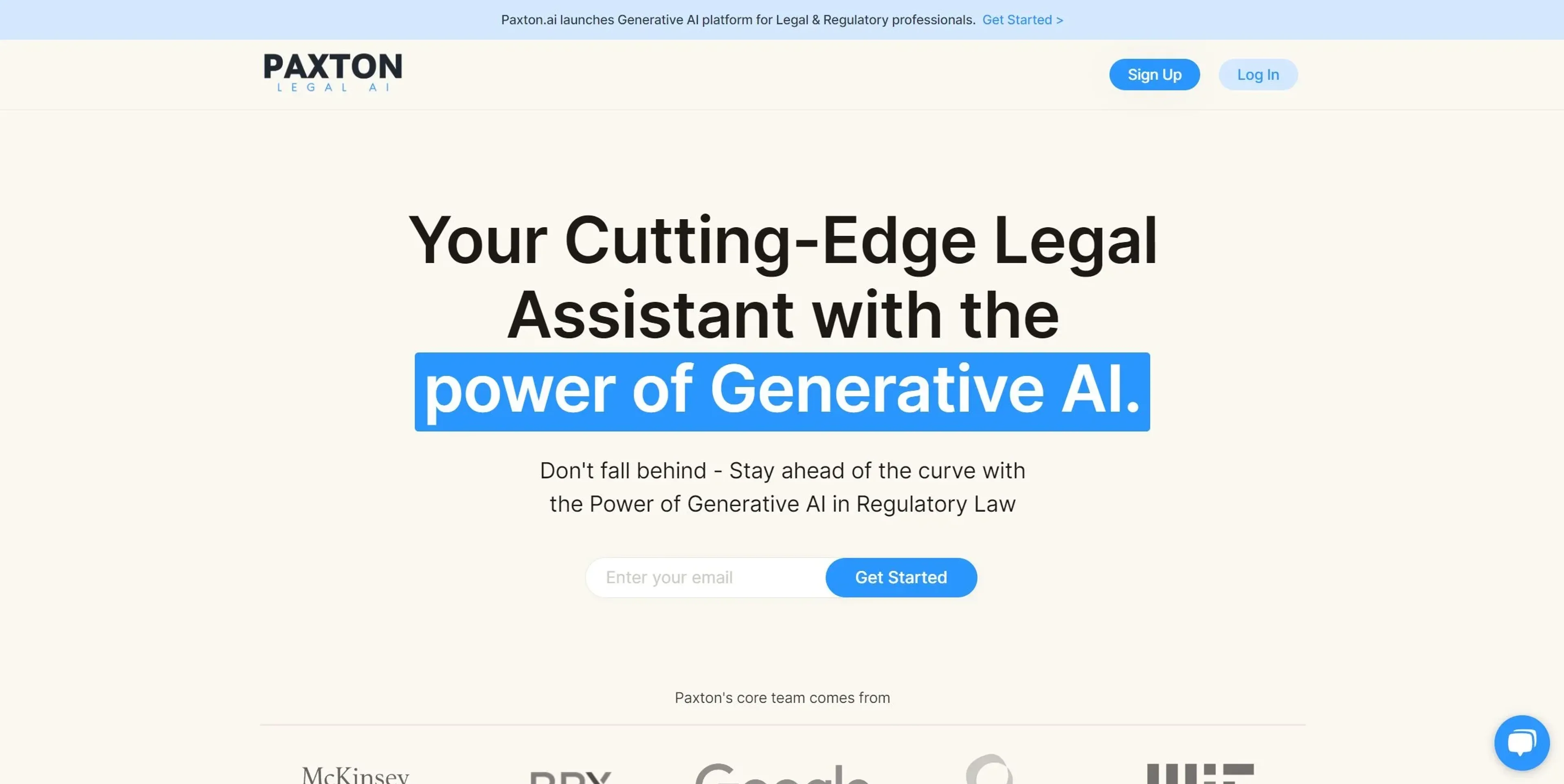
About Paxton AI
Paxton AI is a transformative tool designed to optimize the legal profession by integrating artificial intelligence into the workflow of attorneys. This AI legal assistant excels at making lawyering less tedious, allowing for more billable hours and delivering enhanced value to clients. Its capabilities range from learning new areas of law to rapidly drafting and comparing documents, deepening discovery, and providing accurate citations, all aimed at streamlining the legal research and document creation processes.
Key Features
- Extensive Legal Database Access: Instant access to over 60 million documents, including federal and state case law, statutes, financial regulations, guidance, and filings.
- Custom Document Drafting: Ability to upload personal documents to teach Paxton AI to draft in a user's unique style, catering to specific needs for briefs, memos, and motions.
- Natural Language Search: Conducts comprehensive searches using natural language across a vast array of cases and statutes, keeping users informed with real-time regulatory updates.
- Collaborative Tools: Offers features for seamless team collaboration, such as commenting, idea generation, and document sharing.
- Continuous Learning and Training: Serves as a continuous learning tool, aiding in the onboarding of new associates and refreshing the knowledge of seasoned professionals.
Pros
- Efficiency in Drafting Documents: Accelerates the document drafting process by integrating legal precedents and personal templates.
- Accuracy of Citations: Ensures every claim is cited, reducing the time spent on fact-checking and verification.
- User-Friendly Research: Simplifies legal research by allowing users to query in natural language.
- Enhanced Learning: Aids in the professional development of legal teams by presenting complex legal concepts in an understandable format.
Cons
- Learning Curve: New users may require time to adapt to the AI's functionalities and optimize its use in their legal practices.
- Potential Over-reliance: There might be a risk of over-reliance on AI for complex legal reasoning that requires human expertise.
- Limited to Legal Industry: Its specialized nature means it is not suitable for non-legal professionals.
Use Cases
- Law Firms: Implementing Paxton AI for efficient legal research and document drafting.
- Solo Practitioners: Leveraging Paxton AI to handle diverse legal tasks without additional staff.
- Corporate Legal Departments: Utilizing Paxton AI to navigate regulations and compliance issues swiftly.
- Legal Academics: Incorporating Paxton AI as a teaching aid to demonstrate practical legal research and writing.
- Uncommon Use Cases: Used by legal technology enthusiasts to explore the potential of AI in law; Adopted by legal documentarians for archiving and analyzing large volumes of legal texts.
Pricing
Free Access: Paxton AI offers a free version with no account required for users to experience its features. Custom Plans: While specific pricing details are not provided, the website suggests contacting them directly for tailored solutions. Disclaimer: For the most accurate and current pricing details, refer to the official Paxton AI website.
What Makes It Unique
Paxton AI distinguishes itself with its dedicated focus on the legal industry, providing a tool that is finely tuned to the specific needs of legal practitioners. Its promise to generate no hallucinated citations and to back every claim with a source stands out as a fundamental requirement for professionals who rely on precision and verifiability in legal documents.
Ratings
Accuracy and Reliability: 4.5/5 Ease of Use: 4.0/5 Functionality and Features: 4.6/5 Performance and Speed: 4.3/5 Customization and Flexibility: 4.2/5 Data Privacy and Security: 4.8/5 Support and Resources: 4.1/5 Cost-Efficiency: 4.4/5 Integration Capabilities: 3.9/5 Overall Score: 4.3/5
Summary
Paxton AI is a cutting-edge legal assistant powered by Generative AI, designed to keep businesses ahead of regulatory changes AI Categories: legal, AI chatbots, project management
Key Features
Pros & Cons
- Efficiency in Drafting Documents: Accelerates the document drafting process by integrating legal precedents and personal templates.
- Accuracy of Citations: Ensures every claim is cited, reducing the time spent on fact-checking and verification.
- User-Friendly Research: Simplifies legal research by allowing users to query in natural language.
- Enhanced Learning: Aids in the professional development of legal teams by presenting complex legal concepts in an understandable format.
- Learning Curve: New users may require time to adapt to the AI's functionalities and optimize its use in their legal practices.
- Potential Over-reliance: There might be a risk of over-reliance on AI for complex legal reasoning that requires human expertise.
- Limited to Legal Industry: Its specialized nature means it is not suitable for non-legal professionals.
Best For
Alternatives to Paxton AI
GPT ChatBot
Enhance websites with GPT3's natural language understanding and point-and-click integration for accurate responses.
KITT By LiveKit
KITT by LiveKit: Real‑time multimodal AI for live voice, video, and text
Olympia
Empower Your Business with Olympia's AI-Powered Consultants
AiCogni
Unleash the Power of AI Communication with AiCogni
Aiwizard
Automate customer conversations, improve satisfaction, and analyze performance with AI-powered chatbot agents.
BrightBot
Versatile Chatbot Solution for Seamless Customer Interaction