

Factory
FreemiumRevolutionize software development with autonomous AI-driven Droids.
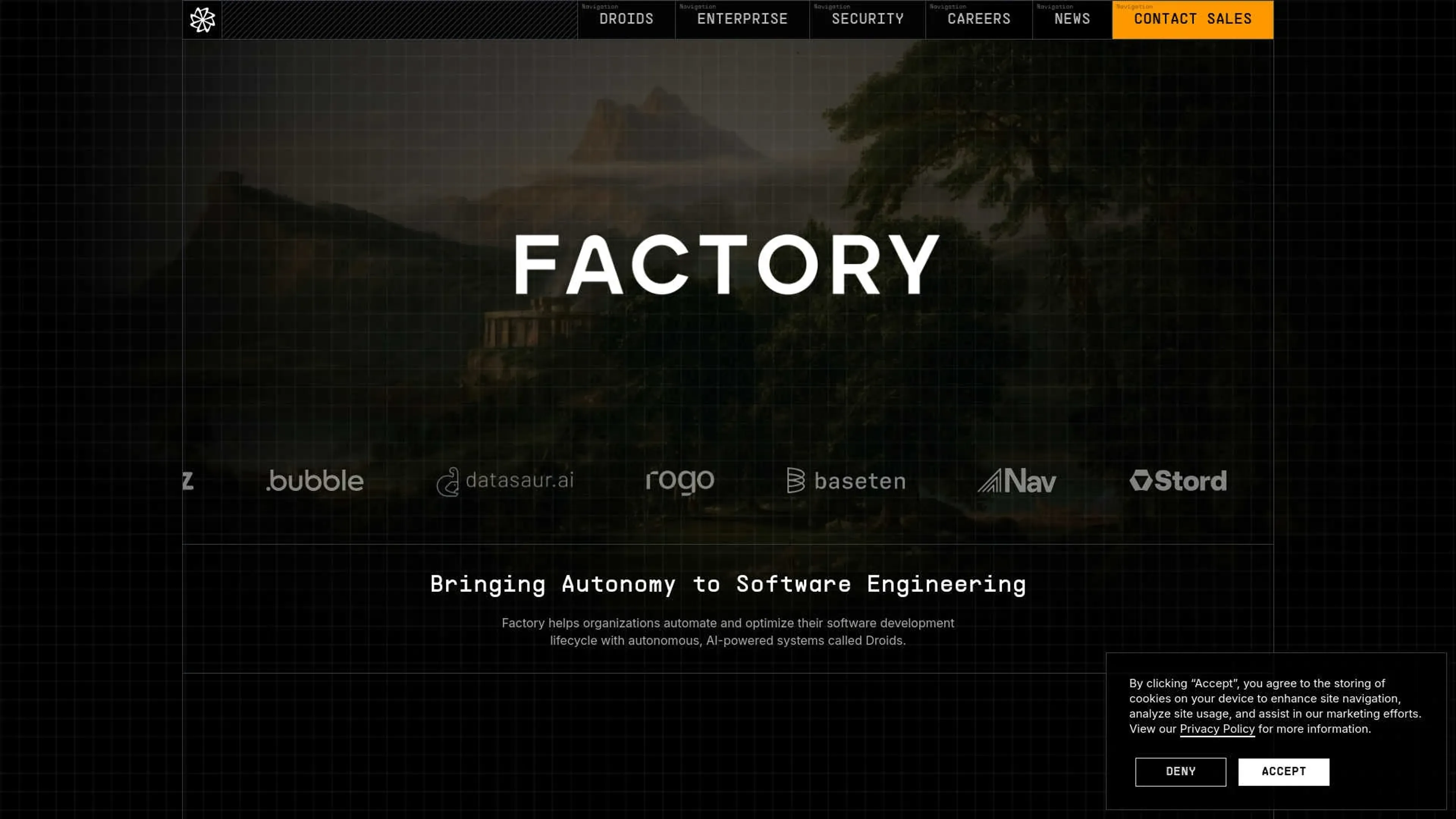
About Factory
Factory is a pioneering AI tool designed to transform the software development lifecycle through the use of autonomous AI-powered systems, known as Droids. These Droids are engineered to automate and optimize various aspects of software development, including ideation, planning, coding, testing, and documentation. By streamlining these processes, Factory aims to significantly boost efficiency and productivity for software engineering teams.
Key Features
- Autonomous Droids: AI-driven systems that handle tasks such as writing code, conducting tests, and generating documentation, allowing for a more efficient development process.
- Systematic Development: Facilitates a structured approach to software development, ensuring a consistent progression through different phases.
- Advanced Security Protocols: Includes compliance with SOC II, GDPR, ISO 42001, and CCPA to safeguard intellectual property and sensitive data.
- Efficiency Metrics: Demonstrates measurable benefits such as a 3x reduction in churn time and notable cost savings per engineer annually.
Pros
- Enhanced Productivity: Accelerates the software development cycle, saving up to 561,000 engineering hours.
- Cost Reduction: Lowers costs by approximately $18,000 per engineer each year through optimized development processes.
- High Security and Compliance: Adheres to stringent security standards, ensuring robust protection against AI misuse.
- Support for Continuous Improvement: Evolves with the latest AI advancements, keeping development practices at the forefront of technology.
Cons
- Complex Integration: May require substantial setup time and adjustments for seamless integration with existing systems.
- Learning Curve: Users might face a steep learning curve in understanding and leveraging advanced AI functionalities.
- Resource Intensity: High resource usage may necessitate significant computational power from organizational IT infrastructure.
Use Cases
- Factory is utilized across various sectors to enhance software development processes:
- Software Development Companies: Automating coding and testing tasks to improve efficiency.
- Enterprise Clients: Leveraging advanced security features for industry compliance and data protection.
- Tech Startups: Accelerating product development and launch with streamlined processes.
- Educational Institutions: Providing students with practical, advanced tools for learning software development.
- Uncommon Use Cases: Research organizations study AI’s impact on development; consultancy firms use it to enhance client projects with state-of-the-art technology.
Pricing
Free Trial: Start with a no-cost trial period to explore Factory’s features and capabilities. Subscription Model: Pricing information is available upon request from the Factory sales team. Disclaimer: For the most accurate and up-to-date pricing details, please visit the official Factory website.
What Makes It Unique
Factory’s uniqueness lies in its use of autonomous Droids to manage the entire software development lifecycle. This approach not only automates routine tasks but also systematically handles ideation, planning, coding, testing, and documentation, offering significant time and cost savings. Its focus on security and continuous improvement further distinguishes it from traditional development tools.
Ratings
Accuracy and Reliability: 4.8/5 Ease of Use: 4.2/5 Functionality and Features: 4.9/5 Performance and Speed: 4.7/5 Customization and Flexibility: 4.5/5 Data Privacy and Security: 5.0/5 Support and Resources: 4.3/5 Cost-Efficiency: 4.6/5 Integration Capabilities: 4.4/5 Overall Score: 4.6/5
Key Features
Pros & Cons
- Enhanced Productivity: Accelerates the software development cycle, saving up to 561,000 engineering hours.
- Cost Reduction: Lowers costs by approximately $18,000 per engineer each year through optimized development processes.
- High Security and Compliance: Adheres to stringent security standards, ensuring robust protection against AI misuse.
- Support for Continuous Improvement: Evolves with the latest AI advancements, keeping development practices at the forefront of technology.
- Complex Integration: May require substantial setup time and adjustments for seamless integration with existing systems.
- Learning Curve: Users might face a steep learning curve in understanding and leveraging advanced AI functionalities.
- Resource Intensity: High resource usage may necessitate significant computational power from organizational IT infrastructure.
Best For
Alternatives to Factory
Eden AI
If you need to build a proper workflow and use AI API to make product-building easy and effective, let’s have a look at Eden AI review. Check out the features!
ChatGPT (OpenAI)
Script for Adaptive Theme Management in Light and Dark Modes
Lovelacestudio
Step up your RPG game creation with lovelacestudio com. Explore innovative AI tools to build and share immersive worlds effortlessly.
Trypromptly
Level Up Your Daily Productivity With Trypromptly'S Smart Tools Designed For Efficiency. Achieve Better Results Effortlessly In Your Everyday Tasks.
CodiumAI
AI test generation for code
Devin
Autonomous AI software engineer