

Liberate
FreeRevolutionizes insurance with AI-driven CX and process automation.
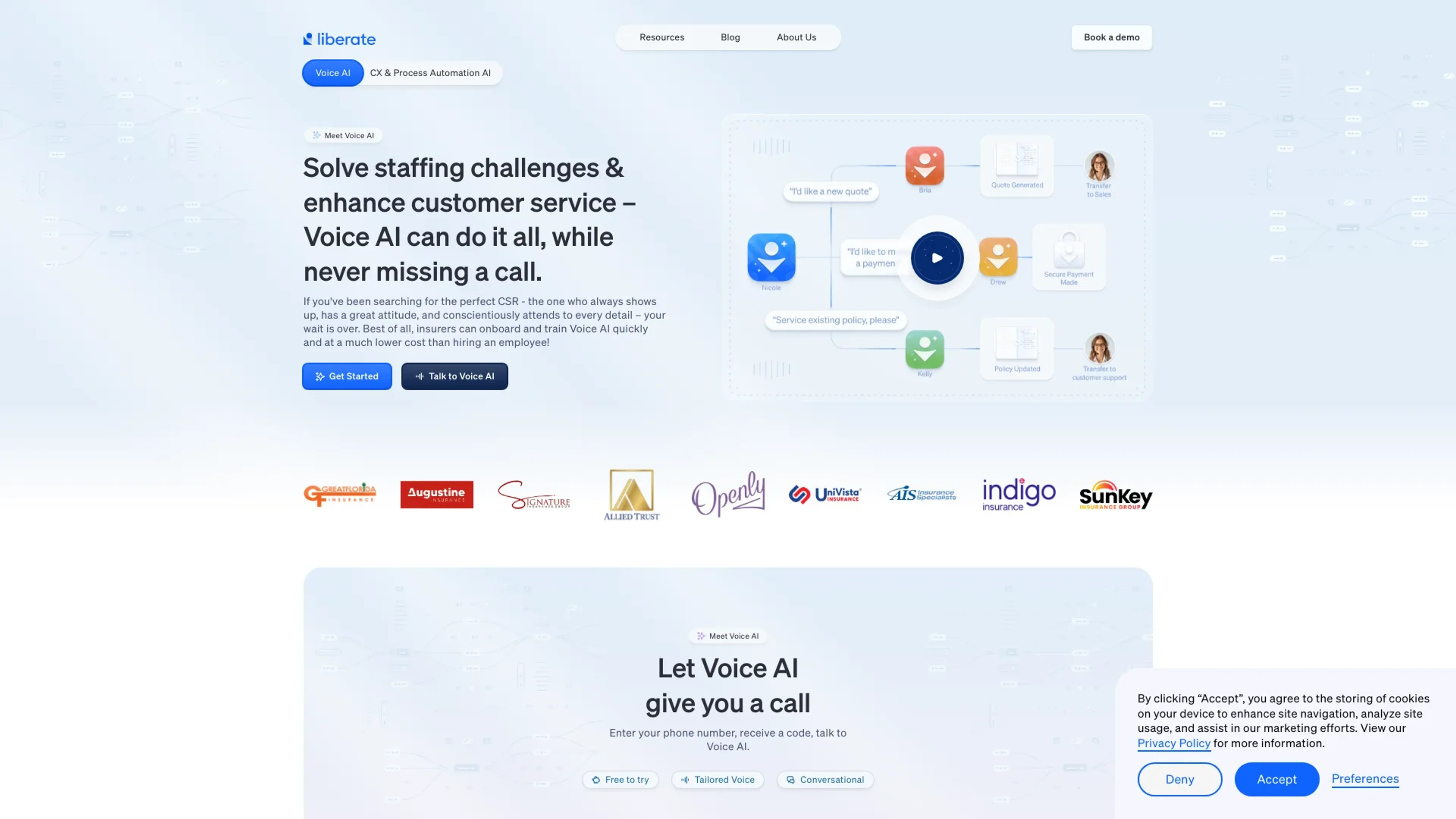
About Liberate
Liberate is a revolutionary AI tool that specializes in CX and Process Automation, particularly within the insurance sector. This platform is designed to streamline and automate key processes such as claims handling, underwriting, and customer interactions, ensuring efficiency and a significant reduction in operational costs. With its robust features, Liberate aims to transform how insurance companies operate by integrating advanced AI with existing systems to deliver seamless customer experiences.
Key Features
- Claims Automation: Streamlines the entire claims process from First Notice of Loss (FNOL) to settlement, reducing manual efforts and speeding up service delivery.
- Underwriting Workbench: Enhances underwriting efficiency with automated data extraction and decision-making support, leading to quicker risk assessment and policy issuance.
- Digital Quote & Bind: Automates the quoting and binding process, allowing for real-time policy management and issuance without human intervention.
- Document AI & Inference: Employs advanced AI to analyze and process documents, extracting relevant data automatically and reducing errors.
- Comprehensive Integration Capabilities: Seamlessly connects with major insurance platforms like Guidewire, Duck Creek, and others, enhancing existing IT ecosystems.
Pros
- Enhanced Customer Experience: Provides end-to-end digital solutions that enhance customer interactions and satisfaction.
- Operational Efficiency: Reduces manual processes significantly, leading to lower operational costs and faster turnaround times.
- Scalability: Adapts to various insurance product lines and company sizes, making it versatile for different business needs.
- Data-Driven Insights: Offers powerful analytics tools that help in making informed decisions based on accurate, real-time data.
Cons
- Initial Setup Complexity: The integration process can be complex, requiring substantial initial setup and customization.
- Training Requirement: New users require training to fully utilize all the features and capabilities of the platform.
- Dependency on Third-Party Platforms: While integration is a strength, it also creates dependency on other systems for full functionality.
Use Cases
- Insurance Companies: Utilizing the tool for automating claims processing and underwriting tasks.
- Brokers and Agencies: Employing the platform to improve customer service and operational efficiency.
- Commercial Auto Insurers: Leveraging the tool to handle large volumes of claims and underwriting data.
- Home and Property Insurers: Using the tool for rapid claims settlement and risk assessment.
- Uncommon Use Cases: Educational institutions adopt Liberate for research and training in insurance technology; tech startups integrate Liberate for backend insurance process automation.
Pricing
Custom Pricing Model: Liberate offers tailored pricing based on the specific needs and scale of the business. Subscription-Based Tiers: Pricing varies depending on the modules and features required by the organization. Disclaimer: For the most accurate and current pricing details, refer to the official Liberate website.
What Makes It Unique
Liberate stands out with its comprehensive automation capabilities that cover both front-end customer interactions and back-end process workflows. Its unique selling point is the ability to integrate deeply with existing insurance platforms, which allows for a smoother transition and enhanced functionality without the need to replace legacy systems.
Ratings
Accuracy and Reliability: 4.8/5 Ease of Use: 4.2/5 Functionality and Features: 4.7/5 Performance and Speed: 4.6/5 Customization and Flexibility: 4.5/5 Data Privacy and Security: 4.9/5 Support and Resources: 4.3/5 Cost-Efficiency: 4.4/5 Integration Capabilities: 4.8/5 Overall Score: 4.6/5
Key Features
Pros & Cons
- Enhanced Customer Experience: Provides end-to-end digital solutions that enhance customer interactions and satisfaction.
- Operational Efficiency: Reduces manual processes significantly, leading to lower operational costs and faster turnaround times.
- Scalability: Adapts to various insurance product lines and company sizes, making it versatile for different business needs.
- Data-Driven Insights: Offers powerful analytics tools that help in making informed decisions based on accurate, real-time data.
- Initial Setup Complexity: The integration process can be complex, requiring substantial initial setup and customization.
- Training Requirement: New users require training to fully utilize all the features and capabilities of the platform.
- Dependency on Third-Party Platforms: While integration is a strength, it also creates dependency on other systems for full functionality.
Best For
Alternatives to Liberate
Eddy AI
Automate Your Sales and Support with Eddy AI's 24/7 Chatbot.
Chatsimple
Revolutionize Your Customer Support with Chatsimple AI Chatbot
ChatShape
Enhance Your Website with Custom AI Chatbots
ParentMate
Personalized, evidence-based parenting guidance—built on child psychology and tailored to your family.
Ultimate
Streamline Your Customer Support with Ultimate
Wallu
Automate Discord support with Wallu—multilingual AI answers, image OCR, and ticket bot integration.