

OpenMeter
FreemiumMaximize billing accuracy with real-time data metering.
About OpenMeter
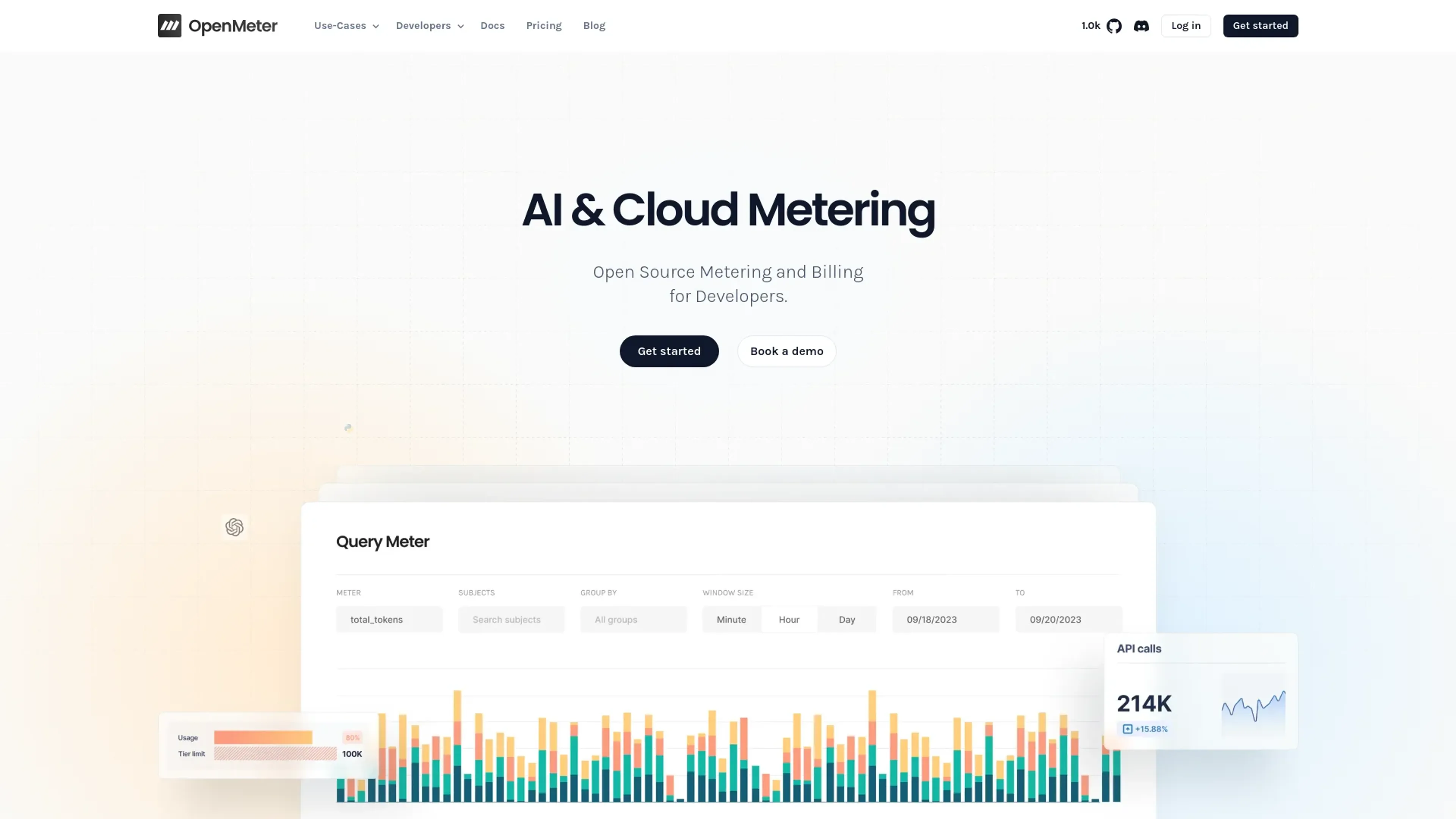
As a professional constantly seeking to optimize and streamline operations within various tech environments, I recently explored OpenMeter. This tool is a beacon for developers and product teams looking to implement sophisticated usage-based billing and metering solutions. OpenMeter excels in converting events, logs, and metrics into insightful, billable data, which can be seamlessly integrated with existing infrastructures. It's particularly designed for those who thrive in the AI, cloud, and software development spheres, aiming to enhance cost-efficiency and resource management through precise metering.
Key Features
- Real-Time Data Aggregation: OpenMeter swiftly collects and aggregates data, allowing for immediate billing and usage insights.
- Embeddable Customer Dashboards: Provides tools to create custom dashboards directly within your app, enhancing customer interaction and transparency.
- Flexible Credit and Quota Systems: Offers sophisticated mechanisms to track and manage customer credits and usage limits, ensuring you can tailor the system to your business model.
- Low Latency Limit Enforcement: Protects your margins by preventing costly overages through real-time usage limits.
- Scalable and Quick Integration: With SDKs available in popular programming languages, OpenMeter ensures you can start metering millions of events per second within minutes.
Pros
- Cost-Effective: Reduces the need for extensive in-house development, thereby lowering operational costs.
- High Scalability: Capable of handling vast amounts of data without compromising performance.
- User Empowerment: Enables end-users to monitor and control their usage and spending directly.
- Rapid Deployment: Quick setup times accelerate the path from integration to deployment.
Cons
- Complexity for Beginners: The initial setup and plethora of features might be overwhelming for new users.
- Integration Limitations: While extensive, integration capabilities might not cover all niche or legacy systems without custom work.
- Dependency on Modern Infrastructure: Best suited for modern, cloud-based environments, which might not be ideal for all businesses.
Use Cases
- Cloud Service Providers: Utilizing the tool to meter and bill for cloud resource usage.
- AI Companies: Employing OpenMeter to measure and charge for AI-driven computations and data processing.
- Software as a Service (SaaS) Businesses: Integrating the tool to adopt usage-based pricing models effectively.
- Large Enterprises: Using the platform to manage internal cost allocations and departmental billing.
- Uncommon Use Cases: Non-profits using the platform to maintain transparency in resource usage; educational tech companies integrating it for usage-based access to digital resources.
Pricing
Free Tier: Enjoy OpenMeter with a free forever plan, no credit card required. Subscription Options: Detailed subscription management through Stripe, offering scalable solutions as your needs grow. Disclaimer: For the most accurate and current pricing details, refer to the official OpenMeter website.
What Makes It Unique
OpenMeter stands out by offering real-time, scalable usage metering and billing solutions that are easy to integrate and manage. Its ability to provide detailed, customer-facing dashboards and enforce usage limits dynamically sets it apart in the market, making it an indispensable tool for modern tech companies.
Ratings
Accuracy and Reliability: 4.8/5 Ease of Use: 4.3/5 Functionality and Features: 4.7/5 Performance and Speed: 4.9/5 Customization and Flexibility: 4.5/5 Data Privacy and Security: 4.6/5 Support and Resources: 4.4/5 Cost-Efficiency: 4.8/5 Integration Capabilities: 4.2/5 Overall Score: 4.52/5
Key Features
Pros & Cons
- Cost-Effective: Reduces the need for extensive in-house development, thereby lowering operational costs.
- High Scalability: Capable of handling vast amounts of data without compromising performance.
- User Empowerment: Enables end-users to monitor and control their usage and spending directly.
- Rapid Deployment: Quick setup times accelerate the path from integration to deployment.
- Complexity for Beginners: The initial setup and plethora of features might be overwhelming for new users.
- Integration Limitations: While extensive, integration capabilities might not cover all niche or legacy systems without custom work.
- Dependency on Modern Infrastructure: Best suited for modern, cloud-based environments, which might not be ideal for all businesses.
Best For
Alternatives to OpenMeter
Eddy AI
Automate Your Sales and Support with Eddy AI's 24/7 Chatbot.
Chatsimple
Revolutionize Your Customer Support with Chatsimple AI Chatbot
ChatShape
Enhance Your Website with Custom AI Chatbots
ParentMate
Personalized, evidence-based parenting guidance—built on child psychology and tailored to your family.
Ultimate
Streamline Your Customer Support with Ultimate
Wallu
Automate Discord support with Wallu—multilingual AI answers, image OCR, and ticket bot integration.