

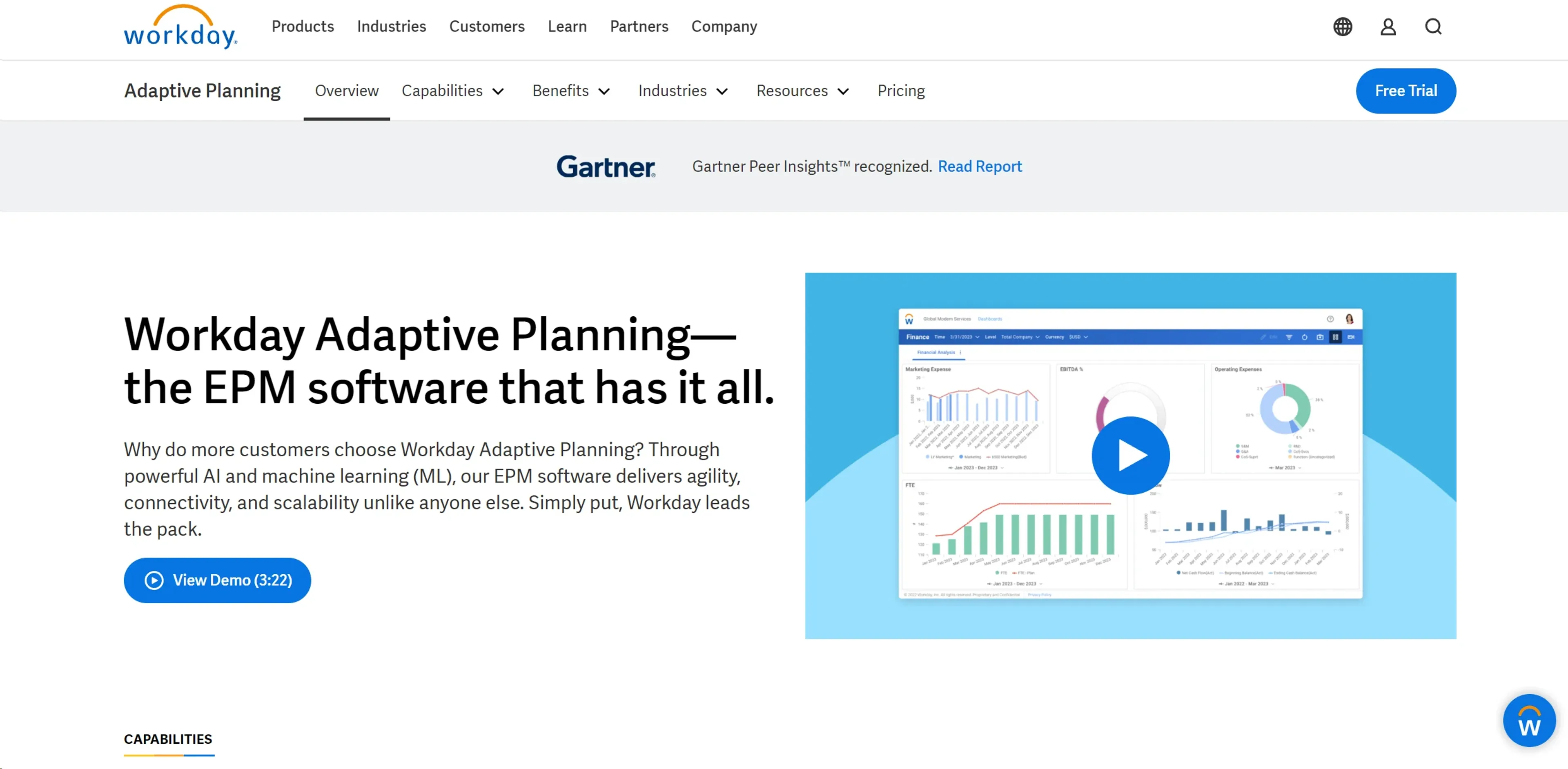
About Adaptive Insights
Adaptive Insights, a part of Workday, offers a comprehensive suite of enterprise performance management (EPM) software designed to help businesses streamline their financial, workforce, and operational planning processes. With a strong emphasis on harnessing the power of AI and machine learning, Adaptive Insights provides tools for budgeting, forecasting, scenario planning, and reporting, enabling organizations to make smarter, faster financial and business decisions.
Key Features
- AI & Machine Learning Integration: Leverages advanced algorithms to enhance data analysis and financial forecasting.
- Comprehensive Planning Capabilities: Supports financial, workforce, and operational planning all within a unified platform.
- Dynamic Scenario Planning: Allows users to create and compare multiple financial scenarios to assess potential impacts and outcomes.
- Robust Analytics & Reporting: Delivers powerful data visualization and reporting tools that facilitate deep insights into business performance.
Pros
- Enhanced Decision Making: AI-driven insights help in making informed strategic decisions quickly.
- Flexibility and Scalability: Adapts to the needs of both small businesses and large enterprises, ensuring scalability.
- User-Friendly Interface: Designed to be intuitive, making it easier for new users to navigate and master.
- Integration Capabilities: Seamlessly integrates with numerous ERP and third-party systems, enhancing data consistency and availability.
Cons
- Complexity in Initial Setup: May require a significant setup time to fully integrate with existing systems and customize according to specific business needs.
- Training Required: Due to its rich features and capabilities, new users often require formal training.
- Cost Factor: Might be considered expensive for small businesses or startups.
Use Cases
- Large Enterprises: Utilizing the tool for complex financial consolidation and management.
- HR Departments: Employing workforce planning features to align staffing with business objectives.
- Healthcare Organizations: Leveraging the tool for operational planning and cost management.
- Educational Institutions: Using it for budget management and financial forecasting.
- Uncommon Use Cases: Non-profits using it to plan and track funding, grants, and expenditures; Startups using it for dynamic scenario planning to navigate growth phases.
Pricing
Free Trial: Experience Adaptive Insights with a 30-day free trial. Custom Pricing: Adaptive Insights offers tailored pricing based on the specific needs and scale of the organization. Disclaimer: Please note that pricing information may change. For the most accurate and current pricing details, refer to the official Adaptive Insights website.
What Makes It Unique
Adaptive Insights stands out due to its comprehensive integration of AI and machine learning within the planning and forecasting processes. This integration not only speeds up data processing but also enhances the accuracy of insights, which is crucial for strategic planning and decision-making. Its ability to seamlessly integrate with a wide range of ERP systems and data sources further sets it apart, making it a versatile choice for diverse business environments.
Ratings
Accuracy and Reliability: 4.7/5 Ease of Use: 4.5/5 Functionality and Features: 4.8/5 Performance and Speed: 4.6/5 Customization and Flexibility: 4.5/5 Data Privacy and Security: 4.7/5 Support and Resources: 4.5/5 Cost-Efficiency: 4.2/5 Integration Capabilities: 4.8/5 Overall Score: 4.6/5
Key Features
Pros & Cons
- Enhanced Decision Making: AI-driven insights help in making informed strategic decisions quickly.
- Flexibility and Scalability: Adapts to the needs of both small businesses and large enterprises, ensuring scalability.
- User-Friendly Interface: Designed to be intuitive, making it easier for new users to navigate and master.
- Integration Capabilities: Seamlessly integrates with numerous ERP and third-party systems, enhancing data consistency and availability.
- Complexity in Initial Setup: May require a significant setup time to fully integrate with existing systems and customize according to specific business needs.
- Training Required: Due to its rich features and capabilities, new users often require formal training.
- Cost Factor: Might be considered expensive for small businesses or startups.
Best For
Alternatives to Adaptive Insights
Glean.ai
Streamline data extraction and analysis, automate coding, and optimize spending decisions for higher ROI.
Stocked AI
Empower Your Investments with AI-Driven Predictions from Stocked AI.
QuickBooks
Generate tax reports, automate invoicing, monitor financial performance with a powerful mobile app.
HypeIndex
Monitor Stock Market Buzz Using HypeIndex
Tonkean InvoicesGPT
Extract fields from PDF/invoice files, ensure compliance, and provide spend visibility across vendors and departments.
Pluto
Personal Investment AI and Real-Time Data Analysis with Pluto