

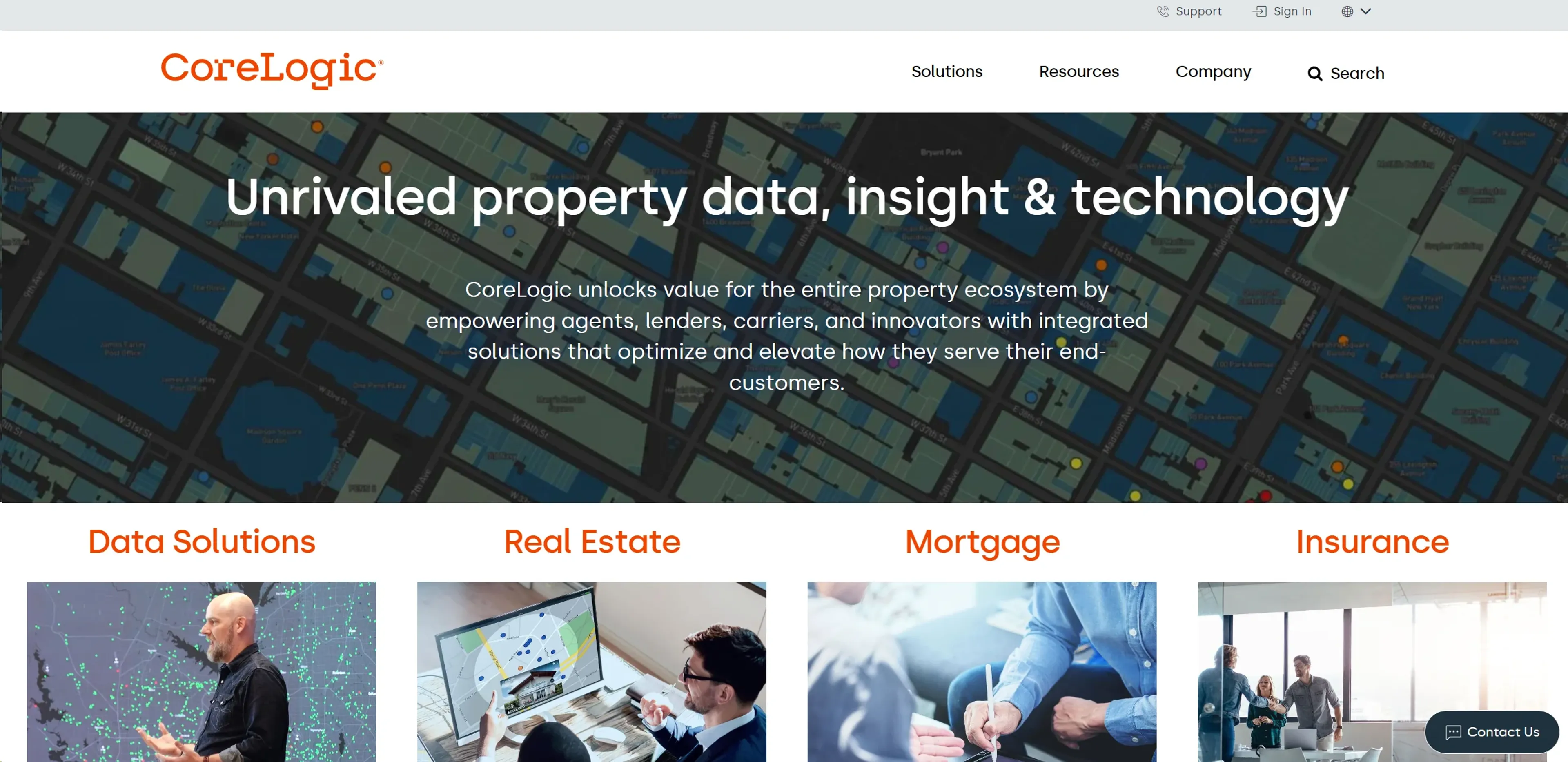
About CoreLogic
As a seasoned reviewer, I've had the opportunity to explore numerous AI tools designed to streamline operations and enhance decision-making processes. Today, I'm diving into CoreLogic, a powerhouse in providing property information, analytics, and data-enabled solutions. This tool primarily serves professionals in the real estate and mortgage industries, offering them critical data to make informed decisions quickly and accurately.
Key Features
- Comprehensive Property Data: CoreLogic boasts an expansive database that includes property details, ownership information, and historical data, making it invaluable for real estate analysis.
- Advanced Analytics: Harnessing the power of machine learning, CoreLogic provides predictive analytics that can forecast real estate market trends.
- Risk Management Tools: Essential for insurance and real estate sectors, these tools help assess and mitigate risks associated with property investments.
- Geospatial Solutions: CoreLogic integrates geospatial data seamlessly, offering detailed mapping and visualization capabilities that enhance property analysis.
Pros
- Data Accuracy: Ensures high reliability in property data, which is crucial for making investment decisions.
- Time-Saving: The comprehensive data available through CoreLogic minimizes the need for external research, significantly speeding up the workflow.
- Customizable Reports: Users can generate tailored reports that focus on specific data points, enhancing the relevance of information.
- Strong Industry Reputation: Recognized as a leader in real estate analytics, adding trustworthiness to its data.
Cons
- Cost Barrier: The extensive features and data quality come at a premium price, potentially putting it out of reach for smaller businesses.
- Complexity: New users may find the depth of data and tools overwhelming without proper training.
- Limited to Certain Geographies: While expansive, its data is more comprehensive in some regions than others, which might limit its utility depending on the location.
Use Cases
- Real Estate Professionals: Utilize CoreLogic for detailed property appraisals and market trend analysis.
- Mortgage Lenders: Employ this tool to assess loan risks and property valuations.
- Insurance Companies: Leverage it to evaluate property risks and claims management.
- Government Agencies: Use CoreLogic for urban planning and regulation compliance.
- Uncommon Use Cases: Non-profit organizations utilize it to study housing market trends; academic researchers use it for real estate market analysis.
Pricing
Subscription-Based Model: CoreLogic offers tailored pricing based on the specific services and data access required by the user. Disclaimer: Please note that pricing information may not be up to date. For the most accurate and current pricing details, refer to the official CoreLogic website.
What Makes It Unique
CoreLogic stands out with its unmatched data comprehensiveness and accuracy in the real estate domain. Its ability to integrate advanced analytics and geospatial data sets it apart, providing users with a robust tool for detailed property analysis and market trend forecasting.
Ratings
Accuracy and Reliability: 4.8/5 Ease of Use: 4.0/5 Functionality and Features: 4.5/5 Performance and Speed: 4.3/5 Customization and Flexibility: 4.2/5 Data Privacy and Security: 4.7/5 Support and Resources: 4.0/5 Cost-Efficiency: 3.8/5 Integration Capabilities: 4.5/5 Overall Score: 4.28/5
Key Features
Pros & Cons
- Data Accuracy: Ensures high reliability in property data, which is crucial for making investment decisions.
- Time-Saving: The comprehensive data available through CoreLogic minimizes the need for external research, significantly speeding up the workflow.
- Customizable Reports: Users can generate tailored reports that focus on specific data points, enhancing the relevance of information.
- Strong Industry Reputation: Recognized as a leader in real estate analytics, adding trustworthiness to its data.
- Cost Barrier: The extensive features and data quality come at a premium price, potentially putting it out of reach for smaller businesses.
- Complexity: New users may find the depth of data and tools overwhelming without proper training.
- Limited to Certain Geographies: While expansive, its data is more comprehensive in some regions than others, which might limit its utility depending on the location.
Best For
Alternatives to CoreLogic
Glean.ai
Streamline data extraction and analysis, automate coding, and optimize spending decisions for higher ROI.
Stocked AI
Empower Your Investments with AI-Driven Predictions from Stocked AI.
QuickBooks
Generate tax reports, automate invoicing, monitor financial performance with a powerful mobile app.
HypeIndex
Monitor Stock Market Buzz Using HypeIndex
Tonkean InvoicesGPT
Extract fields from PDF/invoice files, ensure compliance, and provide spend visibility across vendors and departments.
Pluto
Personal Investment AI and Real-Time Data Analysis with Pluto