

TextQL
FreeSimplifies complex data operations with natural language querying.
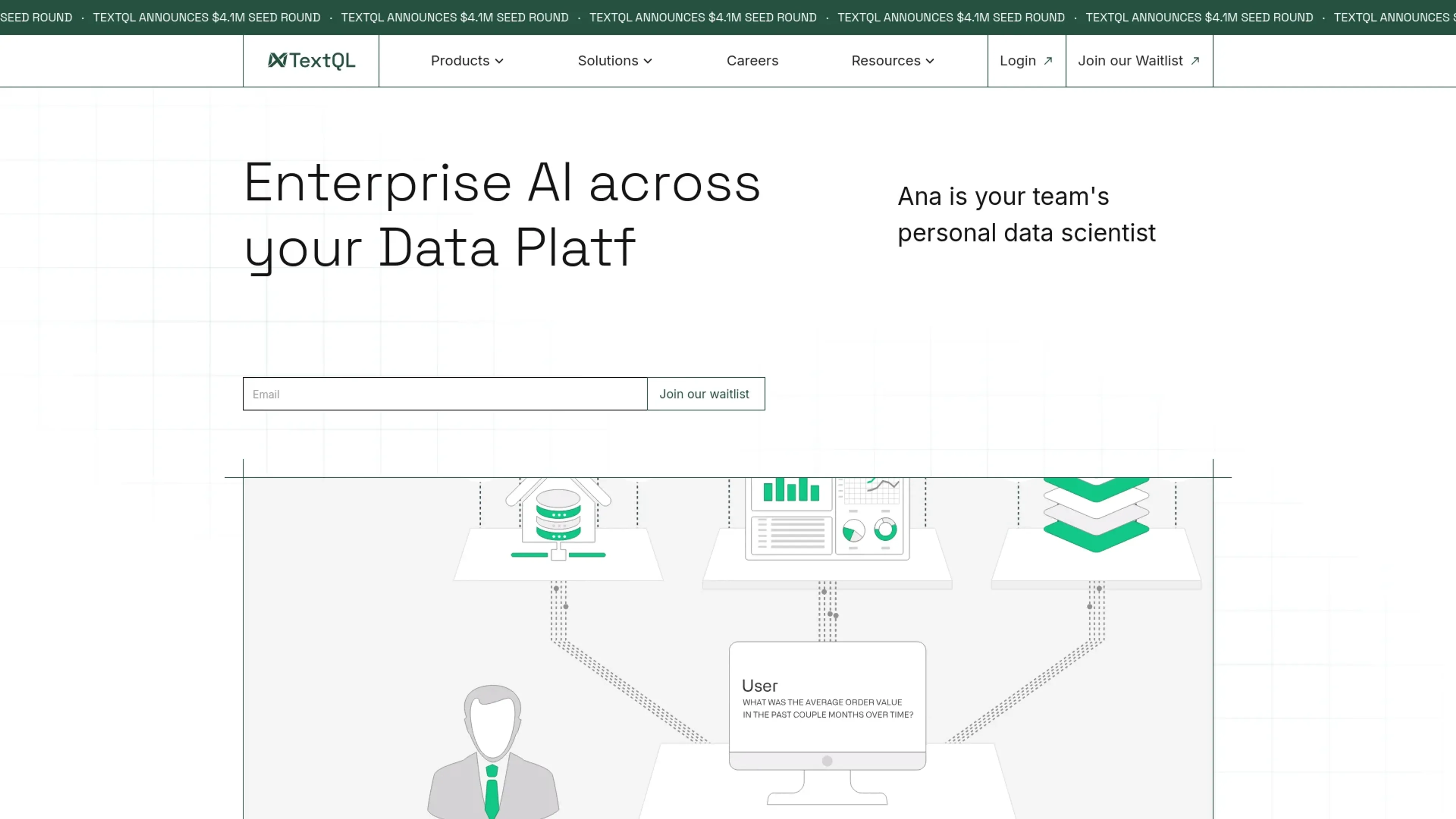
About TextQL
In the rapidly evolving world of data analytics, TextQL stands as a revolutionary tool designed to transform how enterprises interact with their data. At its core, TextQL serves as a virtual data analyst, integrating advanced AI capabilities to simplify complex data operations. This tool is particularly engineered for businesses and professionals who need to harness the power of data without the traditional complexities of data science.
Key Features
- Natural Language Processing: TextQL allows users to query data using natural language, making data analysis accessible to non-technical users.
- Integrated Business Intelligence: Seamlessly connects with existing BI systems, reducing dashboard sprawl and enhancing data discoverability.
- Advanced Metadata Management: Efficiently indexes and surfaces data definitions across various platforms within an organization.
- Compliance and Security: Offers customized configurations to meet different compliance standards, ensuring data is handled securely.
Pros
- Enhanced Data Accessibility: Makes data analytics accessible to a broader range of professionals through natural language processing.
- Time Efficiency: Reduces the time spent on searching and analyzing data across multiple platforms.
- Cost-Effective: Minimizes the need for multiple analytics tools by integrating various functionalities into one platform.
- Customizable AI Models: Tailors AI models to meet specific team needs, improving data analysis relevance and accuracy.
Cons
- Complex Initial Setup: May require a detailed initial setup to integrate fully with existing systems.
- Dependency on Data Quality: The effectiveness of analytics is heavily dependent on the quality of the underlying data.
- Limited Language Support: Currently, the natural language processing capabilities might be limited to specific languages, potentially excluding non-English speakers.
Use Cases
- Data Teams: Utilizing TextQL for streamlined data querying and management.
- Marketing Teams: Leveraging AI to gain insights into market trends and consumer behavior.
- Finance Teams: Employing advanced analytics for financial forecasting and risk management.
- Healthcare Providers: Using TextQL to manage large volumes of medical data efficiently.
- Uncommon Use Cases: Non-profits utilizing TextQL to measure impact and optimize outreach strategies; educational institutions using it for research data analysis.
Pricing
Enterprise Custom Pricing: TextQL offers customized pricing based on the specific needs and scale of the enterprise. Disclaimer: For the most accurate and current pricing details, refer to the official TextQL website.
What Makes It Unique
TextQL stands out for its ability to democratize data analytics through its natural language processing interface. This unique feature allows individuals without technical expertise to perform complex data analyses, making it a game-changer for data-driven decision-making across various sectors.
Ratings
Accuracy and Reliability: 4.5/5 Ease of Use: 4.0/5 Functionality and Features: 4.5/5 Performance and Speed: 4.3/5 Customization and Flexibility: 4.2/5 Data Privacy and Security: 4.8/5 Support and Resources: 4.0/5 Cost-Efficiency: 4.1/5 Integration Capabilities: 4.5/5 Overall Score: 4.3/5
Key Features
Pros & Cons
- Enhanced Data Accessibility: Makes data analytics accessible to a broader range of professionals through natural language processing.
- Time Efficiency: Reduces the time spent on searching and analyzing data across multiple platforms.
- Cost-Effective: Minimizes the need for multiple analytics tools by integrating various functionalities into one platform.
- Customizable AI Models: Tailors AI models to meet specific team needs, improving data analysis relevance and accuracy.
- Complex Initial Setup: May require a detailed initial setup to integrate fully with existing systems.
- Dependency on Data Quality: The effectiveness of analytics is heavily dependent on the quality of the underlying data.
- Limited Language Support: Currently, the natural language processing capabilities might be limited to specific languages, potentially excluding non-English speakers.
Best For
Alternatives to TextQL
Prompt Attack
Track and analyze customer engagement, leverage predictive analytics, and optimize marketing campaigns with powerful segmentation.
Brandmate
Elevate Your Brand's Image with Brandmate AI!
Contlo.AI
AI-Powered Digital Marketing Solutions for Small Businesses
Fliz AI
Discover Fliz AI, an innovative platform that enhances marketing efforts through AI-powered automation. Boost conversions, personalize campaigns, and optimize your strategy with ease.
Hot Reach AI
Personalized AI-Generated First Lines for Cold Emails
InfoMail
Enhanced Email Marketing with Infomail AI