

Typeface
FreeTypeface - Enterprise AI for Marketing with Agentic Workflows
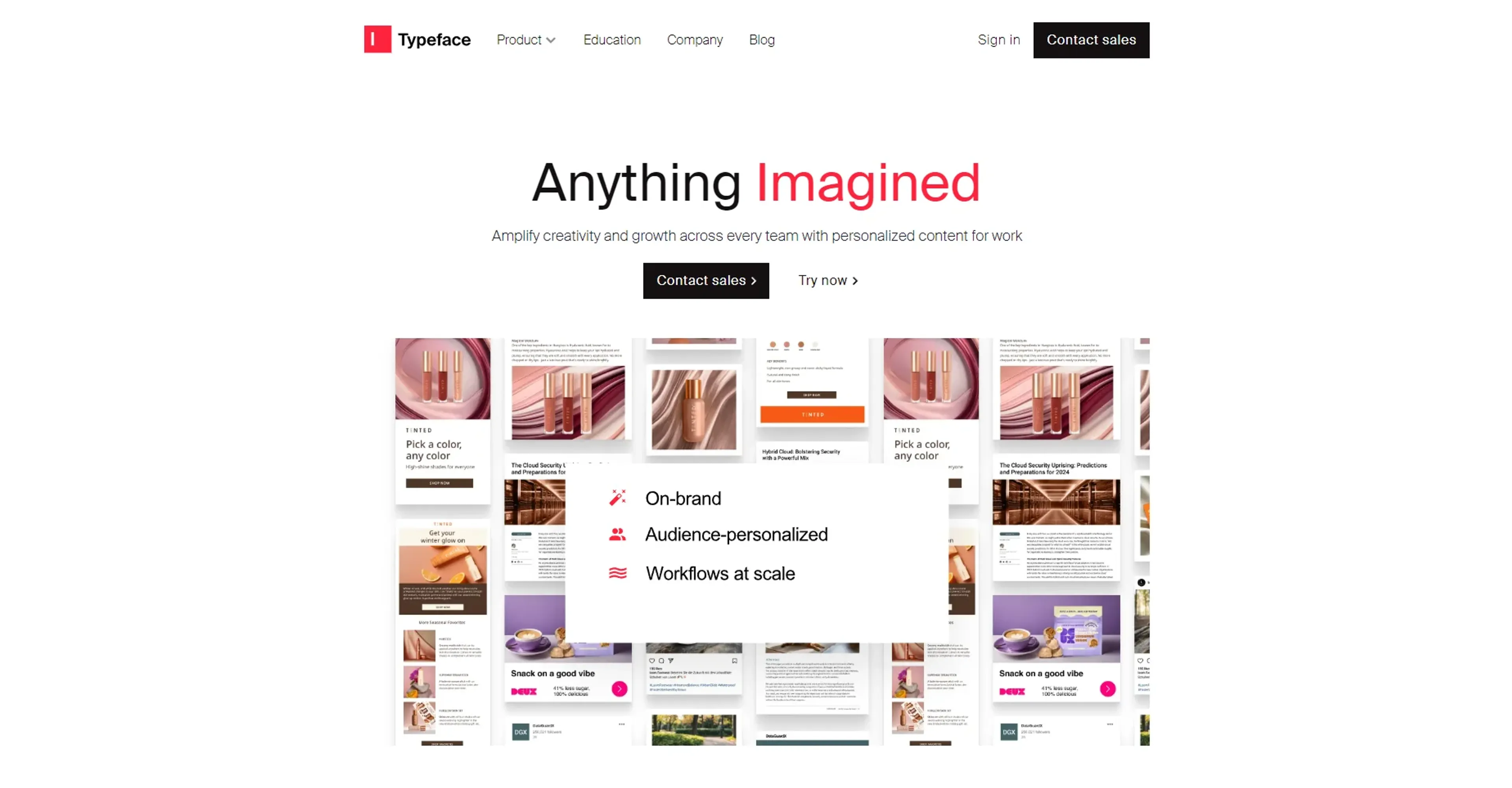
About Typeface
Typeface is a generative AI application tailored for enterprise content creation. It stands out as a powerful tool designed to amplify creativity and growth across various teams by providing personalized content for work. This AI platform is particularly beneficial for businesses looking to enhance their content output with brand-specific personalization, ensuring that all generated content aligns seamlessly with their brand identity and marketing strategies.
Key Features
- Multimodal and Multi-Model: Access the latest generative AI models for diverse content types.
- Deep Brand Personalization: AI training on specific brand data, ensuring unique and brand-aligned content.
- Integrated Workflows: Seamless integration with existing tools and data for efficient workflow.
- Secure Content Ownership: Private AI models with content checks for brand control and security.
- Powerful Templates: Customizable templates that fit into various team workflows.
Pros
- Enhanced Creativity: Facilitates the generation of creative and personalized content at scale.
- Brand Consistency: Ensures all content is aligned with the brand’s tone, style, and values.
- Efficiency in Content Creation: Speeds up the content creation, saving time and resources.
- High Standards of Safety and Governance: Upholds safety, governance, and trust in AI content generation.
Cons
- Learning Curve: This might require time to fully understand and utilize all features effectively.
- Dependence on Data Quality: The quality of output heavily relies on the quality of brand data and inputs provided.
Use Cases
- Marketing Teams: For creating on-brand marketing content across various channels.
- Sales Professionals: To generate personalized sales pitches and presentations.
- Content Creators: For crafting engaging and brand-aligned articles, blogs, and social media posts.
- Design Teams: In designing visual content that resonates with brand identity.
What Makes It Unique
Typeface distinguishes itself by offering deep brand personalization, where the AI learns and adapts to a specific brand's tone, style, and values. This feature ensures that every piece of content generated is high-quality and resonates perfectly with the brand's identity, making it a valuable asset for businesses focused on maintaining a consistent brand image across all their content.
Ratings
Accuracy and Reliability: 4.5/5 Ease of Use: 4.0/5 Functionality and Features: 4.5/5 Performance and Speed: 4.3/5 Customization and Flexibility: 4.2/5 Data Privacy and Security: 4.5/5 Support and Resources: 4.0/5 Cost-Efficiency: 4.1/5 Integration Capabilities: 4.3/5 Overall Score: 4.3/5
Summary
An AI-driven content creation tool that specializes in personalized, brand-aligned outputs for businesses. AI Categories: social media, copywriting, design generators
Key Features
Pros & Cons
- Enhanced Creativity: Facilitates the generation of creative and personalized content at scale.
- Brand Consistency: Ensures all content is aligned with the brand’s tone, style, and values.
- Efficiency in Content Creation: Speeds up the content creation, saving time and resources.
- High Standards of Safety and Governance: Upholds safety, governance, and trust in AI content generation.
- Learning Curve: This might require time to fully understand and utilize all features effectively.
- Dependence on Data Quality: The quality of output heavily relies on the quality of brand data and inputs provided.
Best For
Alternatives to Typeface
Prompt Attack
Track and analyze customer engagement, leverage predictive analytics, and optimize marketing campaigns with powerful segmentation.
Brandmate
Elevate Your Brand's Image with Brandmate AI!
Contlo.AI
AI-Powered Digital Marketing Solutions for Small Businesses
Fliz AI
Discover Fliz AI, an innovative platform that enhances marketing efforts through AI-powered automation. Boost conversions, personalize campaigns, and optimize your strategy with ease.
Hot Reach AI
Personalized AI-Generated First Lines for Cold Emails
InfoMail
Enhanced Email Marketing with Infomail AI