

Lily AI
FreemiumTransform e-commerce with AI-driven emotional customer insights.
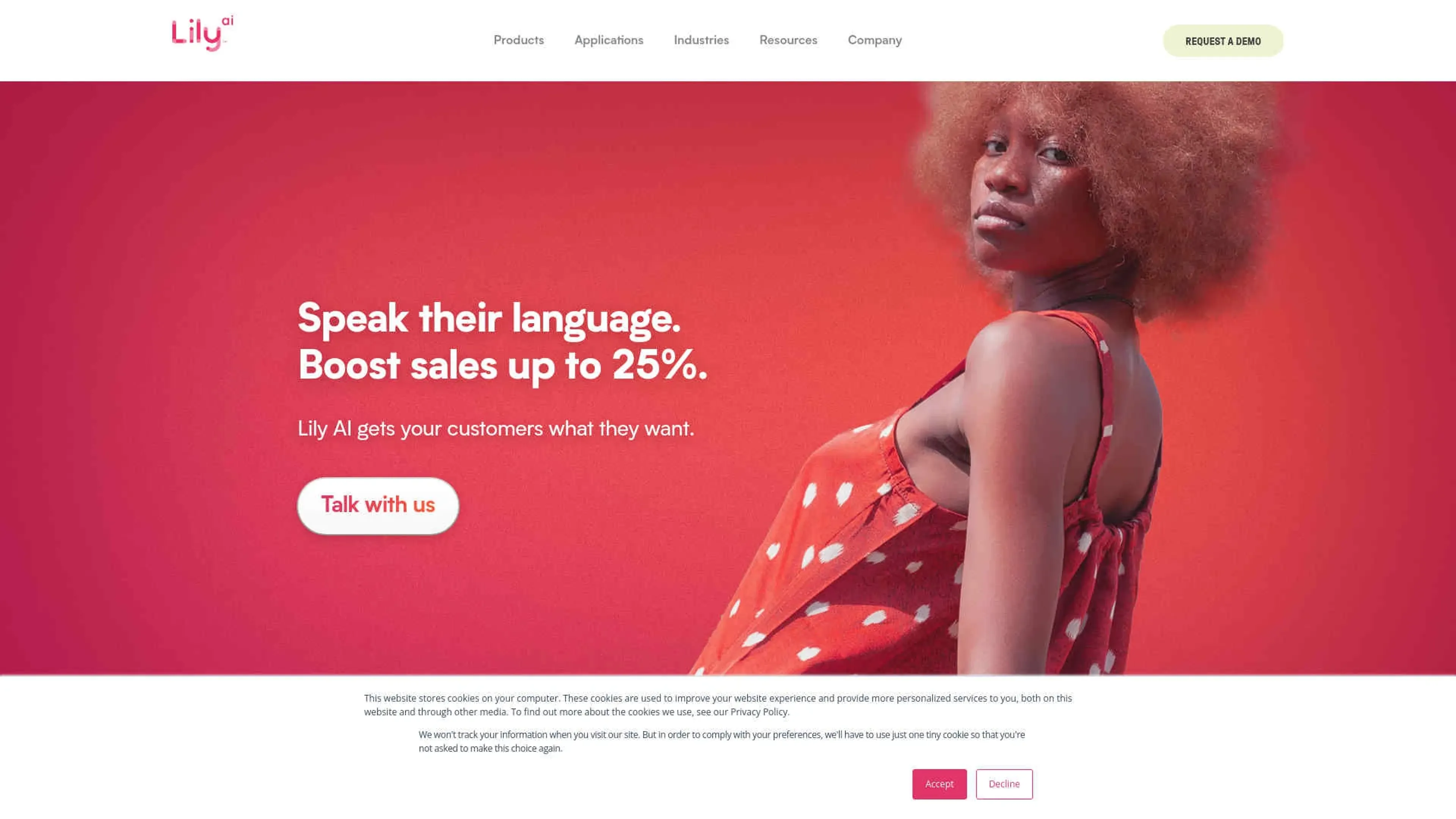
About Lily AI
Lily AI is an innovative platform designed to enhance the e-commerce experience by leveraging advanced artificial intelligence to analyze customer emotions and preferences. This tool aims to transform product discovery and increase conversion rates by delivering highly personalized recommendations. Targeted at retailers and brands, Lily AI enhances the shopping experience for consumers by providing insights that drive better product suggestions and marketing strategies.
Key Features
- Emotion Intelligence Technology: Utilizes AI to analyze and understand customer emotions and preferences, tailoring product recommendations accordingly.
- Customer Insight Dashboard: Provides a comprehensive view of customer behavior patterns and trends, offering valuable insights for strategic decisions.
- Real-Time Analytics: Delivers dynamic updates on customer interactions, enabling responsive and agile marketing strategies.
- Personalization Engine: Integrates with existing e-commerce platforms to offer a personalized shopping experience that aligns with individual customer needs.
Pros
- Enhanced Customer Engagement: Boosts user interaction by offering tailored shopping experiences based on emotional and preference data.
- Improved Conversion Rates: Increases sales through more relevant product recommendations, tailored to individual customer insights.
- Scalable Solutions: Accommodates various sizes of retail operations, from small businesses to large enterprises.
- Data-Driven Decisions: Provides actionable insights through real-time analytics, helping brands make informed decisions.
Cons
- Complex Integration: Integration with existing systems may require technical support or assistance.
- Higher Costs for Premium Features: Advanced features may come at a higher cost, which could be a barrier for smaller retailers.
- Dependence on Data Quality: The effectiveness of the recommendations depends on the quality and accuracy of the customer data provided.
Use Cases
- E-commerce Retailers: Enhancing online shopping experiences with personalized product recommendations.
- Fashion Brands: Gaining deeper insights into customer sentiment and trends for better product alignment.
- Online Marketers: Creating targeted marketing campaigns based on detailed emotional and preference data.
- Customer Experience Managers: Analyzing and improving customer service interactions using emotion-based insights.
- Uncommon Use Cases: Applied by online educational platforms to recommend tailored learning materials; utilized by healthcare retailers for personalized product suggestions based on patient feedback.
Pricing
Free Trial: Available with a 30-day free trial for new users to explore Lily AI's capabilities. Standard Tier: Starts at $200 per month. Enterprise Solutions: Offers custom pricing based on specific client needs. Disclaimer: Pricing information may change. For the most accurate and current details, consult the official Lily AI website.
What Makes It Unique
Lily AI stands out with its Emotion Intelligence technology, which provides a unique advantage by using emotional data to drive sales and enhance the e-commerce experience. This technology differentiates it from traditional analytics tools by focusing on emotional and behavioral insights to deliver more effective product recommendations.
Ratings
Accuracy and Reliability: 4.5/5 Ease of Use: 4.2/5 Functionality and Features: 4.8/5 Performance and Speed: 4.6/5 Customization and Flexibility: 4.3/5 Data Privacy and Security: 4.7/5 Support and Resources: 4.0/5 Cost-Efficiency: 3.8/5 Integration Capabilities: 4.5/5 Overall Score: 4.4/5
Key Features
Pros & Cons
- Enhanced Customer Engagement: Boosts user interaction by offering tailored shopping experiences based on emotional and preference data.
- Improved Conversion Rates: Increases sales through more relevant product recommendations, tailored to individual customer insights.
- Scalable Solutions: Accommodates various sizes of retail operations, from small businesses to large enterprises.
- Data-Driven Decisions: Provides actionable insights through real-time analytics, helping brands make informed decisions.
- Complex Integration: Integration with existing systems may require technical support or assistance.
- Higher Costs for Premium Features: Advanced features may come at a higher cost, which could be a barrier for smaller retailers.
- Dependence on Data Quality: The effectiveness of the recommendations depends on the quality and accuracy of the customer data provided.
Best For
Alternatives to Lily AI
PlugSugar
Automate conversations, answer questions with Web Search plugin, and customize ChatGPT experience using powerful AI plugins.
Vate.ai
Automate customer service, respond to inquiries, and personalize experiences by collecting customer insights.
100DaysOfAI Challenge
Respage
Automate lead acquisition, interact with potential leads, and capture lead information and preferences.
Travel Plan AI
Your personal AI guide for unforgettable journeys.
AnimateDiff