

Composabl
FreemiumRevolutionize industrial automation with intelligent, no-code AI agents.
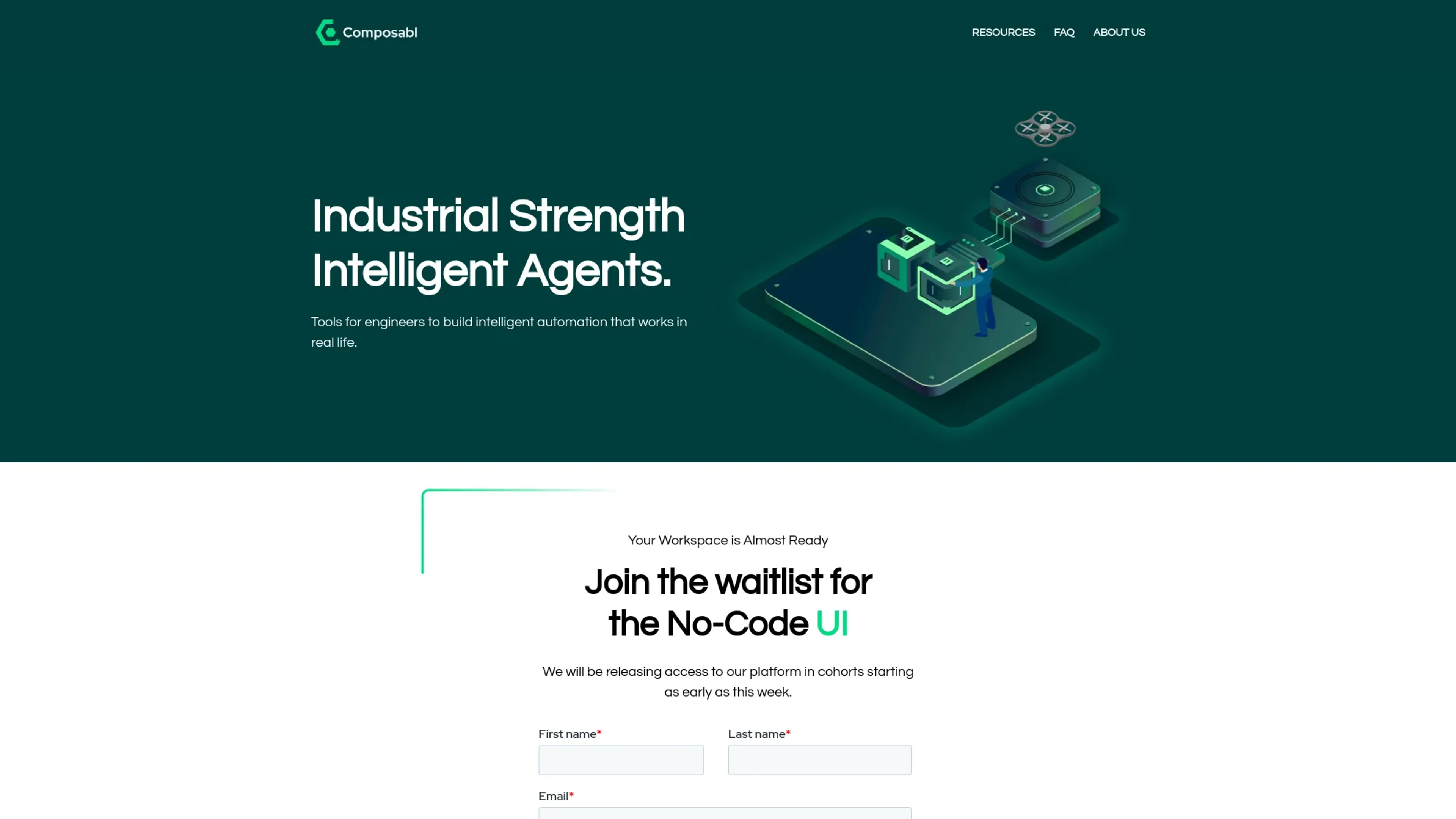
About Composabl
Exploring the world of industrial automation, I recently delved into Composabl, a cutting-edge AI tool designed to revolutionize how engineers create and implement intelligent automation systems. Composabl addresses a critical gap in the market: the overwhelming presence of unorganized algorithms and the lack of a structured platform to harness their potential efficiently. This tool offers a no-code interface that simplifies the process of building Intelligent Autonomous Agents capable of solving complex, real-world problems beyond the capabilities of traditional manufacturing floor automation.
Key Features
- Intelligent Autonomous Agents: Allows engineers to build systems that learn and adapt to complex industrial tasks without the need for extensive coding.
- No-Code UI: A user-friendly interface that democratizes the creation of AI agents, making it accessible to engineers without specialized software development skills.
- Agent Builder Studio: A drag-and-drop environment where users can orchestrate skills and train agents either locally or on the cloud.
- Composite AI: Integrates various AI techniques to create more robust and intelligent systems.
- Real-World Application: Tailored specifically for industrial settings, focusing on manufacturing, supply chain, and logistics.
Pros
- Enhanced Efficiency: Significantly reduces the time and effort required to deploy automation solutions.
- Cost-Effective: Minimizes the need for hiring specialized AI developers, reducing operational costs.
- User Empowerment: Empowers engineers with a practical tool to implement AI without prior deep tech expertise.
- Scalability: Offers scalable solutions that grow with industrial needs and complexities.
Cons
- Limited Scope: Primarily focused on industrial applications, which may not be suitable for non-industrial users.
- Complexity in Advanced Features: Some users may require additional training to fully leverage advanced functionalities.
- Dependency on Platform Updates: As a relatively new and evolving platform, continuous updates are necessary, which might affect long-term project stability.
Use Cases
- Manufacturing Companies: Automating complex manufacturing processes to increase efficiency and reduce errors.
- Supply Chain Operators: Enhancing logistics operations through smarter automation and predictive analytics.
- Industrial Engineers: Utilizing the tool to innovate and improve existing systems.
- Tech Innovators: Experimenting with advanced AI capabilities to solve novel industrial challenges.
- Uncommon Use Cases: Academic institutions using it for research in industrial automation; startups integrating it into bespoke industrial solutions.
Pricing
Free Trial: Start with a set number of free training cycle credits to explore the platform's capabilities. Subscription Plans: Detailed pricing plans are available upon request, tailored to the scale and needs of different businesses. Disclaimer: For the most accurate and current pricing details, refer to the official Composabl website.
What Makes It Unique
Composabl uniquely combines the power of AI, a no-code interface, and deep industry knowledge to provide a solution that is both powerful and accessible. Its focus on enabling engineers to directly build and implement AI without needing extensive programming skills sets it apart in the market.
Ratings
Accuracy and Reliability: 4.5/5 Ease of Use: 4.2/5 Functionality and Features: 4.7/5 Performance and Speed: 4.3/5 Customization and Flexibility: 4.0/5 Data Privacy and Security: 4.5/5 Support and Resources: 4.0/5 Cost-Efficiency: 4.2/5 Integration Capabilities: 4.1/5 Overall Score: 4.3/5
Key Features
Pros & Cons
- Enhanced Efficiency: Significantly reduces the time and effort required to deploy automation solutions.
- Cost-Effective: Minimizes the need for hiring specialized AI developers, reducing operational costs.
- User Empowerment: Empowers engineers with a practical tool to implement AI without prior deep tech expertise.
- Scalability: Offers scalable solutions that grow with industrial needs and complexities.
- Limited Scope: Primarily focused on industrial applications, which may not be suitable for non-industrial users.
- Complexity in Advanced Features: Some users may require additional training to fully leverage advanced functionalities.
- Dependency on Platform Updates: As a relatively new and evolving platform, continuous updates are necessary, which might affect long-term project stability.
Best For
Alternatives to Composabl
Forms.app
Transform Your Form Creation Process with forms.app
Aigur Client
The Ultimate Platform for Building and Managing AI Flows.
Magick
Unlock the Future of AI Development with Magick
Floneum
Securely Build AI Workflows and Extend Capabilities with Floneum
Draftbit
Easily create and customize mobile apps, including push notifications and analytics, without coding.
Aspen
Effortlessly create AI-powered web apps using Aspen's no-code platform.