

SnapLogic
FreemiumAI-driven platform seamlessly integrates applications, data, and devices.
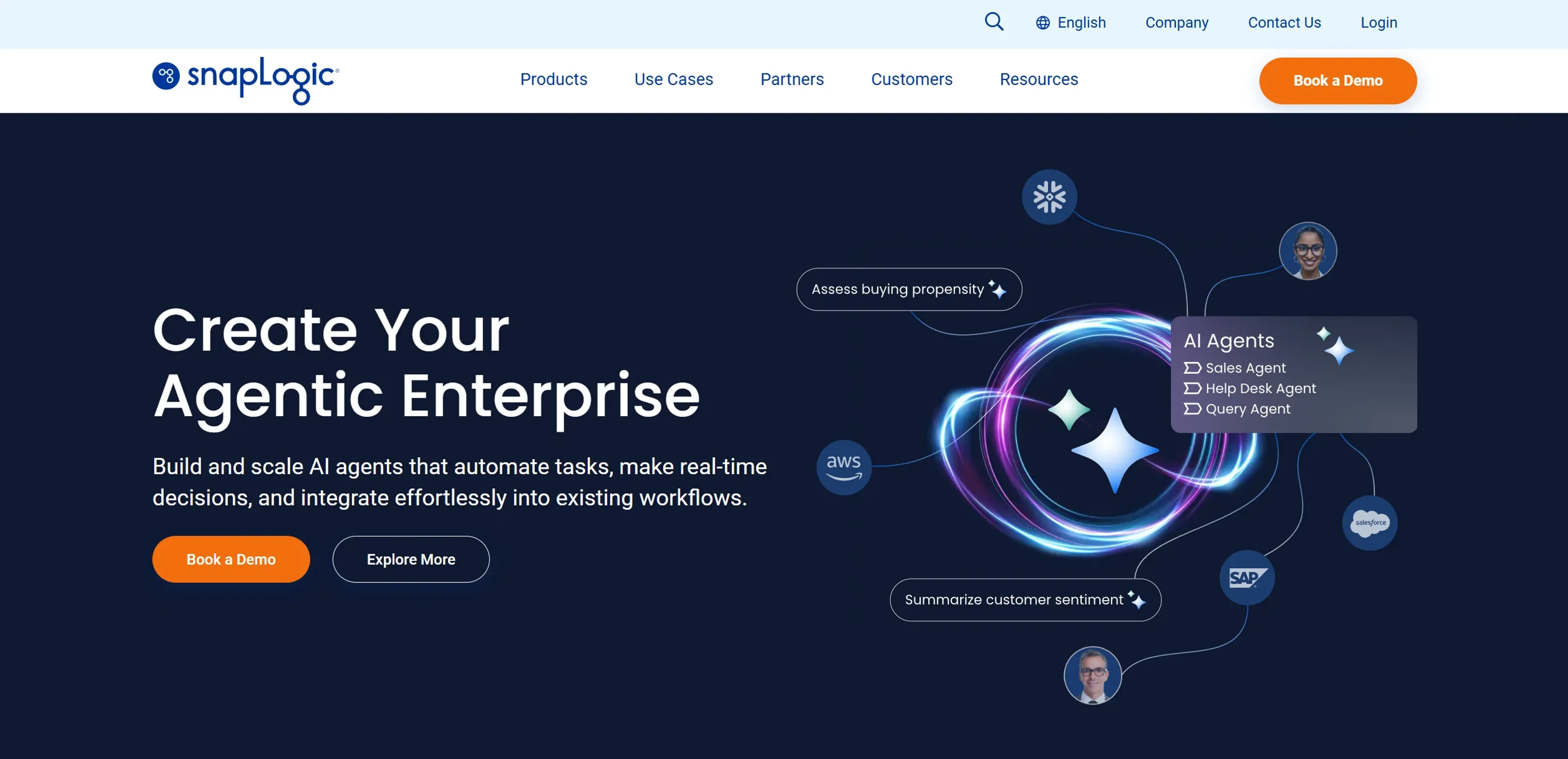
About SnapLogic
SnapLogic is a powerful, cloud-based integration platform that redefines the way businesses connect applications, data, and devices. It empowers organizations to automate their workflows through a sophisticated AI-driven interface, making it an invaluable tool for IT professionals and business analysts alike. By simplifying complex integration processes, SnapLogic enables users to seamlessly connect disparate systems, ensuring data flows smoothly across the enterprise landscape.
Key Features
- AI-Powered Integration: SnapLogic leverages machine learning to automate routine tasks, reducing the need for manual intervention and enhancing efficiency.
- Visual Designer: The intuitive drag-and-drop interface allows users to design integration workflows without extensive coding knowledge.
- Pre-built Connectors: With a vast library of pre-configured connectors, SnapLogic facilitates seamless integration with popular applications and services.
- Real-Time Data Processing: Enables real-time data movement and transformation, ensuring up-to-date information is always available for business operations.
Pros
- Scalability: Easily scales to accommodate growing data and integration needs.
- User-Friendly Experience: The visual interface simplifies complex integrations for users of varying technical expertise.
- Robust Security: Offers comprehensive security features to protect sensitive data during integration processes.
- Comprehensive Support: Provides extensive documentation and support resources to assist users at every step.
Cons
- Initial Learning Curve: While user-friendly, mastering all features may take some time for beginners.
- Pricing Complexity: The pricing structure can be complex and may require consultation for full clarity.
- Limited Offline Capabilities: Primarily cloud-based, which may not suit organizations with offline needs.
Use Cases
- Enterprise IT Departments: Utilizing SnapLogic to streamline data integration and improve operational efficiency.
- Business Analysts: Employing the tool to automate and analyze data workflows.
- Data Scientists: Leveraging its capabilities for data preparation and real-time analytics.
- Software Developers: Using SnapLogic to integrate various applications and services seamlessly.
- Uncommon Use Cases:
- Utilized by healthcare organizations for patient data integration.
- Adopted by logistics companies to optimize supply chain operations.
Pricing
Enterprise Subscription: Custom pricing based on specific business needs and usage. Professional Services: Available to assist with implementation and optimization. Disclaimer: Please note that pricing information may not be up to date. For the most accurate and current pricing details, refer to the official SnapLogic website.
What Makes It Unique
SnapLogic stands out with its AI-driven integration capabilities, revolutionizing how businesses automate and manage their data workflows. Its ability to provide real-time data processing and a vast library of pre-built connectors sets it apart, making it a leader in the integration platform-as-a-service (iPaaS) market.
Ratings
Accuracy and Reliability: 4.7/5 Ease of Use: 4.5/5 Functionality and Features: 4.8/5 Performance and Speed: 4.6/5 Customization and Flexibility: 4.5/5 Data Privacy and Security: 4.9/5 Support and Resources: 4.4/5 Cost-Efficiency: 4.2/5 Integration Capabilities: 4.8/5 Overall Score: 4.6/5
Key Features
Pros & Cons
- Scalability: Easily scales to accommodate growing data and integration needs.
- User-Friendly Experience: The visual interface simplifies complex integrations for users of varying technical expertise.
- Robust Security: Offers comprehensive security features to protect sensitive data during integration processes.
- Comprehensive Support: Provides extensive documentation and support resources to assist users at every step.
- Initial Learning Curve: While user-friendly, mastering all features may take some time for beginners.
- Pricing Complexity: The pricing structure can be complex and may require consultation for full clarity.
- Limited Offline Capabilities: Primarily cloud-based, which may not suit organizations with offline needs.
Best For
Alternatives to SnapLogic
Enzyme
Design, launch, and manage secure smart contracts—no code required.
Aspen
Effortlessly create AI-powered web apps using Aspen's no-code platform.
Floneum
Securely Build AI Workflows and Extend Capabilities with Floneum
Make Forms
Build secure, branded forms and workflows—no code required.
Magick
Unlock the Future of AI Development with Magick
Imagica
Create AI Apps in Minutes Without Writing Code Using Imagica AI