
AI Overview Optimizer
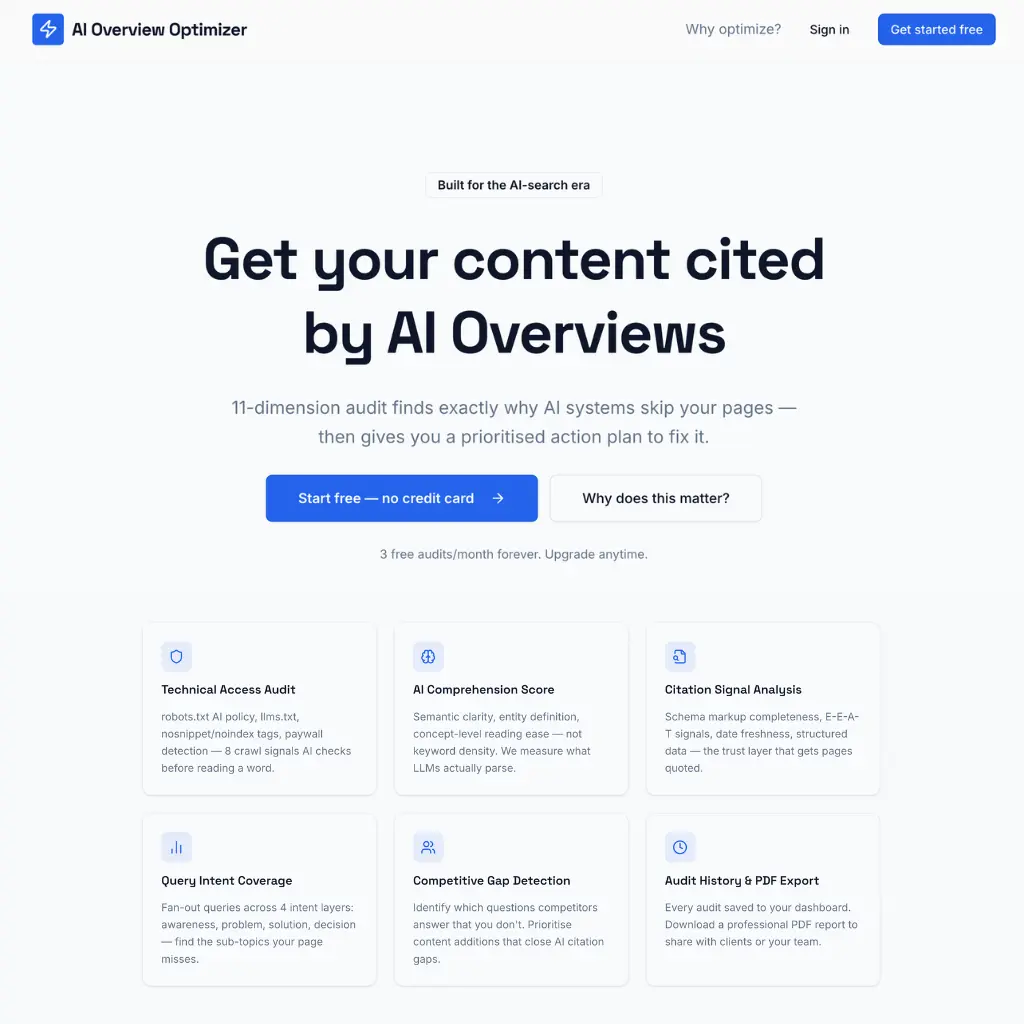
FreemiumAI visibility audit tool that identifies why your pages are bypassed by AI search systems and provides specific fixes to increase citation chances in Google AI Overviews.
About AI Overview Optimizer
The "blue link" era of search is effectively over. In 2026, the internet has split into content meant for humans and content that AI agents choose to talk about. AI Overview Optimizer is a diagnostic platform built for this shift. It operates on a simple premise: if a Large Language Model (LLM) or a search engine like Gemini or Perplexity doesn't "cite" you in its summary, you're effectively invisible to most searchers.
The tool acts as a stress test for a website's "machine-readability". It doesn't look for keyword stuffing; it looks for "Answer Capsules". These are concise, factual blocks of text that an AI can easily lift and attribute. If you hide your value behind a long marketing intro, the AI moves to a competitor who gets to the point faster.
Key Features
Pros & Cons
- Addresses a new and growing need in AI-driven search visibility
- Provides specific fixes rather than generic SEO advice
- Freemium model allows low-cost initial evaluation (free tier limits should be verified)
- Diagnostic focus helps users understand root causes of low AI citation rates
- Relevant for multiple LLM search systems beyond just Google AI Overviews
- Primarily focuses on Google AI Overviews; coverage of other AI search systems may be limited
- Effectiveness depends on the accuracy of the diagnostic algorithms (should be tested)
- Free tier likely has usage caps or limited features (exact limits should be checked)
- Requires users to have knowledge of SEO and content structuring to implement fixes
- No guarantee that following recommendations will result in citations
Best For
Alternatives to AI Overview Optimizer
Keywrds.ai
AI Powered SEO Tools
Horseman
Meet Horseman v0.3.2: Your Ultimate Web Crawling Companion
GetChatGPT
Domain GetGPTAPI.com Available for Purchase
Shako
Revolutionize Content Creation Using Shako AI
AI Templates
Streamline Your SEO Automation with Adaptify SEO
Feather.so
The Content Platform for People Who Care About SEO