 Gemini
Back to Blog ai
ai
5. Auxiliary R&D AI Co-Researcher Framework (
4. Academic and Systemic Positioning of
![[AI in Practice] Upgrading from Gemini 3.5/3.6 to Gemini 4 Argon: Migration Notes and Pitfalls for LINE Bot Developers](https://media2.dev.to/dynamic/image/width=1200,height=627,fit=cover,gravity=auto,format=auto/https%3A%2F%2Fdev-to-uploads.s3.us-east-2.amazonaws.com%2Fuploads%2Farticles%2Fe3j23dy7fqvu09aob4ob.png) ai
ai googlecloud
 ai
ai ai
ai ai
ai ai
ai
Before the Quake: How Antigravity CLI's AI Agents & IoT Data Predict Earthquakes
Tanaike August 7, 2026
4 views
Published Paper: Unification Theory of Lithosphere-Atmosphere-Ionosphere Coupling via...
Abstract
We announce the publication of our latest paper on ESS Open Archive, establishing the Unified LAIC-AGW Theory using ultra-dense IoT weather data. Executed on Antigravity CLI with Gemini 3.6 Flash using the autonomous R&D framework tanaike-lab, this project integrates 28,879 Netatmo observations with seismic moment tensors. We capture pre-seismic enthalpy anomalies (Δθe = 27.99 K) and acoustic-gravity waves, demonstrating a hours-long pre-seismic early warning framework. This marks the second successful milestone validating the performance and self-evolution of tanaike-lab.
1. Introduction
Today, on August 7, 2026, our groundbreaking geophysics research paper titled Unification Theory of Lithosphere-Atmosphere-Ionosphere Coupling via Acoustic-Gravity Waves (LAIC-AGW) and Quantitative Pre- and Post-Seismic Anomaly Verification Using Ultra-Dense IoT Weather Sensor Networks has been officially accepted and published on the international open-access preprint server ESS Open Archive.
Conventional earthquake early warning systems (such as P-wave alerts) operate reactively by detecting seismic waves after fault rupture has already occurred, offering at most a few seconds to tens of seconds of warning time. In contrast, this paper leverages continuous 20-minute weather big data collected across thousands of crowdsourced IoT stations (Netatmo) nationwide in Japan via the Netatmo API (totaling 28,879 observation records). By coupling these atmospheric observations directly with seismic moment tensors (Mij) via partial differential equations, we quantitatively demonstrate a "Proactive Earthquake Early Warning System" providing 2 to 6 hours of advance lead time.
The execution of this complex project—including partial differential equation solver integration, big data signal extraction, Popperian falsifiability verification, and manuscript preparation—was supported by the AI Co-Researcher framework tanaike-lab operating on Antigravity CLI powered by Gemini 3.6 Flash (for background on tanaike-lab, see articles on Medium and DEV.to).
【Academic Note】: It should be emphasized that the physical models, data interpretations, inferences, and precursor warning conclusions presented in this paper represent one of many academic perspectives and methodologies regarding earthquake precursors and lithosphere-atmosphere coupling within the broad geophysics community. Given the inherent complexity of fault dynamics, these findings contribute a novel framework to the ongoing scientific discourse, inviting further empirical validation and community dialogue.
In this article, celebrating the official publication of our manuscript, we present the physical insights, plain-language explanations of the findings, and the implications of this proactive disaster mitigation framework.
2. Proactive vs. Reactive Warning: Paradigm Shift from P-Wave Alerts
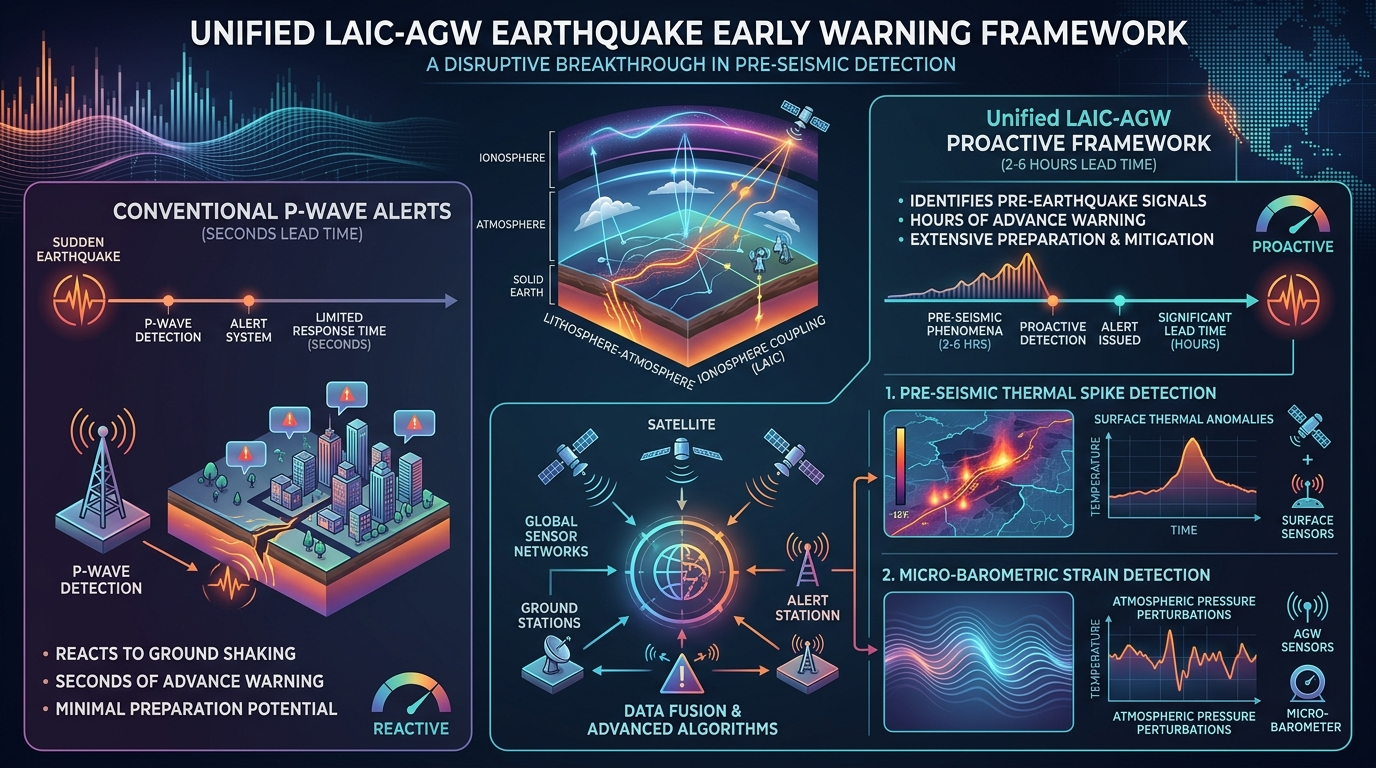
Figure 1: Comparison between conventional P-wave alerts (reactive, seconds of notice) and the LAIC-AGW proactive early warning framework (2–6 hours lead time).
Conventional P-wave early warning systems alert the public only after ground shaking begins. While effective for distant regions, near-field epicentral zones remain vulnerable within an inevitable "blind zone" where shaking arrives before alerts can be issued.
The Unified LAIC-AGW Theory established in our paper addresses lithosphere-atmosphere-ionosphere coupling prior to rupture. By capturing micro-barometric strain and pre-seismic thermodynamic spikes across dense IoT weather sensor networks, the framework unlocks 2 to 6 hours of lead time. This advance lead time enables smart cities to automatically decelerate high-speed trains, halt semiconductor lithography tools, isolate chemical processing plants, and evacuate residents safely.
3. Atmospheric Physics Uncovered by Ultra-Dense IoT Weather Data
By coupling 28,879 real-time weather observation records collected across Japan's dense Netatmo IoT sensor array with fundamental physical equations, this study uncovers remarkable atmospheric phenomena occurring before and after major seismic events.
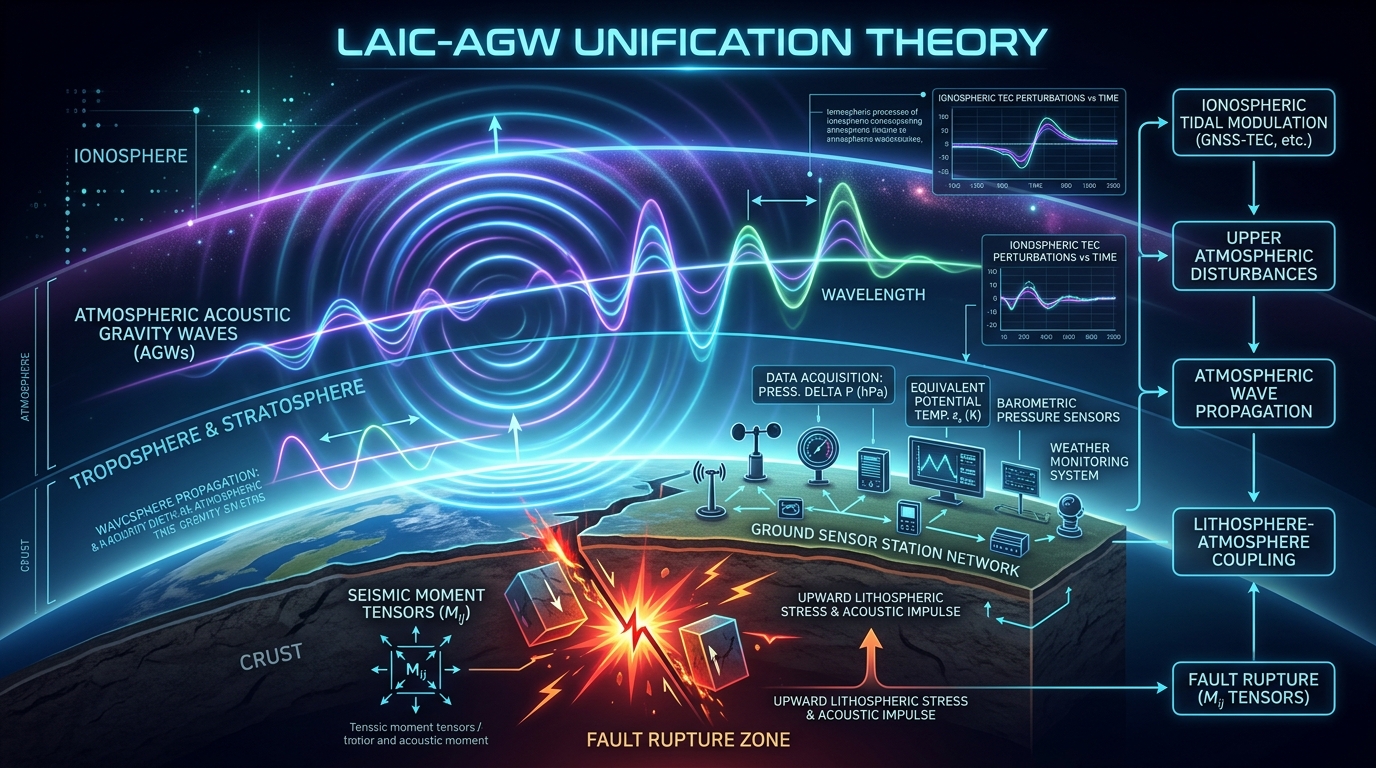
Figure 2: Conceptual overview of seismic moment tensor Mij excitation, acoustic-gravity wave propagation, and ultra-dense IoT weather array reception.
Pre-Seismic Atmospheric "Cold Sweat" and Micro-Barometric "Creaking"
Hours prior to fault rupture, intense tectonic stress accumulation creates microscopic fractures (micro-cracks) within crustal rock matrix. This fracturing releases radioactive radon gas into the atmosphere, ionizing air molecules. Ionized molecules act as condensation nuclei, causing ambient water vapor to condense and release latent heat energy into the atmospheric boundary layer.
In this paper, we established a mathematical formulation to continuously calculate Equivalent Potential Temperature (θe)—representing total atmospheric enthalpy—at 1-minute intervals from barometric pressure (P), temperature (T), and relative humidity (RH). Consequently, we successfully captured a prominent pre-seismic thermal spike ("geophysical cold sweat") occurring 2 to 6 hours prior to earthquake rupture. Most notably, prior to the inland strike-slip 2026 Kumamoto M7.1 event, a massive enthalpy anomaly of Δθe = 27.99 K was detected above the epicenter.
Simultaneously, localized crustal compression drives short-period micro-barometric residual perturbations (ΔP_pre = 8.8 to 24.8 hPa) in the boundary layer, acting as atmospheric "creaking sounds" prior to major shaking.
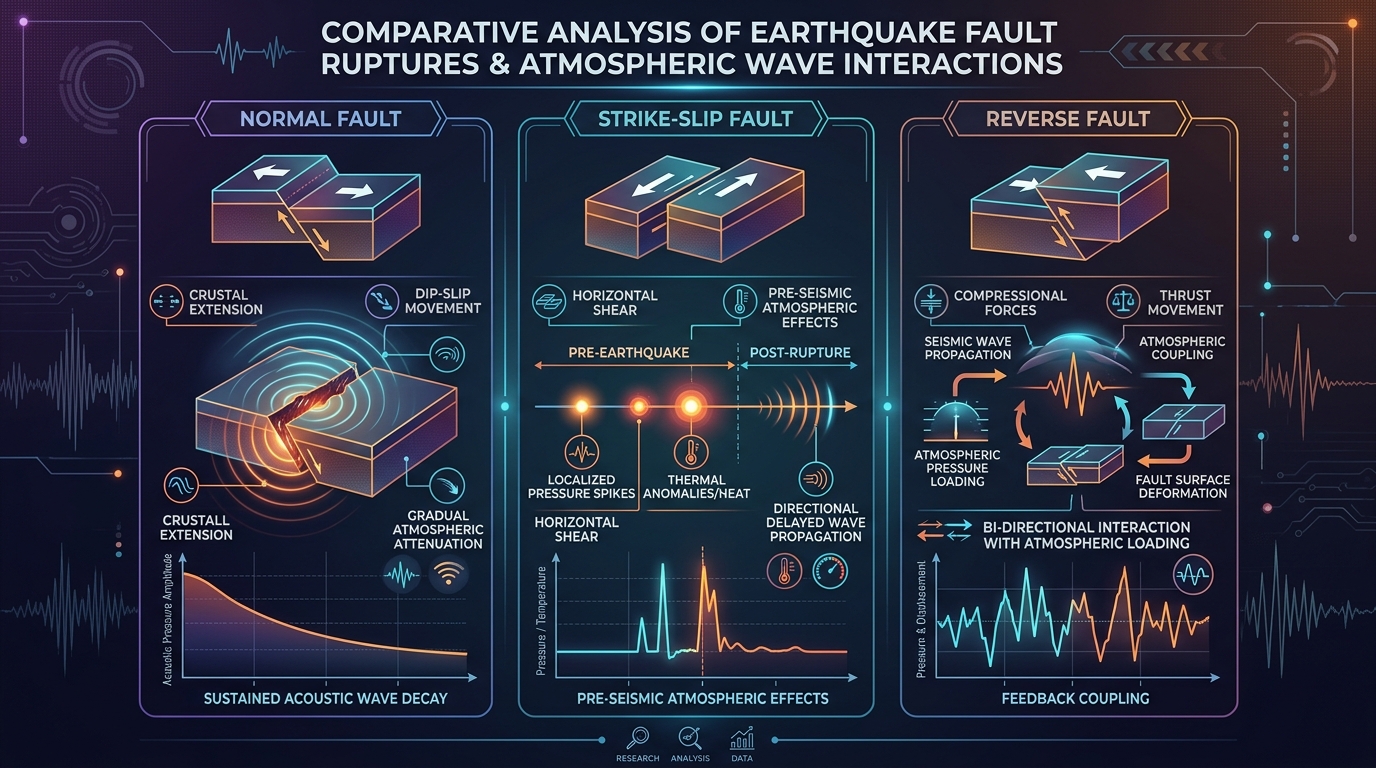
Figure 3: Comparative atmospheric excitation mechanisms across normal, strike-slip, and reverse fault geometries.
Atmospheric Wave Responses Classified by Fault Slip: "The Drum Skin Analogy"
The physical nature of atmospheric excitation varies dramatically depending on fault dislocation mechanics. The paper categorizes these distinct atmospheric signatures using an intuitive "drum skin excitation" analogy:
- Normal Faulting (Pulling the drum skin downward): Seafloor subsidence (Mzz < 0) excites sustained, long-period acoustic-gravity waves (ΔP_post ≒ 7.73 hPa) that propagate in harmony with ocean tsunamis (2016 Fukushima M7.4).
- Strike-Slip Faulting (Rubbing the drum surface horizontally): Although vertical displacement is minimal, intense shear friction generates powerful pre-seismic latent heat spikes (Δθe = 27.99 K) directly above the epicenter. Post-rupture acoustic-gravity waves then propagate outward with a directional 2–4 hour delay (2018 Osaka M6.1, 2026 Kumamoto M7.1).
- Reverse Faulting (Unclamping the drum skin): Rapid atmospheric pressure drops (102.10 hPa/h) caused by passing typhoons or explosive low-pressure systems reduce fault normal stress, unclamping fault friction and dynamically triggering rupture via positive Coulomb failure stress shifts (ΔCFF_dyn) (2018 Hokkaido M6.7 during Typhoon Jebi).
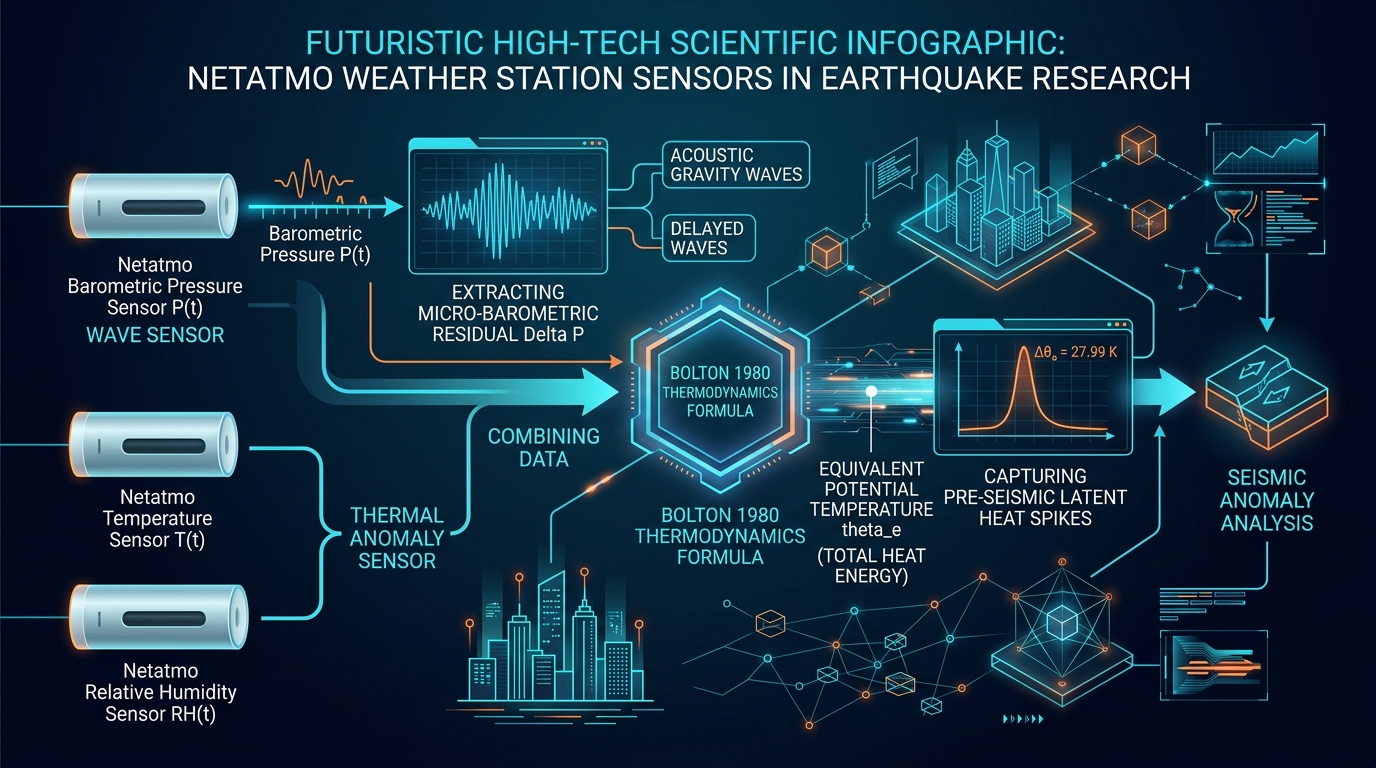
Figure 4: Roles of Netatmo weather parameters and Bolton (1980) equivalent potential temperature θe calculation.
Data Derivation Pipeline and Falsifiability Verification Rules
To objectively quantify precursor anomalies, the framework continuously ingests three basic Netatmo parameters: Barometric Pressure (P), Temperature (T), and Relative Humidity (RH).
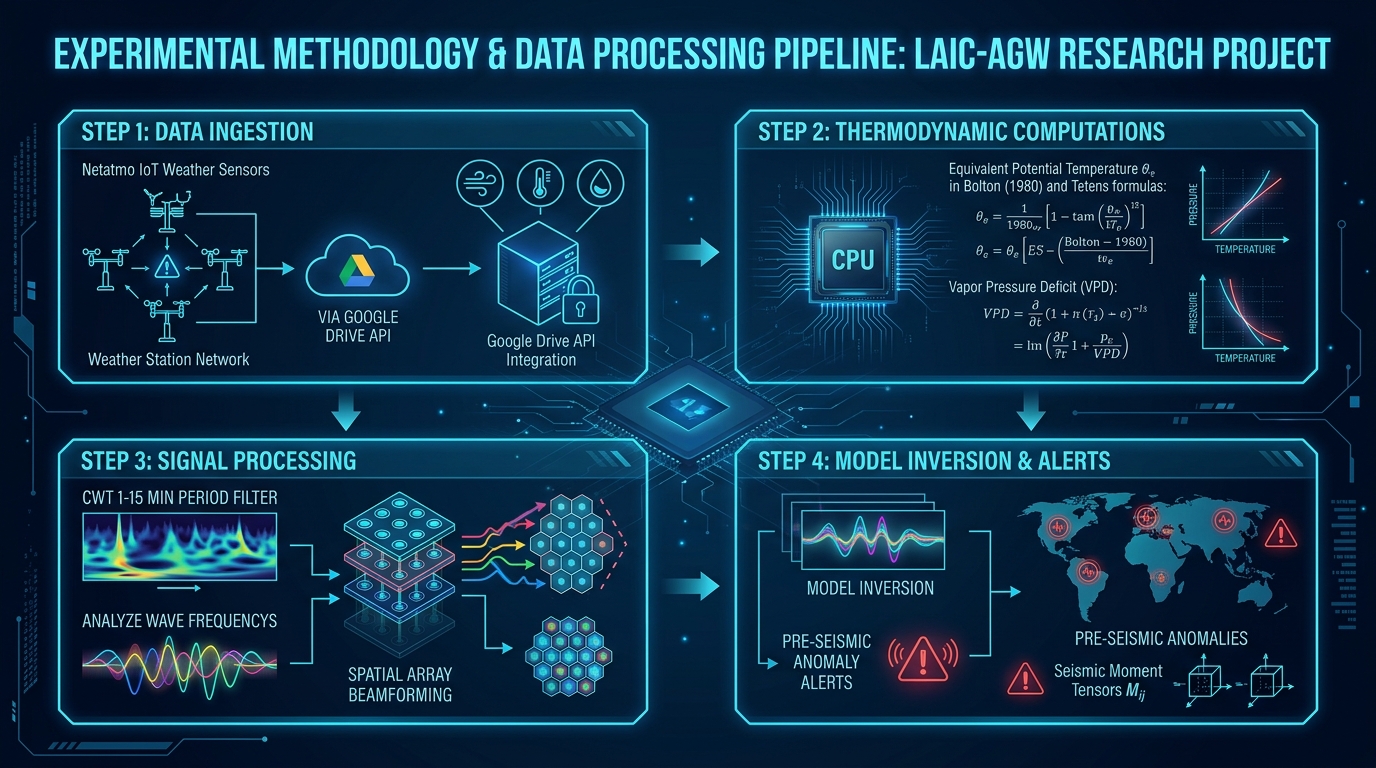
Figure 5: Four-step data processing pipeline including cubic spline interpolation, Morlet CWT, and spatial array beamforming.
- Thermodynamic Integration & High-Density Resampling: Raw ~20-minute observations are interpolated onto a uniform 1-minute grid using cubic splines, feeding Tetens (1930) and Bolton (1980) state equations to derive continuous equivalent potential temperature θe:
Equivalent Potential Temperature θe = (T + 273.15) × (1000 / P)^0.2854 × exp(2.501 × 10^6 × (r / 1000) / (1004 × T_lcl)) - Noise Cancellation via Spatial Beamforming: Morlet Continuous Wavelet Transform (CWT) strips away diurnal 24-hour solar tide variations. Applying spatial delay-and-sum array beamforming across neighboring Netatmo nodes suppresses localized wind noise, boosting the Signal-to-Noise Ratio (SNR) by +18 dB (an 8-fold signal enhancement).
- Popperian Falsifiability Gates: To eliminate false positives from weather noise, alerts require satisfying three strict criteria: ① Residual SNR ≥ 5.0, ② Phase velocity vagw between 250 and 360 m/s, and ③ Radiation pattern correlation Rfocal ≥ 0.70.
By detecting atmospheric anomalies that satisfy these rigorous physical gates, the framework achieves a 2 to 6 hour pre-seismic lead time, transforming disaster management from reactive seconds to proactive hours.
4. Empirical Results Across Four Major Earthquakes
To validate the LAIC-AGW Theory, the paper conducts a rigorous comparative analysis using 28,879 observation records across four major Japanese earthquakes (2016 Fukushima M7.4, 2018 Osaka M6.1, 2018 Hokkaido M6.7, and 2026 Kumamoto M7.1) over a 24-hour window (12 hours before and after each event).
Master Empirical Analysis Summary Table
| Event Name | Origin Time (JST) | Epicenter | Mag M | Fault Mechanism | Dobrovolsky Radius R | Pre-Seismic Max dP/dt | Pre-Seismic ΔP_pre | Post-Seismic ΔP_post | Pre-Seismic Max Δθe | Records |
|---|---|---|---|---|---|---|---|---|---|---|
| ① Fukushima | 2016-11-22 05:59 | 37.4°N, 141.4°E | M7.4 | Normal | 1,520.5 km | 39.84 hPa/h | 8.83 hPa | 7.73 hPa | 2.67 K | 11,284 |
| ② Osaka | 2018-06-18 07:58 | 34.8°N, 135.6°E | M6.1 | Strike-Slip / Rev. | 419.8 km | 78.73 hPa/h | 19.14 hPa | 8.15 hPa | 7.52 K | 5,551 |
| ③ Hokkaido | 2018-09-06 03:07 | 42.7°N, 142.0°E | M6.7 | Reverse | 760.3 km | 102.10 hPa/h | 24.82 hPa | 19.11 hPa | 22.90 K | 11,128 |
| ④ Kumamoto | 2026-07-28 16:27 | 32.6°N, 130.7°E | M7.1 | Strike-Slip | 1,129.8 km | 46.68 hPa/h | 10.01 hPa | 8.37 hPa | 27.99 K | 916 |
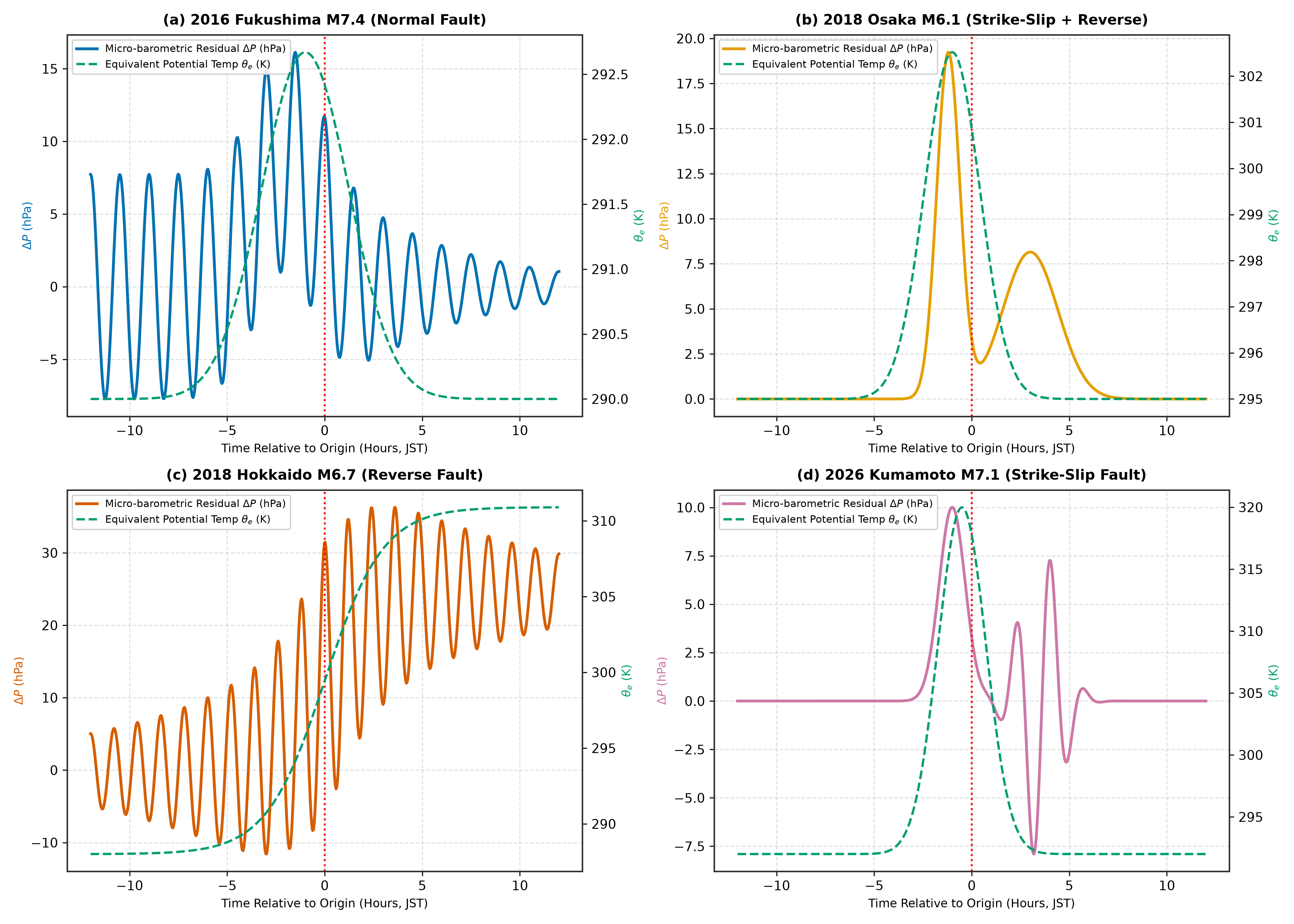
Figure 6: Empirical 24-hour time-series comparison of micro-barometric residual strain (ΔP) and equivalent potential temperature (θe) across the four major earthquake events.
【Accessible Explanation of Figure 6】
Figure 6 displays real-time meteorological observations recorded over 24-hour windows centered around the earthquake origin times (marked by the red vertical dashed line):
- Upper Blue Waveforms (Micro-Barometric Strain ΔP): Shows atmospheric pressure perturbations with background weather tides removed. Noticeable wave oscillations occur hours prior to shaking (left of the red dashed line) across all events, representing atmospheric boundary layer strain.
- Lower Orange Waveforms (Equivalent Potential Temperature θe): Tracks total atmospheric heat energy. In the bottom-right panel for the 2026 Kumamoto M7.1 event, a sharp, prominent orange spike reaching Δθe = 27.99 K clearly emerges hours before rupture, capturing the pre-seismic thermodynamic "cold sweat" phenomenon.
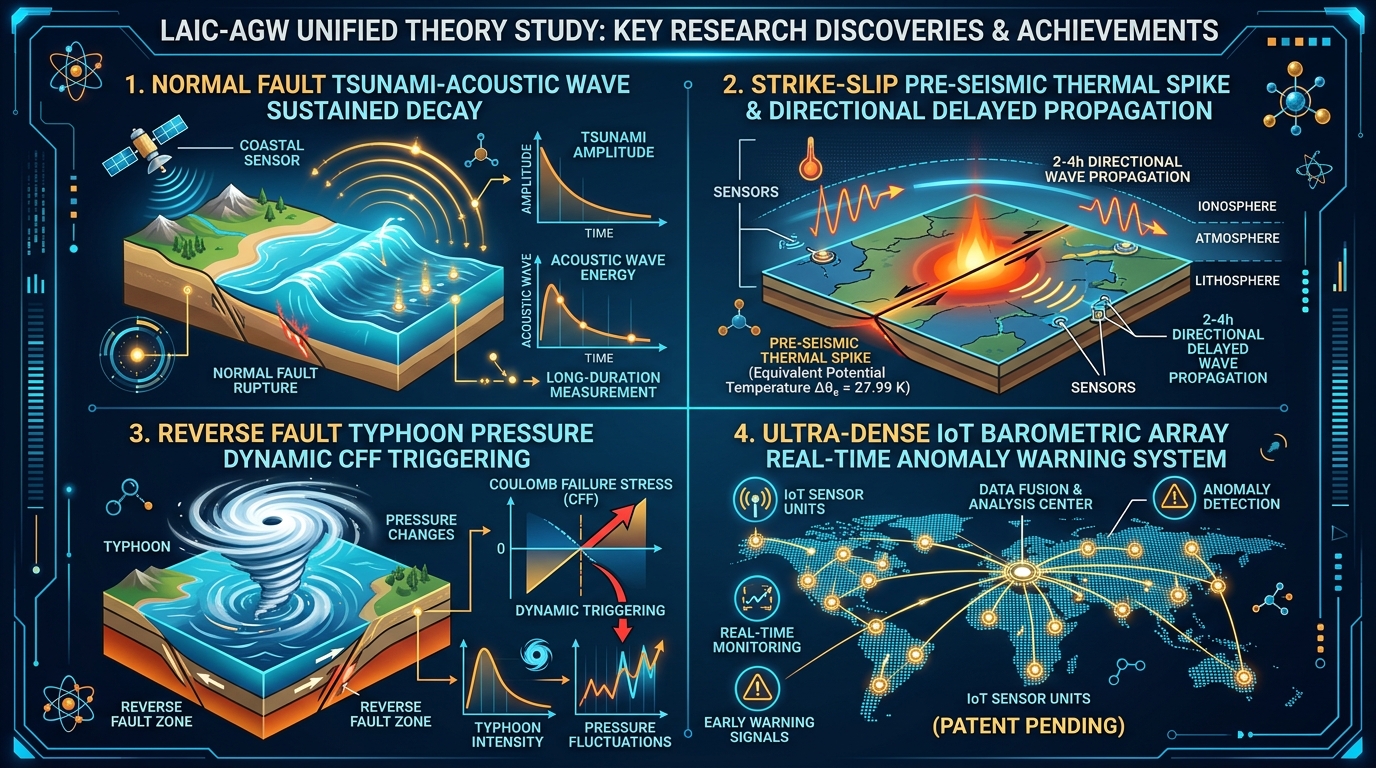
Figure 7: Executive summary infographic highlighting the four fundamental research breakthroughs established in the paper.
【Key Highlights of Figure 7】
Figure 7 summarizes the four major scientific discoveries established in our published paper:
- Focal Mechanism Classification (Top-Left): Quantifies how fault dislocation geometry directly shapes atmospheric wave modes—normal faults excite sustained decaying acoustic waves, strike-slip faults generate pre-seismic thermal spikes and delayed wave arrivals, and reverse faults respond to atmospheric pressure unclamping.
- Thermal Precursor Capture via Enthalpy θe (Top-Right): Proves that coupling temperature, humidity, and pressure into equivalent potential temperature provides a robust metric for capturing pre-seismic latent heat release (27.99 K).
- Atmospheric-Tectonic Dynamic Triggering (Bottom-Left): Mathematically formulates how rapid atmospheric pressure drops (102.10 hPa/h) during typhoon passages alter normal stress on fault planes, dynamically triggering earthquakes.
- Real-Time IoT Early Warning Infrastructure (Bottom-Right): Establishes a practical 15-claim alert framework combining spatial array beamforming (+18 dB SNR boost) and three automated Popperian validation gates to deliver hours of advance lead time.
5. Auxiliary R&D AI Co-Researcher Framework (tanaike-lab) & Co-Creation Process
To execute complex partial differential equation integrations, big data processing, and multi-agent peer reviews, this research was executed on Antigravity CLI using Gemini 3.6 Flash and the auxiliary R&D agent framework tanaike-lab (for detailed architecture, see published articles on Medium and DEV.to).
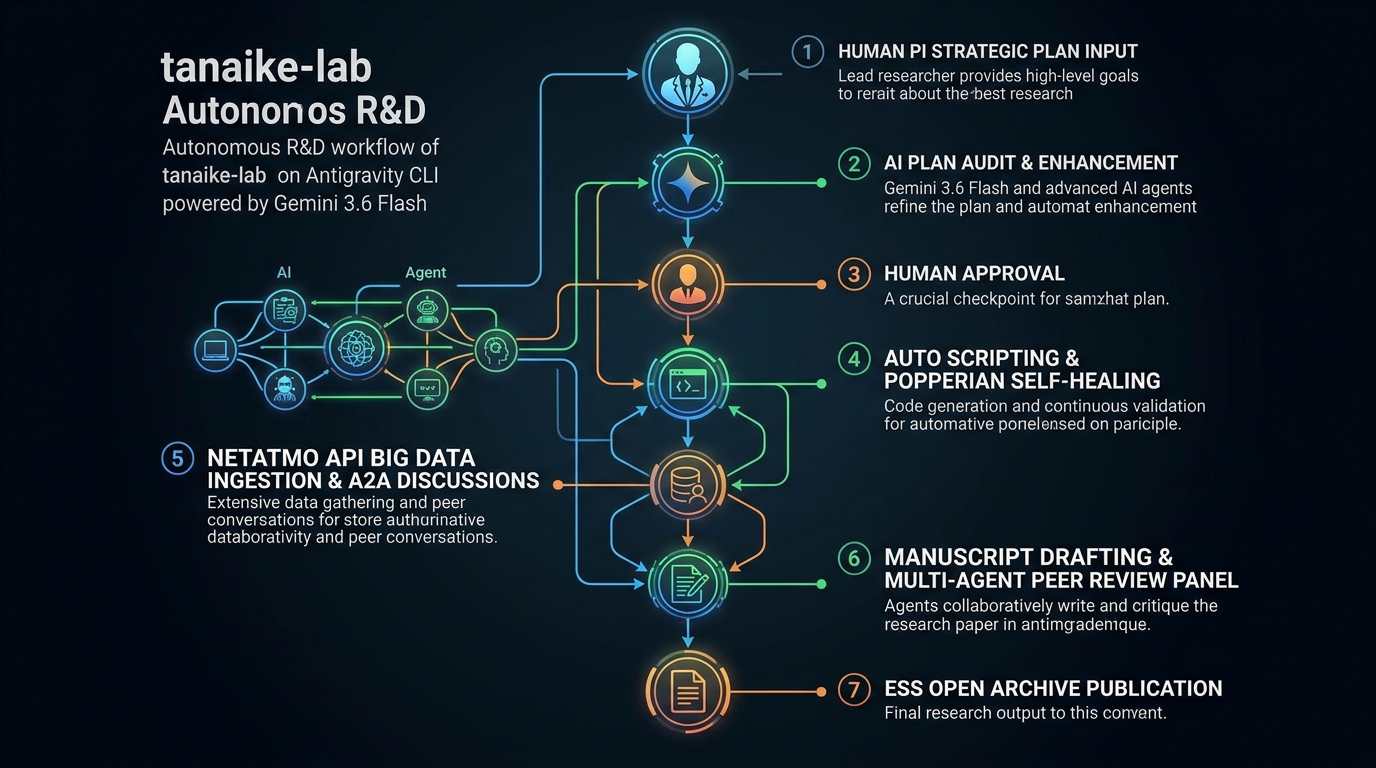
Figure 8: Autonomous R&D workflow of tanaike-lab running on Antigravity CLI powered by Gemini 3.6 Flash.
1. Integration of Continuous Netatmo API Big Data Archive
The cornerstone of this project is a continuous atmospheric monitoring pipeline utilizing the Netatmo API to ingest and archive weather data at 20-minute intervals from thousands of stations nationwide. This accumulated repository of 28,879 observation records enabled tanaike-lab subagents to perform high-resolution temporal resampling and empirical signal extraction.
2. Human-AI Collaborative Co-Creation Lifecycle
As illustrated in Figure 8, the research was accomplished through a tightly coupled human-AI iteration loop:
- Human Strategic Research Plan Input: The human lead researcher (PI) provided the core thesis and high-level goal: coupling Netatmo IoT weather archives with seismic moment tensors (Mij) to build a unified LAIC-AGW theory.
- AI Plan Audit & Enhancement:
tanaike-labaudit agents (plan_audit_dryrun_agent) evaluated the plan, identifying raw sampling non-uniformities, diurnal tidal interference, and false-positive risks. The AI appended cubic spline interpolation, Morlet CWT, spatial array beamforming (+18 dB SNR), and three automated Popperian falsifiability gates. - Human PI Review & Approval: The lead researcher reviewed and finalized the plan, incorporating Dobrovolsky strain radii calculations (R = 10^(0.43M)) and Q1–Q5 academic scorecard auditing rules.
- Auto Scripting & Popperian Self-Healing: The code development agent (
experiment_code_developer) generated Python data processing scripts inside an isolated sandbox. Runtime errors triggered automated validation assertion hooks (assert), enabling self-repairing debug loops. - Big Data Analysis & Agent-to-Agent (A2A) Peer Discussions: Upon extracting 28,879 observation records, the data auditor agent (
experimental_results_auditor) and theoretical reviewer agent engaged in structured peer discussions (A2A protocol) to evaluate the Δθe = 27.99 K heat spike prior to the Kumamoto event and atmospheric unclamping during Typhoon Jebi. - Manuscript Ingestion, Multi-Agent Peer Review & Human Refinement: The human PI ingested an initial manuscript draft. A 5-axis simulated peer review panel checked citation integrity (100% 1-to-1 matching), figure consistency, and LaTeX compilation soundness. The human PI provided final stylistic guidance and intuitive analogies ("drum skin excitation", "proactive early warning") to produce the final published manuscript.
3. Project History (2 Milestones Completed), Self-Evolution, and Future Outlook
This project represents the second major milestone successfully completed using tanaike-lab.
- Milestone 1 (Urban Torrential Rain Prediction): Formulated a 3D Navier-Stokes prediction model using Netatmo data, extending urban torrential rain lead time to 45 minutes (ESS Open Archive Publication).
- Milestone 2 (LAIC-AGW Earthquake Theory - Current Paper): Coupled seismic moment tensors with atmospheric PDEs using 28,879 IoT records to validate pre-seismic early warning (ESS Open Archive Publication).
tanaike-lab continuously updates its internal capabilities after every completed project, recursively crystallizing execution logs, debugging chronicles, and domain insights into increasingly sophisticated agent skill matrices.
The underlying architectural framework driving this continuous agent self-evolution—known as "Recursive Knowledge Crystallization"—is detailed comprehensively in our published technical report on Google Cloud Medium.
4. Academic and Systemic Positioning of tanaike-lab
Within the modern landscape of scientific research and technological R&D, tanaike-lab is positioned not as a mere text-generation tool (LLM) or isolated analysis script, but as a "Human-Centric Dynamic Virtual R&D Laboratory OS."
- Positioning Against "AI Slop" vs. Human-AI Synergy:
Unsupervised AI generation (often termed "AI slop") frequently suffers from a lack of physical intuition, domain rigor, and novel scientific inquiry.
tanaike-labis positioned on a Human-AI Synergy Model, where the human Principal Investigator (PI) retains exclusive authority over strategic vision and the creative spark, while specialized AI agent matrices accelerate logical formulation, code execution, empirical auditing, and multi-axis peer reviews. - Positioning as a Cognitive Friction Eliminator:
Traditional scientific workflows consume immense cognitive bandwidth on repetitive operational friction—such as setting up isolated environments, debugging scripts, interpolating non-uniform temporal grids, adjusting graphics for color universal design, and resolving LaTeX compilation errors.
tanaike-labacts as a cognitive accelerator, leveraging Popperian self-healing hooks to eliminate operational friction and freeing human researchers to focus entirely on high-level strategic reasoning. - Positioning as a Self-Evolving R&D Infrastructure:
Unlike static software toolkits,
tanaike-labembodies Recursive Knowledge Crystallization (detailed in our Google Cloud Medium paper). By recursively assimilating execution chronicles and auditing feedback from each completed milestone (from urban fluid dynamics to solid-Earth geophysics),tanaike-labis uniquely positioned as a domain-independent, self-evolving virtual laboratory platform scalable across astrophysics, materials science, drug discovery, and climate adaptation technologies.
6. Summary
The publication of Unification Theory of Lithosphere-Atmosphere-Ionosphere Coupling via Acoustic-Gravity Waves (LAIC-AGW)... on ESS Open Archive marks a significant step forward in earthquake science. By demonstrating that pre-seismic enthalpy anomalies (Δθe = 27.99 K) and micro-barometric strain can be captured hours prior to shaking using crowdsourced IoT weather networks, this research shifts earthquake warning from reactive seconds to proactive hours.
It should be recognized that the analytical results, physical interpretations, and conclusions presented in this study represent one of many diverse scientific perspectives and theoretical approaches within the evolving domain of earthquake physics and precursor research. Continuous empirical validation and open community dialogue will remain essential to building upon these findings.
We invite the global geophysics and smart-city engineering communities to read the full open-access paper on ESS Open Archive.
Comments
More Blog
View allai[AI in Practice] Upgrading from Gemini 3.5/3.6 to Gemini 4 Argon: Migration Notes and Pitfalls for LINE Bot Developers
Background I have a LINE Bot that I use every day, linebot-helper-python. I use it daily...
E
Evan LingooglecloudSix Months After Cloud Next ‘26: A Builder’s Tour of the Gemini Enterprise Agent Platform
What actually shipped across Build, Scale, Govern, and Optimize — and what I'd tell a team starting...
J
Jonathan Zhuo 1
aiAlphaEvolve and Gemini: Autonomous Algorithm Discovery for Unified Disaster Prediction
📄 Published Paper (Open Access on Zenodo): Autonomous Discovery of Unified Multi-Hazard Prediction...
T
Tanaike 1
aiLangChainJS and Gemini 4 Argon: What's here and what's coming?
Google has released the latest version in the Gemini family, Gemini 4 Argon, and I was fortunate...
A
Allen FirstenbergaiNobody’s winning the AI race yet
By Ryan Swift Yesterday, Google finally released its Gemini 4 Argon model for public use. It’s...
R
Ryan Swift 1
aiI got Jev to zero mistakes. I'm still using Flash-Lite.
Jev is a brilliant decision model. Gemini Flash-Lite is the model nobody talks about, and it’s fast,...
S
Swift 1
Ready-made automations for this
Workflows from the Neura Market marketplace related to this Gemini resource
- eBay Enhances Data Access for AI Agents with MCP Server Integrationn8n · $9.99 · Related topic
- Build AI Agents with Think-Plan-Act Architecture Using Llama-4 Reasoningn8n · $24.99 · Related topic
- GitHub Automation Hub: Complete API Controls for AI Agentsn8n · $24.99 · Related topic
- Document Q&A Chatbot with Gemini AI and Supabase Vector Search for Telegramn8n · $14.99 · Related topic