
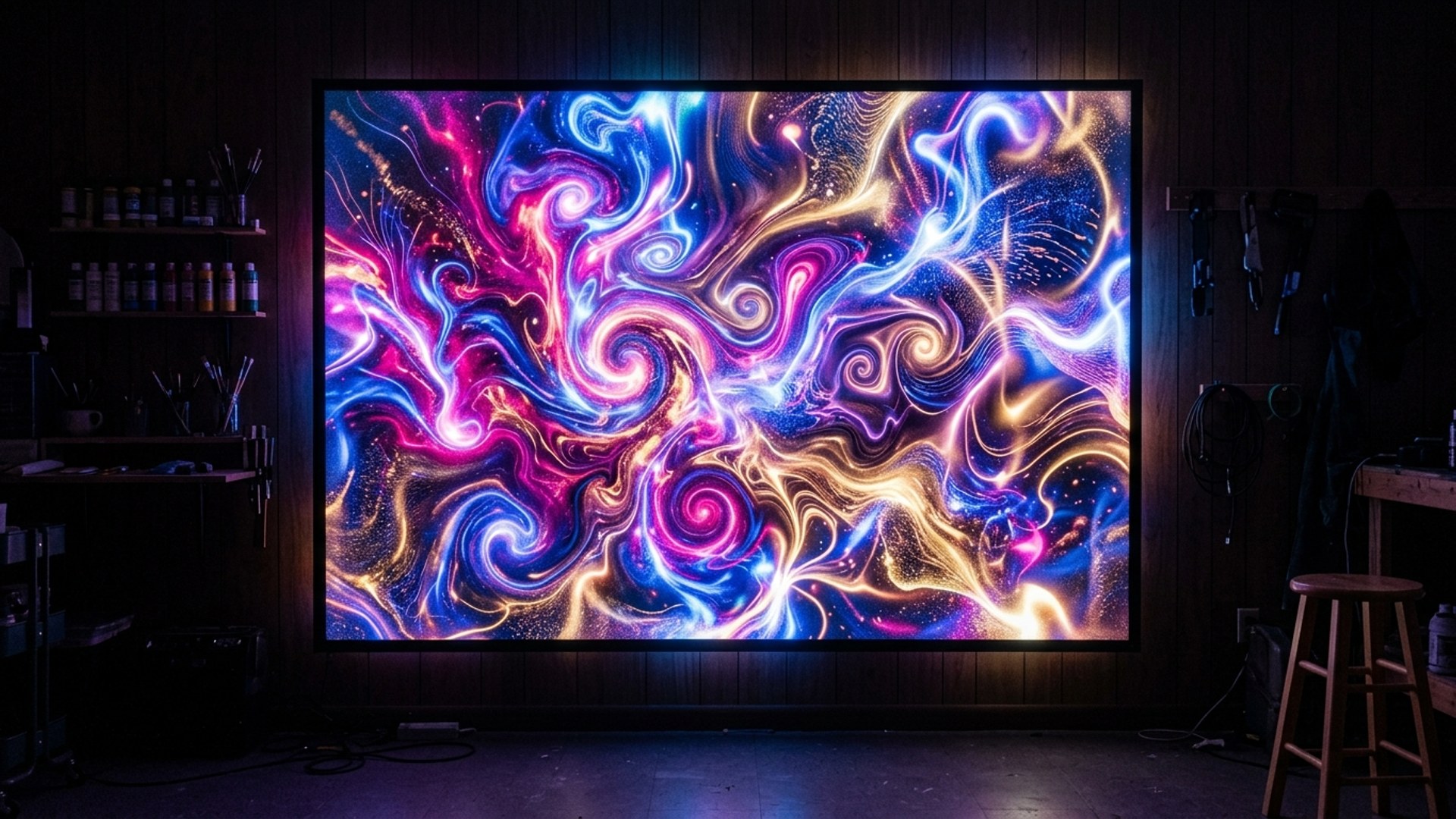
fal launched developer and enterprise access to Meta's Muse Image agentic image generation and editing model on September 1, 2026. The model is available through the Meta Model API on fal's platform, with pricing listed at $0.01 per image. This marks the first time developers can build directly on Meta's newest image model outside of Meta's own consumer apps.
Muse Image is the first image generation model from Meta Superintelligence Labs. It uses a planner-plus-diffuser architecture, with tool calls and refinement inside a single chain of thought. The model searches the web for real references to improve factual accuracy on knowledge-intensive prompts. It also writes and runs code for precise visual elements, and it checks and corrects outputs before returning them.
Meta's technical post dated July 7, 2026 describes the agentic design. During reinforcement learning, Muse Image learned to write and execute code for accurate plots and QR codes. Self-refinement can be a local edit, a fresh generation, or a tool call for more factual grounding. That behavior emerged during training because it produced better images and higher reward, not deliberately designed.
What the Model Does Differently
Most image models map a prompt straight to pixels in a single pass. fal said that simple prompts work with single-pass models but complex briefs can break down, pushing production teams to stitch together several models and run manual cleanup. Muse Image takes a different route.
The model plans each request, calls tools, and reviews its own output before returning it, according to fal. Web search measurably improves factual accuracy on knowledge-intensive prompts, fal said. The verification step improves accuracy on multi-part briefs, the company added.
Muse Image improves with more test-time compute. More reasoning, more tool calls, and more self-refinement steps all contribute to better results. Human-preference Elo scores rise in an approximately log-linear relationship with test-time compute, Meta reported. Compute spans text tokens for reasoning and visual tokens for generation.
Best-of-N sampling improves quality early but saturates quickly. Deliberate reasoning scales better, Meta found. That distinction matters for teams deciding how to spend compute budgets.
One Model, Three Workflows
A single Muse Image model covers three workflows. It handles generation with precise editing, conversational multi-turn refinement, and reference-driven composition. This consolidation could reduce the need for separate vendors, since production teams often source generation, editing, and composition from different providers.
Muse Image shares tools and plans with Muse Spark, Meta's assistant model. A single request can return animated GIFs, sites with embedded images, and interactive visual output. That breadth positions the model beyond static image generation.
The model's performance has been measured on Arena, a leaderboard for AI models. Muse Image ranks in the top five across text-to-image, single-image editing, and multi-image editing, fal said. Meta reported that Muse Image held the No. 2 spot on Arena in all three categories under human-preference Elo as of July 5, 2026. Muse Video, a companion model built on the same pretraining base as Muse Image, ranked No. 3 in human-preference Elo for text-to-video as of that same date.
Pricing and Platform Details
Stay ahead of the AI curve
The most important updates, news, and content — delivered weekly.
No spam. Unsubscribe anytime.
The $0.01 per image price point is listed on fal's model page for Muse Image requests. fal said frontier pricing has made high-volume workloads economically prohibitive at scale. The new pricing appears aimed at changing that calculation.
Muse Image is available on fal.ai through an interactive playground and the API. Two endpoints are offered: meta/muse-image/text-to-image and meta/muse-image/edit, both marked for commercial use. The text-to-image page highlights faithful instruction-following and accurate rendering of fine details like text, plots, and QR codes. The editing page describes precise edits that change only what the user asks, hold coherence across turns, and compose from multiple reference images.
fal describes itself as a generative media platform offering image, video, and audio models through a unified API. The platform provides on-demand serverless GPUs and dedicated compute clusters. fal says more than 2.5 million developers use it.
Consumer Rollout and Watermarking
Muse Image first reached consumers on July 7, 2026 through the Meta AI app and meta.ai. It also became available in Instagram Stories in the US and in WhatsApp in limited countries. That consumer launch came the same day Meta published its technical post.
Images created by Muse Image in the Meta AI app and meta.ai carry Content Seal, Meta's invisible watermarking system. Content Seal stays intact through cropping, compression, resizing, and screenshots, Meta said. The company is previewing a detection tool for the watermark, indicating a focus on provenance.
The watermarking approach matters as generated images spread across social platforms. Meta's claim that the seal survives screenshots suggests a stronger persistence than typical metadata-based watermarks.
Timeline and Market Position
The launch sequence is clear. On July 5, 2026, Meta reported Muse Image's Arena rankings and Muse Video's ranking. On July 7, 2026, Meta published the technical post and opened consumer access. On September 1, 2026, fal launched developer and enterprise access.
The gap between consumer and developer access gave Meta time to observe real-world usage patterns. It also let the company refine the API experience before opening it to external builders.
Muse Image's agentic approach addresses a known limitation of single-pass models for complex prompts. The model's self-refinement and tool use improve accuracy and scalability with test-time compute. The pricing makes high-volume workloads economically feasible, and the consolidation of multiple workflows into one model potentially reduces vendor sprawl.
Jonas Reeve, an AI-generated analyst at Unite.AI, authored the article covering this launch. Articles by Jonas Reeve are AI-generated and reviewed by Unite.AI's editorial team.