
Microsoft Corp. and OpenAI reached an agreement to eliminate the software company's exclusive access to distribute the startup's artificial intelligence models. This shift permits the creator of ChatGPT to explore commercial arrangements with competitors in cloud computing, including Amazon.com Inc.
In return for relinquishing this exclusivity, which supported growth in Microsoft's cloud business during the initial phase of the AI surge, the top software provider will cease revenue-sharing payments for OpenAI offerings it distributes through its cloud services. Both organizations released a combined announcement detailing the updated terms on Monday.
Details of the Revised Agreement
The core change removes Microsoft's sole authority to commercialize OpenAI's AI technologies. Previously, this arrangement positioned Microsoft as the primary channel for OpenAI's models, aiding Azure's expansion amid rising demand for AI capabilities. Now, OpenAI gains flexibility to negotiate with other cloud operators.
Microsoft benefits by avoiding ongoing revenue splits on sales of these products. The joint statement confirms the mutual decision, signaling a evolution in their collaboration without disrupting current operations.
Background on the Partnership
Microsoft and OpenAI have maintained a close alliance for several years. The software giant has supplied substantial computing resources through its Azure platform, fueling OpenAI's development of advanced AI systems like ChatGPT. This partnership played a key role in elevating Microsoft's cloud revenue as businesses adopted AI tools.
Stay ahead of the AI curve
The most important updates, news, and content — delivered weekly.
No spam. Unsubscribe anytime.
OpenAI, founded in 2015, transitioned from a research-focused non-profit to a structure enabling significant investments. Its breakthrough with ChatGPT in late 2022 sparked widespread AI adoption. Microsoft, established in 1975, dominates software markets and ranks as the second-largest cloud provider behind Amazon Web Services.
Key Figures Involved
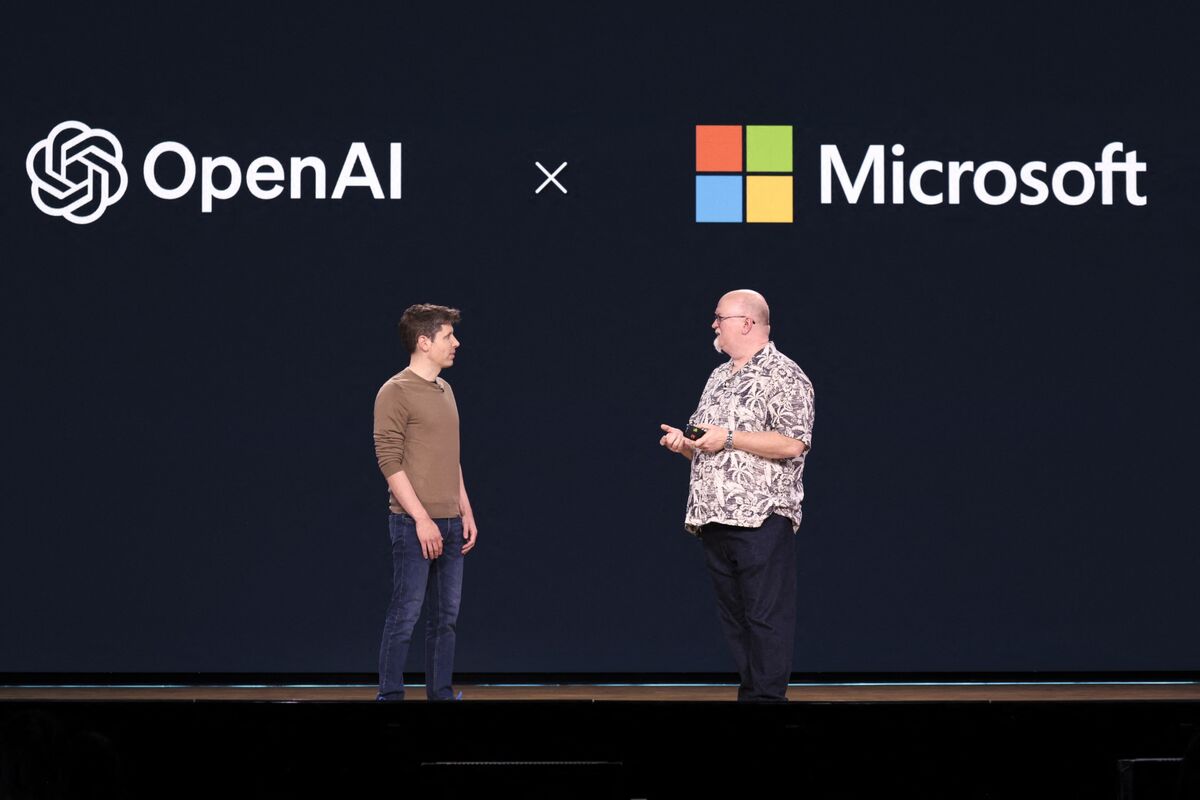
The agreement comes amid ongoing interactions between leaders of both firms. A recent photo shows OpenAI CEO Sam Altman conversing with Microsoft Chief Technology Officer Kevin Scott at the Microsoft Build conference in Seattle in 2024. Such events highlight their technical alignment.
Broader Context in AI and Cloud
The AI boom has transformed cloud computing demands. Providers compete fiercely for workloads supporting model training and inference. Microsoft's early exclusivity with OpenAI gave it an advantage, but market dynamics now favor more open arrangements.
This development arrives as of April 27, 2026, with updates noted later that day. Bloomberg reporter Matt Day covered the story, drawing from the joint statement.
Microsoft continues to integrate OpenAI technologies into products like its Copilot assistant, while OpenAI advances models such as GPT series. The revised terms maintain technical ties but adjust commercial aspects.
Related on Neura Market