
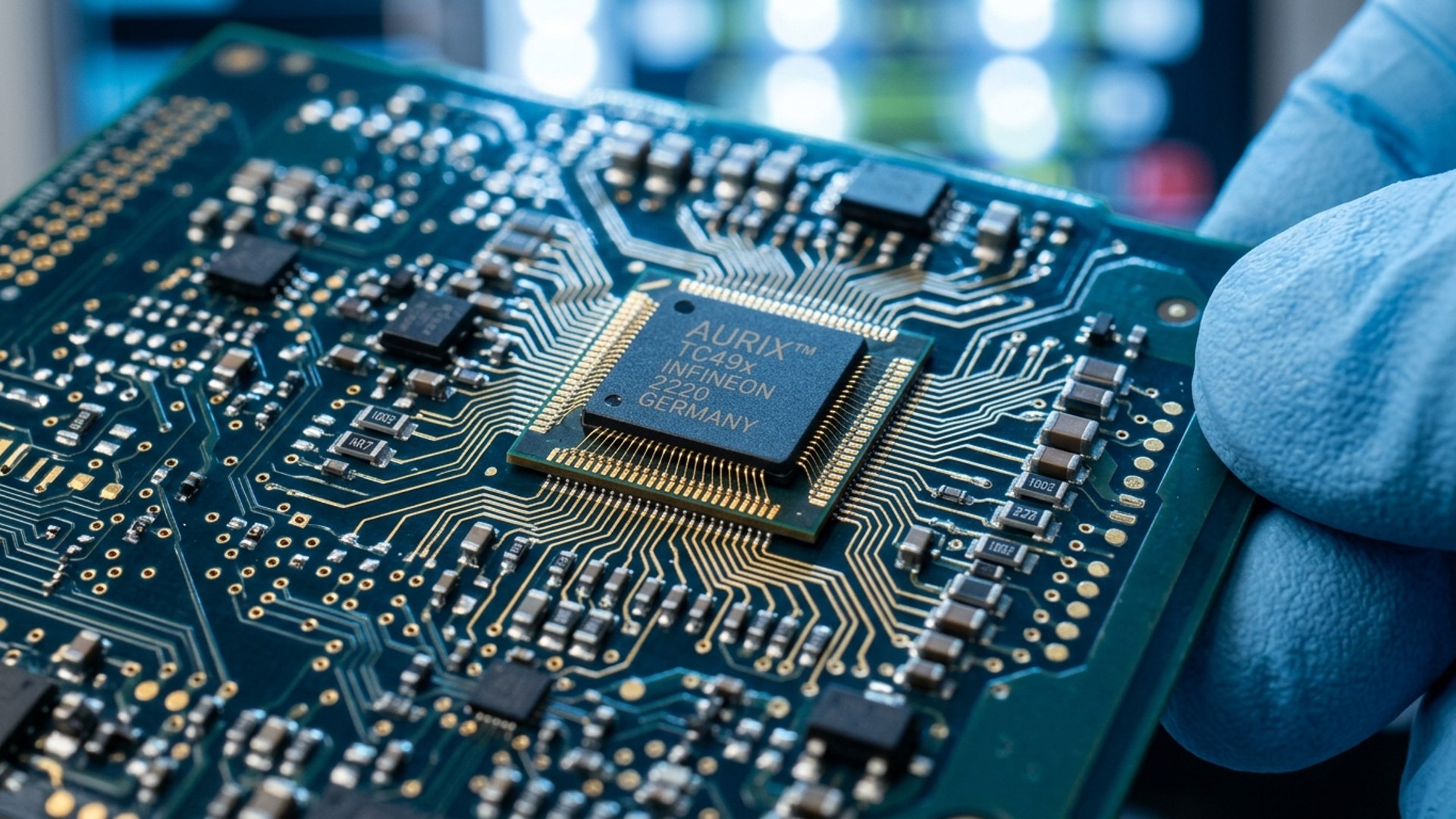
Renesas Electronics has joined the Autoware Foundation at its highest membership tier, a move that will bring the foundation's open-source end-to-end AI software to Renesas R-Car system-on-chip platforms for advanced driver assistance and autonomous driving. The announcement, made on September 1, 2026, pairs one of the automotive industry's largest chip suppliers with a non-profit pushing open-source software for physical AI.
The collaboration aims to deliver pre-integrated, scalable systems for automotive OEMs and Tier-1 suppliers. The goal spans entry-level L2 driver assistance, L2++ hands-free autopilot, and fully driverless L4 robotaxis. That range of ambition is what makes the partnership notable, according to both organizations.
A New Software Option for R-Car Customers
The deal introduces Autoware's open-source end-to-end AI stack as a fresh AI driving software option for customers using Renesas R-Car SoC and RoX software platforms. OEMs and Tier-1 suppliers can retrain, tune, and customize the open-source AI stack for specific vehicles and use cases. Deployment will run on Renesas R-Car SoCs.
The model gives automakers an alternative to building an entire AI stack in-house or purchasing a ready-made solution from a traditional commercial supplier. Autoware's software is supplied under the Apache 2.0 license, enabling full commercialization without restrictions. Autoware is built on the Robot Operating System (ROS) and describes itself as a production-ready software stack designed to accelerate commercial deployment of autonomous vehicles.
Christian John, board director at the Autoware Foundation, framed the partnership in sweeping terms. "We believe that this is the Linux moment for the ADAS and autonomous driving industry," he said. John added that bringing Autoware's open-source technology stack to Renesas's R-Car SoC platform allows deployment of customizable, scalable, and production-grade technologies to automotive OEMs and Tier-1 suppliers at a fraction of the cost of traditional suppliers.
Renesas's RoX Platform and Its Two Flavors
Renesas introduced the RoX platform in June 2024. RoX, short for R-Car Open Access, is the company's development platform for software-defined vehicles. It combines hardware, out-of-box software, and a cloud-native AI development environment for ADAS, in-vehicle infotainment, and gateway systems.
The platform comes in two versions. One is an open Whitebox package with royalty-free operating systems. The other is a Licensed version built on commercial software. RoX also includes an AI Workbench for validating and optimizing AI models and testing applications in the cloud, either on a virtual development platform or on Renesas board farms.
That cloud-based tooling matters for the Autoware integration. It gives developers a place to test the open-source stack before committing to silicon. Renesas's products span microcontrollers, analog, power, and SoC devices serving automotive, industrial, infrastructure, and IoT markets. The R-Car family sits at the heart of its automotive ambitions.
Industry Shift Toward Integrated Platforms
Aish Dubey, vice president and head of the HPC SoC Division at Renesas Electronics, said the automotive industry is moving beyond individual components toward integrated platforms that combine computing, AI, and open software technologies. The collaboration, she said, provides OEMs and Tier-1 suppliers with scalable solutions that help reduce integration complexity and expand options for deploying AI-driven ADAS and automated driving systems.
Stay ahead of the AI curve
The most important updates, news, and content — delivered weekly.
No spam. Unsubscribe anytime.
The foundation echoed that view. It said the model gives automakers and suppliers a lower-cost and flexible option that can be internalized and customized. That is a direct pitch against traditional commercial suppliers who sell closed, ready-made stacks.
The Autoware Foundation is a non-profit dedicated to advancing open-source software for physical AI. It brings together industry participants, researchers, and developers to accelerate safe deployment of autonomous driving technologies. Its membership model allows companies and institutions to influence the strategic direction, business, financial, and technical priorities of the Autoware project. Renesas, by joining at the highest tier, gets a seat at that table.
What the Open-Source Model Changes
The significance of the Apache 2.0 license cannot be overstated for commercial users. It means any company can take Autoware, modify it, and ship it in production vehicles without paying royalties or disclosing their changes. That is a fundamentally different proposition from buying a proprietary ADAS stack from a traditional supplier.
For Renesas, the partnership is about making its silicon more attractive. A customer choosing an R-Car SoC now has a credible open-source software path alongside whatever commercial options exist. For the Autoware Foundation, landing a top-tier chip vendor adds legitimacy and a distribution channel into mass-market vehicles.
The foundation said the model gives automakers and suppliers a lower-cost and flexible option that can be internalized and customized. That framing positions open source as a strategic asset rather than a compromise. The "Linux moment" quote from John captures that sentiment directly, drawing a parallel to how Linux disrupted proprietary operating systems in computing.
Timeline and Context
The partnership builds on groundwork laid two years earlier. Renesas introduced the RoX platform in June 2024, and the Autoware Foundation announced Renesas's top-tier membership on September 1, 2026. The gap between those dates reflects the work needed to align a hardware platform with an open-source software stack.
The announcement arrives as the autonomous driving industry consolidates around a few dominant approaches. Some companies build everything in-house. Others buy from traditional suppliers. This partnership offers a third path: take an open-source foundation and adapt it to specific hardware. Whether that path gains traction will depend on how well Autoware performs on R-Car silicon in real vehicles.
Neither organization provided a timeline for when the integrated stack would be available to customers. The announcement focused on the strategic alignment rather than product specifics. Still, the scope is clear. From L2 driver assistance to L4 robotaxis, the partnership targets the full spectrum of automated driving.