
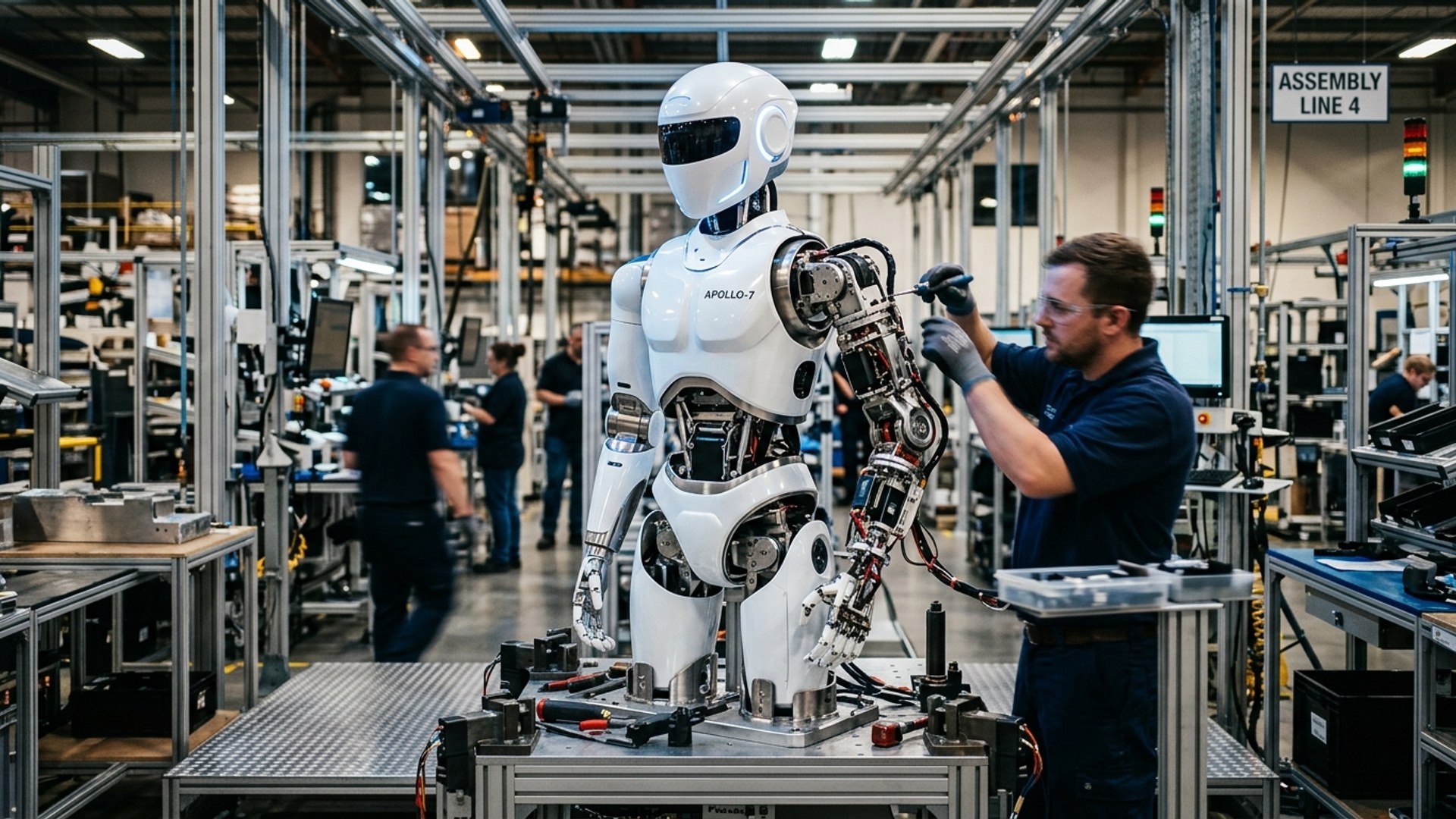
XPENG Robotics has secured more than $900 million in its first external funding round, a deal that values the humanoid robot unit at over $6.3 billion and marks the largest single-round private financing in China's embodied AI industry.
The announcement, made on August 24, 2026, brings together a lead investment from IDG Capital, participation from Gaorong Ventures, and strategic backing from Tencent and Alibaba. The round is more than nine times the size of the unit's 2022 Series A, which raised over $100 million.
A Record Round for Embodied AI
XPENG says both the size and valuation set new records for the sector. The capital will fund software and hardware research and development, training and iteration of Physical AI models, high-quality data generation, construction of end-to-end mass production facilities, and global commercial expansion.
The round extends IDG Capital's relationship with XPENG Robotics, which began with that 2022 Series A. At the time, the unit was known for a quadruped robotic pony aimed at households, and the round was the largest single investment in China's bionic robotics sector in two years.
Now the focus has shifted to IRON, XPENG's next-generation humanoid robot. The robot is expected to enter mass production by the end of 2026, with initial deployment at XPENG's own stores and campuses before a commercial launch and deliveries in China and overseas markets in 2027.
He Xiaopeng, chairman and CEO of XPENG, tied the raise to years of internal development. "Our ambition is for IRON to become a trusted partner for people and a meaningful part of everyday work and life," he said, citing 12 years of full-stack in-house R&D as the foundation for the robotics push.
The IRON Humanoid Robot
IRON is not a small machine. The humanoid has 76 degrees of freedom across its body and 21 in each hand, giving it a range of motion that mirrors human movement. It runs on three Turing AI chips delivering up to 2,250 TOPS of on-device compute, and XPENG says it executes tasks autonomously without remote operation.
The design uses a fully enclosed flexible lattice structure, and the robot's form factor allows it to draw on behavioral data generated through everyday human activity. XPENG's AI Day presentation in November 2025 detailed the underlying stack: a humanoid spine with bionic muscles, fully covered flexible skin, all-solid-state batteries, and a combination of VLT, VLA, and VLM models.
Chips, controllers, motion modules, and dexterous hands are all developed in-house. The company applies automotive-grade quality standards and existing EV manufacturing infrastructure to robot production, a carryover that Gaorong Ventures highlighted in its comments on the round.
Strategic Logic and Investor Support
The strategic logic is the carryover from XPENG's EV business to robotics. XPENG's physical world foundation model, Turing AI chips, and AI infrastructure are cited as the basis for the raise. The company's EV business provides chips, controllers, motion modules, and dexterous hands that transfer directly to the robot line.
IDG Capital described the embodied AI industry as moving from technical breakthroughs toward scalable manufacturing and commercial deployment. Tencent and Alibaba's cloud and distribution assets complement a physical AI push, which is why both joined as strategic investors.
Stay ahead of the AI curve
The most important updates, news, and content — delivered weekly.
No spam. Unsubscribe anytime.
The structure of the deal is notable. This is external capital coming into a controlled subsidiary of a dual-listed public company, not a startup round. XPENG will retain controlling ownership of the robotics business when the deal closes, and the unit will remain consolidated in the group's financial statements.
The round establishes a market valuation for the business and strengthens long-term incentives for senior executives and key talent. Share purchase agreements have been signed but still require closing.
The Data Flywheel Argument
The data argument is as important as the hardware one. XPENG owns both the robot fleet and the factory, which means each deployed robot feeds a production-data-model flywheel that improves the foundation model. This flywheel framing is the standard pitch across physical AI.
The company says it can use behavioral data from everyday human activity because IRON's form factor mirrors human movement. That data feeds the models that make the robot more capable, which in turn makes it more useful in real settings.
Veeda AI, which raised a $90 million seed round earlier in the month, is a comparable example of the data flywheel pitch in physical AI. The company's world-model training data approach reflects the same logic that XPENG is applying at a much larger scale.
Market Comparables and Context
The humanoid market has other large players. DeepSeek's recent investment in Unitree's Shanghai IPO valued Unitree at $9 billion, a figure that shows how far the sector has come. Gravis Robotics raised a $200 million Series A, an order of magnitude smaller than XPENG's round.
The round is the second act of a much smaller first one. The 2022 Series A of more than $100 million was led by IDG Capital, with XPeng and other long-term investors participating. That round funded a quadruped pony, not a humanoid, and the sector was far less developed.
Now the sector is drawing strategic investors from outside robotics. Tencent and Alibaba's participation signals that cloud and distribution assets are seen as complementary to physical AI. The round's size and valuation set new records for the embodied AI sector in China, according to XPENG.
The announcement lays out a dated sequence for mass production and commercial launch. Mass production by the end of 2026, initial deployment at XPENG's stores and campuses, and then official launch with deliveries in China and overseas markets in 2027.
The deal structure means XPENG keeps consolidation while the unit gets an outside valuation mark and strategic investors. That arrangement gives the robotics business financial independence without losing the parent company's manufacturing and technology base.
The round is a bet on the physical AI sector's trajectory, and the numbers are large. Over $900 million raised, a $6.3 billion valuation, and a robot with 76 degrees of freedom and 2,250 TOPS of compute. The sector is moving from research to production, and XPENG is positioning itself at the front of that shift.