Automated SMS Alerts for Temperature Monitoring via Kafka
This workflow automatically monitors temperature data from Kafka and sends SMS alerts when thresholds are crossed.
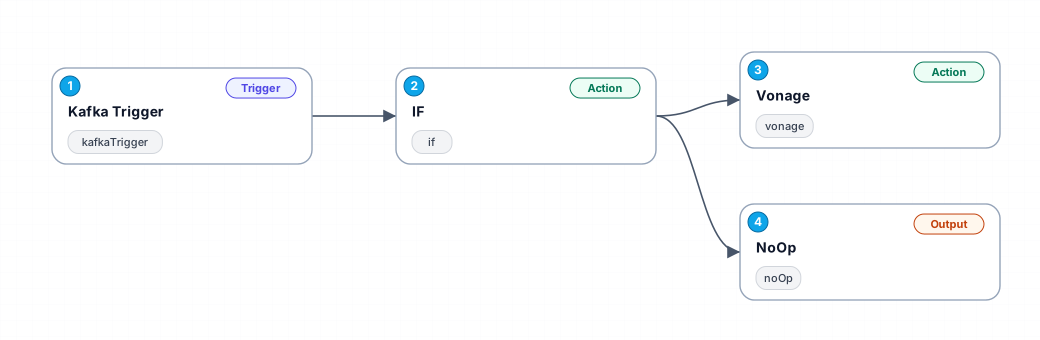
The 'Automated SMS Alerts for Temperature Monitoring via Kafka' workflow is designed to streamline the process of monitoring temperature data in real-time. By utilizing Kafka as a messaging system, this workflow efficiently listens for incoming temperature messages on a specified topic. When the temperature exceeds a defined threshold, the workflow triggers an SMS alert, ensuring that stakeholders are immediately informed of any critical changes.
This workflow is particularly beneficial for industries that require constant temperature monitoring, such as food storage, pharmaceuticals, and climate control systems. By automating the alert process, organizations can minimize response times to temperature fluctuations, thereby reducing risks and ensuring compliance with safety regulations.
Additionally, the integration with Vonage for SMS notifications allows for seamless communication, making it an invaluable tool for teams that need to stay connected and informed. Use cases include alerting maintenance teams, notifying management, or even informing customers about product conditions.
Overall, this workflow enhances operational efficiency and promotes proactive management of temperature-sensitive processes, ultimately leading to improved safety and reliability.
New buyers can create an account from the cart to unlock a controlled $10 first-purchase credit on eligible orders of $25+.
Secure checkout powered by Stripe
Support
How to import this workflow into n8n
- 1Purchase or download the workflow to get the n8n workflow JSON file.
- 2In your n8n instance, open Workflows and choose "Import from File" (or paste the JSON with Ctrl+V on the canvas).
- 3Open each node marked with a credential warning and connect your own accounts and API keys.
- 4Run the workflow once manually to verify the data flow, then toggle it to Active.
Related Productivity workflows
- Automate Personal Life Management with Telegram and Google Services$14.99
- Automate Google Sheets Cleanup by Removing Duplicates via Profile URLs$4.99
- Automate Google Sheets with AI-Driven Text Generation in n8n$9.99
- Automated Daily Briefing for Executive Communication Management$14.99
- Automate Salon Bookings with AI, Google Calendar, and Email Confirmations$14.99
- Automate Meeting Scheduling with AI via Telegram$9.99
More from Matt Buds
Need this deployed? We'll set it up for you.
Our automation experts deploy this workflow in your stack, connect your accounts, and verify it works — or build a custom solution from scratch.