
Back to Blog python
Step 3: The
 ai
ai googlecloud
 discuss
 agents
 agenticarchitect
 ai
ai
Hacking perfectly square AI videos with Veo 3.1 and NanoBanana 2
Paige Bailey May 12, 2026
0 views
If you’ve been playing around with AI video generation lately, you already know the struggle: the...
If you’ve been playing around with AI video generation lately, you already know the struggle: the tech is insanely cool, but sometimes getting it to output exactly the format you want feels like trying to center a <div> in 2014.
Recently, I needed to generate a perfectly looping, high-quality square (1:1) video with audio using Google's new video models. The problem? Native aspect ratio support can sometimes be finicky depending on the model tier, and cropping a generated 16:9 or 9:16 video often ruins the framing or hallucinates weird artifacts at the edges.
So, I had to let it cook. I came up with a slightly hacky but reliable workaround using NanoBanana 2, Veo 3.1 Lite, and our old reliable friend, FFmpeg.
Here is the ultimate pipeline to get flawless square AI videos:
TL;DR
- Start with a square image concept.
- Ask NanoBanana 2 to convert it to a 9:16 aspect ratio by literally just padding the top and bottom with black bars.
- Feed that phone-format 9:16 image into Veo 3.1 Lite as your start and end frames to force a loop.
- Run a quick Python script using
ffmpegto slice off the black bars.
Boom. Perfect square video. Perfect audio sync. And no weird edge hallucinations. Here’s how to automate this flow using Python. 🐍
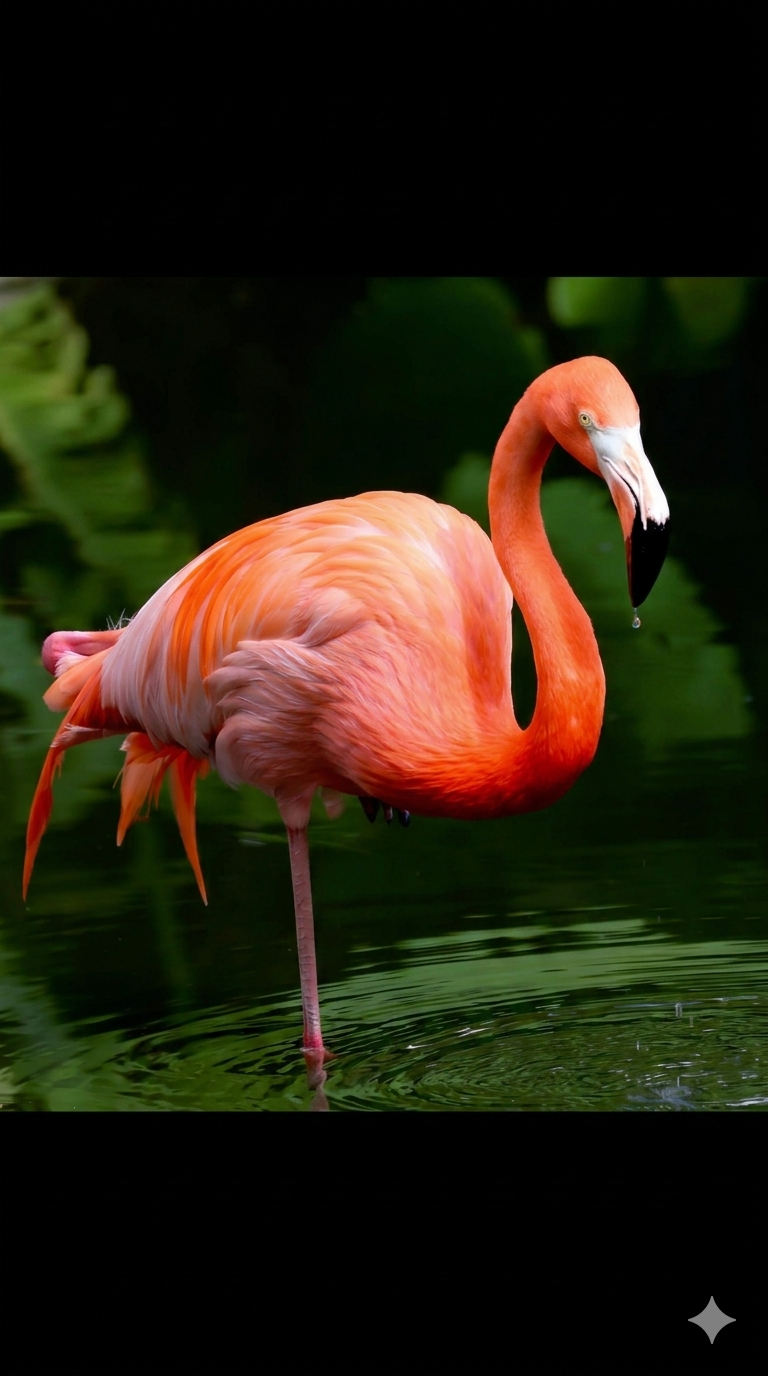
Step 1: Generating the "phone format" 9:16 frames with NanoBanana 2
First, we need to generate our 9:16 image with the black bars baked in. Using the new Gemini API SDK, we can prompt NanoBanana 2 to do the heavy lifting for us.
from google import genai
from google.genai import types

# Initialize your client
client = genai.Client(api_key="YOUR_API_KEY")

def generate_padded_frame(prompt, output_filename):
    print("🎨 Generating padded 9:16 image with NanoBanana 2...")

    # We explicitly tell NanoBanana 2 to give us a 9:16 image
    # where the subject is a square in the middle, padded by black bars.
    hacked_prompt = f"{prompt}. Keep the main subject perfectly square in the center, and pad the top and bottom with solid black bars to make the overall aspect ratio 9:16."

    result = client.models.generate_images(
        model='nanobanana-2', # Our trusty image model
        prompt=hacked_prompt,
        config=types.GenerateImagesConfig(
            number_of_images=1,
            aspect_ratio="9:16",
            output_mime_type="image/jpeg"
        )
    )

    # Save the output
    for generated_image in result.generated_images:
        image = generated_image.image
        image.save(output_filename)
        print(f"✅ Saved to {output_filename}")

# Generate our start/end frame
generate_padded_frame("A majestic pink flamingo standing in a serene pond", "flamingo_padded.jpg")
Step 2: Generating the video with Veo 3.1 Lite
Now that we have our 9:16 image with black bars (flamingo_padded.jpg), we pass it to Veo 3.1 Lite. By using the same image as the visual prompt, we ensure the video maintains those exact black bars throughout the generation process.
(Note: In the Veo web UI, you can set this as the start and end frame for a perfect loop. Here is the API equivalent for generating the video from your image).
import time

def generate_video(image_path, video_prompt, output_filename):
    print("🎬 Uploading frame and prompting Veo 3.1 Lite...")

    # Upload the padded image to the Gemini API
    initial_frame = client.files.upload(file=image_path)

    # Wait for the file to be processed
    while initial_frame.state.name == "PROCESSING":
        print(".", end="", flush=True)
        time.sleep(2)
        initial_frame = client.files.get(name=initial_frame.name)

    # Call Veo 3.1 Lite
    # We ask it to animate the subject but keep the black bars untouched
    response = client.models.generate_content(
        model='veo-3.1-lite',
        contents=[
            initial_frame,
            f"{video_prompt}. The flamingo moves slightly, but the black bars at the top and bottom must remain exactly the same."
        ]
    )

    # Save the generated video bytes
    with open(output_filename, "wb") as f:
        f.write(response.text.encode('utf-8')) # Handling depends on raw bytes returned
    print(f"\n✅ Video generated and saved as {output_filename}")

generate_video("flamingo_padded.jpg", "Cinematic shot of a flamingo looking around", "raw_veo_output.mp4")
Step 3: The ffmpeg post-processing
Now we have a beautiful video of a flamingo, but it's a 9:16 file with annoying black bars at the top and bottom.
We could crop this frame-by-frame using Python libraries like MoviePy, but honestly? ffmpeg via the subprocess module is infinitely faster, uses way less memory, and most importantly: it perfectly preserves the audio stream without degrading it through re-encoding.
Since the video is 9:16, trimming it to iw:iw (input width : input width) creates a perfect 1:1 square. FFmpeg is smart enough to center the crop automatically, perfectly slicing off the top and bottom black bars.
import subprocess

def crop_to_square(input_video, output_video):
    print("✂️ Cropping out the black bars with FFmpeg...")

    command =[
        'ffmpeg',
        '-y',                 # Overwrite output if it exists
        '-i', input_video,    # Input file
        '-vf', 'crop=iw:iw',  # Video Filter: Crop to width x width (automatically centered!)
        '-c:a', 'copy',       # Copy the audio as-is (chef's kiss for performance)
        output_video
    ]

    try:
        subprocess.run(command, check=True, stdout=subprocess.DEVNULL, stderr=subprocess.DEVNULL)
        print(f"🔥 Success! Perfectly square video saved to {output_video}")
    except subprocess.CalledProcessError as e:
        print(f"💀 FFmpeg failed: {e}")

# Run the final crop
crop_to_square("raw_veo_output.mp4", "final_square_flamingo.mp4")
{% embed https://x.com/DynamicWebPaige/status/2054247282841985125 %}
Why this workaround actually... works
- Framing control: When you force the AI to outpaint black bars first, you control the framing of the main subject. You aren't relying on the video model to guess what to keep in the center.
- Audio preservation: The
'-c:a', 'copy'flag in FFmpeg ensures you don't lose any audio fidelity when manipulating the video file. - Zero hallucinations: Because the video model is explicitly told to keep the black bars, it doesn't waste compute trying to generate weird background details at the extreme top and bottom edges.
Sometimes the best engineering solutions are just stacking simple tools together in a trench coat. 🧥
Have you guys found any other weird/genius hacks for wrangling AI video generation APIs? Drop them in the comments, I’d love to test them out!
(P.S. Make sure you have ffmpeg already installed on your machine before running the Python script, or it will yell at you).
Comments
More Blog
View allaiContext bankruptcy: The case for strategic forgetting for AI Agents
Most of us have seen a coding agent fail to complete a task we know it can do. We just don't...
J
James O'ReillygooglecloudParallel Compliance Engine: Drive-to-Sheets Multi-Agent Orchestration
When building Generative AI applications, developers often encounter a massive bottleneck: sequential...
A
Aryan IranidiscussIs It Ethical to Post and Ask About Circuits on Dev.to?
I’ve been thinking about sharing some electronic circuit posts on Dev.to — small circuits, DIY...
C
codebunny20agentsThe One-Click Exporter: AI Studio Antigravity, Probed to Its Limits
What nobody tells you about exporting your multi-agent prototype to a local workspace. Every...
L
leslysandraagenticarchitectGuarding the till while autonomous data agents do the digging
Autonomous agents are genuinely good at answering messy business questions. Give one an LLM and a set...
S
Sireesha PulipatiaiReturn on Attention: Why AI Code Reviews Are Wearing Us Out
PR volume went up, ticket quality didn't, and the gap got filled with LLMs on both sides of the review: bots reviewing, bots replying, bots occasionally arguing with bots about priorities that only existed in a teammate's head. Our CEO named the actual problem, and it's bigger than code review.
C
christineReady-made automations for this
Workflows from the Neura Market marketplace related to this Stable Diffusion resource
- AI Smart Supplier Matcher - Automated Sourcing & Contract Generation Workflown8n · $100 · Related topic
- Generate AI Viral Videos with NanoBanana & VEO3, Shared on Socials via Blotaton8n · Free · Related topic
- End-to-End Blog Generation for WordPress with LLM Agents & Image - GP-5 Optimizedn8n · Free · Related topic
- Automated Blog Post Generation with GPT-4 and Publishing to Ghost CMSn8n · Free · Related topic