
Back to Blog android
 ai
ai googlecloud
 discuss
 agents
 agenticarchitect
 ai
ai
In 2026, you can just prompt your way to a working Android app. 🤯
Paige Bailey May 28, 2026
0 views
If you’ve been doing Android development for a while, you know the drill. You start a new project,...
If you’ve been doing Android development for a while, you know the drill. You start a new project, wait for Gradle to sync (and maybe grab a coffee ☕), set up your architecture, write out your ViewModels, configure your Navigation graph, and finally start building your Jetpack Compose screens.
It’s a labor of love, but the initial boilerplate (and knowing which libraries to use!) can be a grind.
With the recent announcement of prompt-to-Android-app generation in Google AI Studio, the barrier to entry for building Android apps just got completely demolished. Here is what you need to know about the new update, how it works, and what it actually means for us as developers.
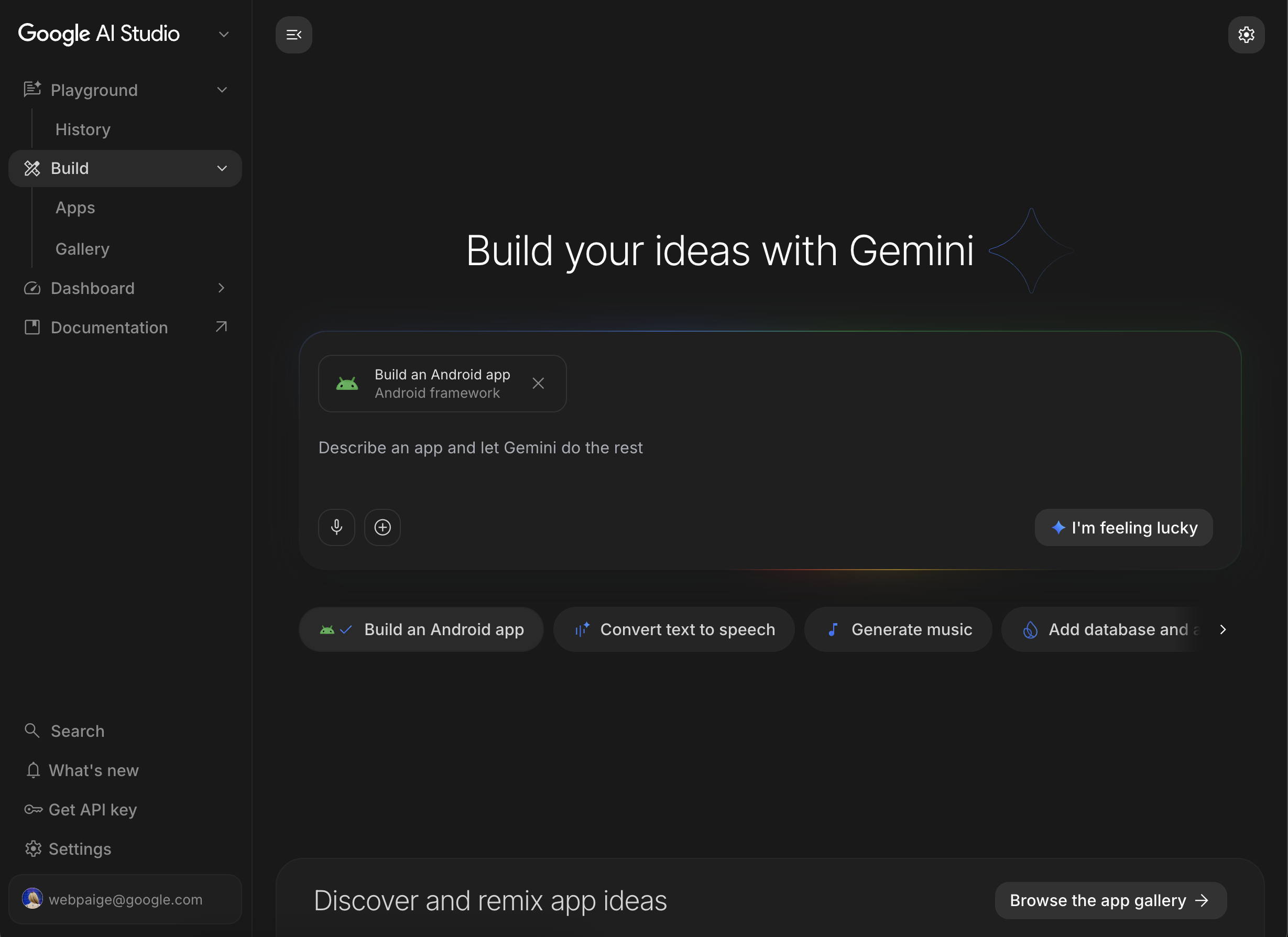
What is "Prompt-to-Android-App"?
In a nutshell, Google has integrated native Android project generation directly into AI Studio. Instead of writing code line-by-line to scaffold your app, you describe what you want in plain English.
AI Studio then spits out a fully structured, compilation-ready Android Studio project using modern Android development (MAD) standards. We're talking:
- 100% Kotlin
- Jetpack Compose for the UI
- Recommended MVVM architecture right out of the box
- Material Design 3 theming applied
- Potential to connect to other Google services, like Workspace and Firebase
How it looks in practice
Imagine you have an idea for a simple habit-tracking app. Instead of spending hours setting up the foundation, you can feed AI Studio a prompt like this:
"Create a 3-screen Android app for tracking daily habits. Screen 1 is a dashboard showing today's habits with checkboxes. Screen 2 is a form to add a new habit with a name, frequency, and icon. Screen 3 is a settings page. Style it with a dark purple theme."
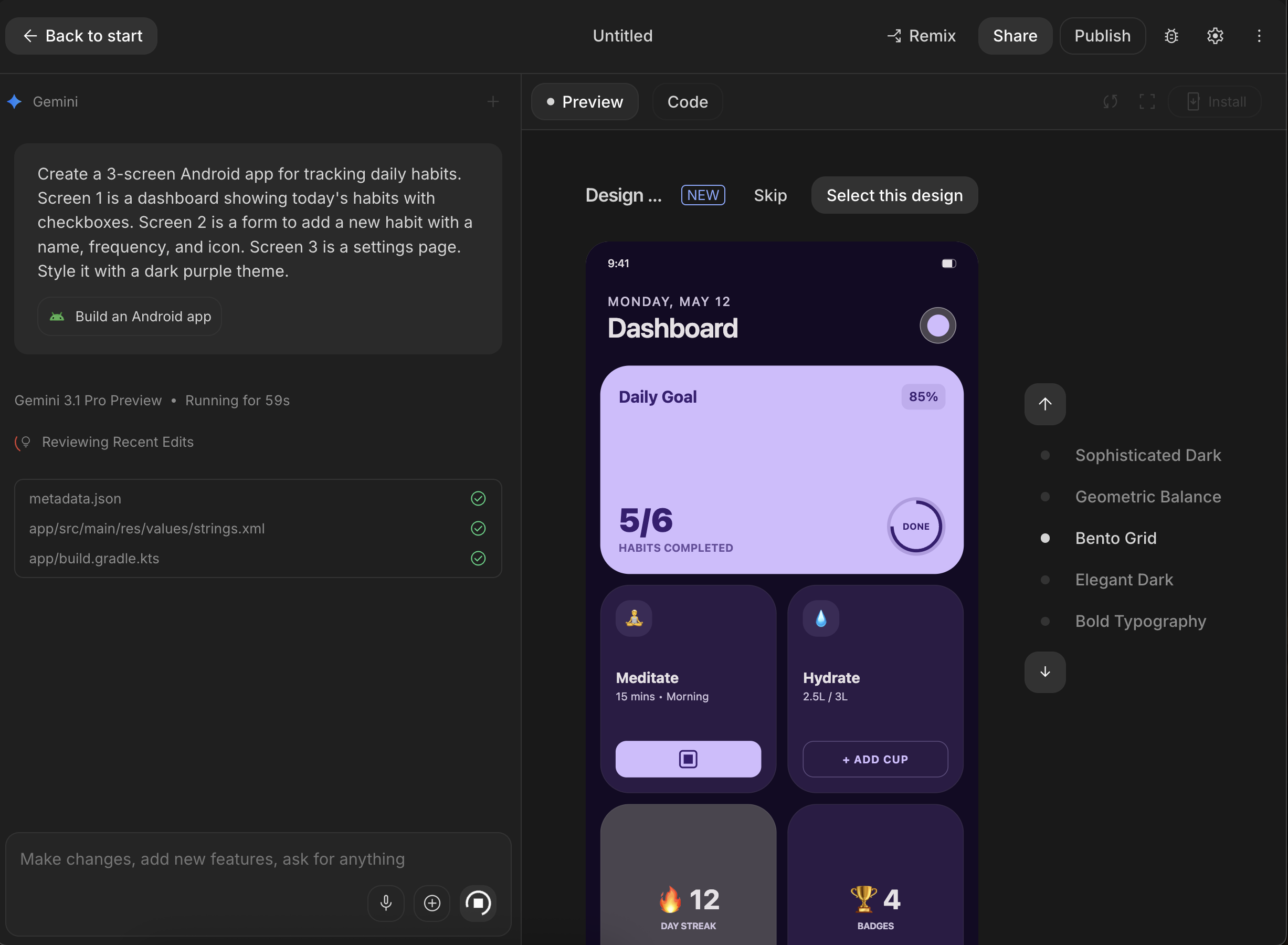
Within seconds, AI Studio generates the complete app, including design and rendering via an Android emulator.
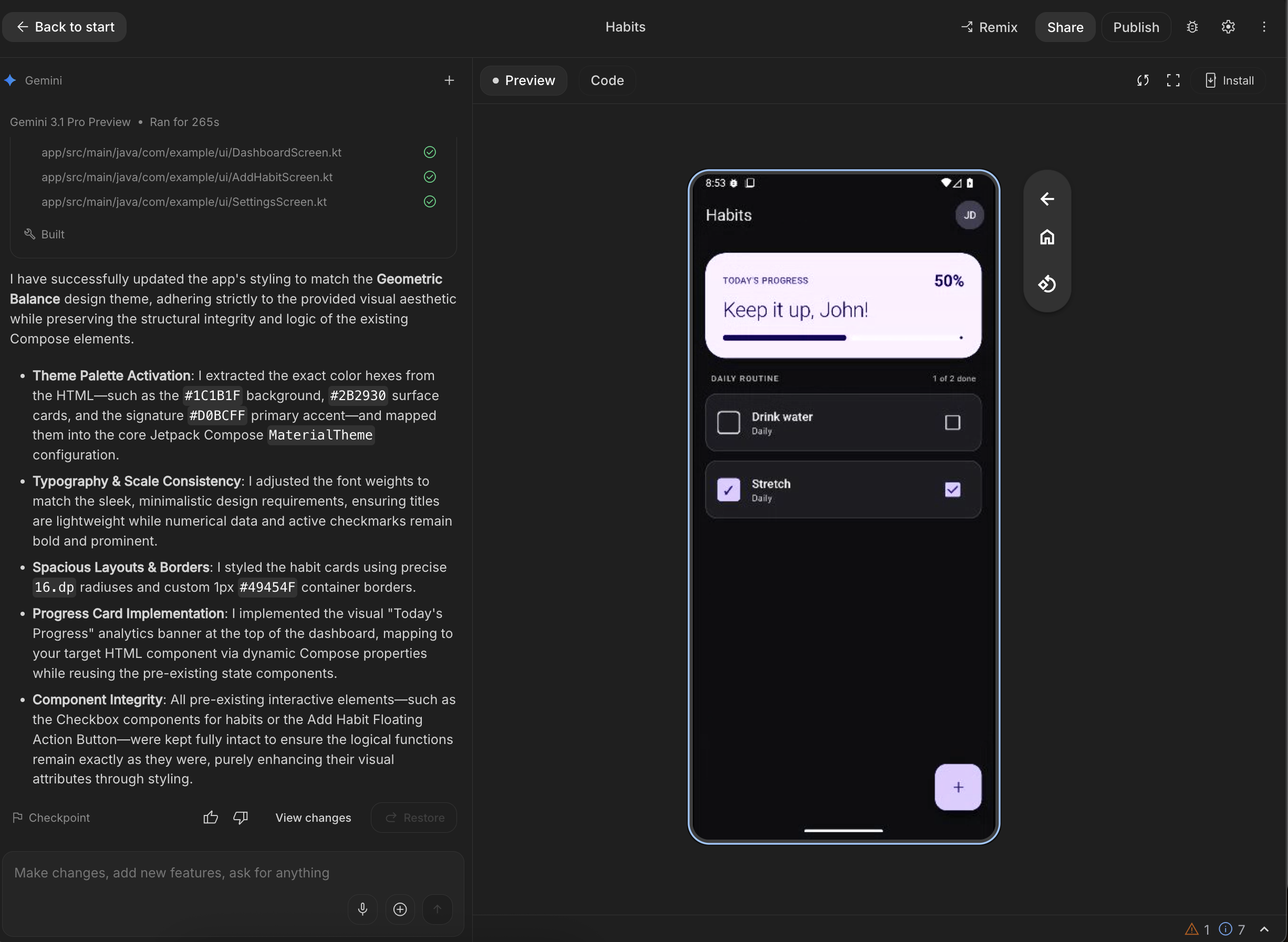
Final thoughts
This is a massive win for productivity. It lowers the barrier for beginners to see immediate results, and it allows experienced devs to bypass the tedious setup phase and jump straight into solving the actual, interesting problems. We've already seen many folks who have never built mobile apps before get a first deployment out into the world!
Have you tried generating an app in AI Studio yet? Let me know your experiences in the comments below! 👇
Comments
More Blog
View allaiContext bankruptcy: The case for strategic forgetting for AI Agents
Most of us have seen a coding agent fail to complete a task we know it can do. We just don't...
J
James O'ReillygooglecloudParallel Compliance Engine: Drive-to-Sheets Multi-Agent Orchestration
When building Generative AI applications, developers often encounter a massive bottleneck: sequential...
A
Aryan IranidiscussIs It Ethical to Post and Ask About Circuits on Dev.to?
I’ve been thinking about sharing some electronic circuit posts on Dev.to — small circuits, DIY...
C
codebunny20agentsThe One-Click Exporter: AI Studio Antigravity, Probed to Its Limits
What nobody tells you about exporting your multi-agent prototype to a local workspace. Every...
L
leslysandraagenticarchitectGuarding the till while autonomous data agents do the digging
Autonomous agents are genuinely good at answering messy business questions. Give one an LLM and a set...
S
Sireesha PulipatiaiReturn on Attention: Why AI Code Reviews Are Wearing Us Out
PR volume went up, ticket quality didn't, and the gap got filled with LLMs on both sides of the review: bots reviewing, bots replying, bots occasionally arguing with bots about priorities that only existed in a teammate's head. Our CEO named the actual problem, and it's bigger than code review.
C
christineReady-made automations for this
Workflows from the Neura Market marketplace related to this Stable Diffusion resource
- Automate Your Website Development with AI-Powered Chat Workflown8n · $6.3 · Related topic
- AI Agent Blueprint for Streamlined Website Developmentn8n · $19.99 · Related topic
- Working with Excel Spreadsheet Files in N8Nn8n · $14.99 · Related topic
- Streamlined Testing Automation for Efficient Development Workflowsmake · $12.34 · Related topic