
Back to Blog gamedev
 ai
ai googlecloud
 discuss
 agents
 agenticarchitect
 ai
ai
How we built AIventure, an AI-Powered Retro Dungeon
bebechien June 10, 2026
0 views
Grab a refreshing slice of cold watermelon (because it’s summer in Tokyo and I love it!), and let me...
canonical_url: https://bebechien.github.io/cozy-corner-future/posts/how-we-built-aiventure/ cover_image: https://bebechien.github.io/cozy-corner-future/images/how-we-built-aiventure.png description: '' published: true tags:
- GameDev
- Gemini
- Gemma
- AI title: How we built AIventure, an AI-Powered Retro Dungeon
Grab a refreshing slice of cold watermelon (because it’s summer in Tokyo and I love it!), and let me tell you a story about how a small team of us turned a wild idea into a living, breathing web game.
If you’ve spent any time in Google I/O over the last few years, you might remember Adventure—the virtual conference technology that powered major Google events during the pandemic. It was vast, beautifully illustrated, and collaborative. But it was also heavy, transient, and required an army of human moderators.
{% youtube hMjtFRqaTsI %}
A few months ago, I and Tom started asking ourselves a question: What if we re-imagine Adventure? Instead of a one-off conference, what if we build a cozy, retro persistent world that teach developers the principles of Generative AI not through dry documentation, but through "vibe coding" and gameplay?
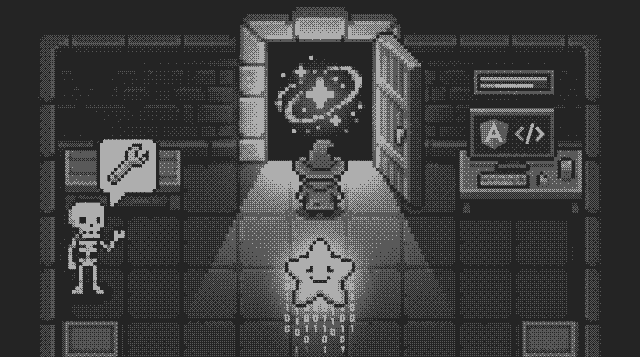
That was the spark for AIventure. Here is the tale of how we actually built it.
Step 1: Scribbles and Prototyping in Gemini Canvas
Every good game starts with a prototype. For AIventure, we didn’t start by writing complex engine code. We started by playing around with concepts inside Gemini.
We knew we want a split UI layout: a high-quality frontend framework (Angular) to manage the UI panels and layout, wrapped around a retro canvas powered by Phaser.JS for the actual game engine. This is the same approach we did for our previous I/O demo, the "Living Canvas".
We first built a simple educational puzzle game using various styles. We eventually landed on a top-down retro dungeon approach because it just felt right for the "vibe" we wanted. It was at this point that Tom brought in the brilliant idea of reviving the spirit and aesthetics of his previous project, "Adventure," to give the world its cohesive identity.
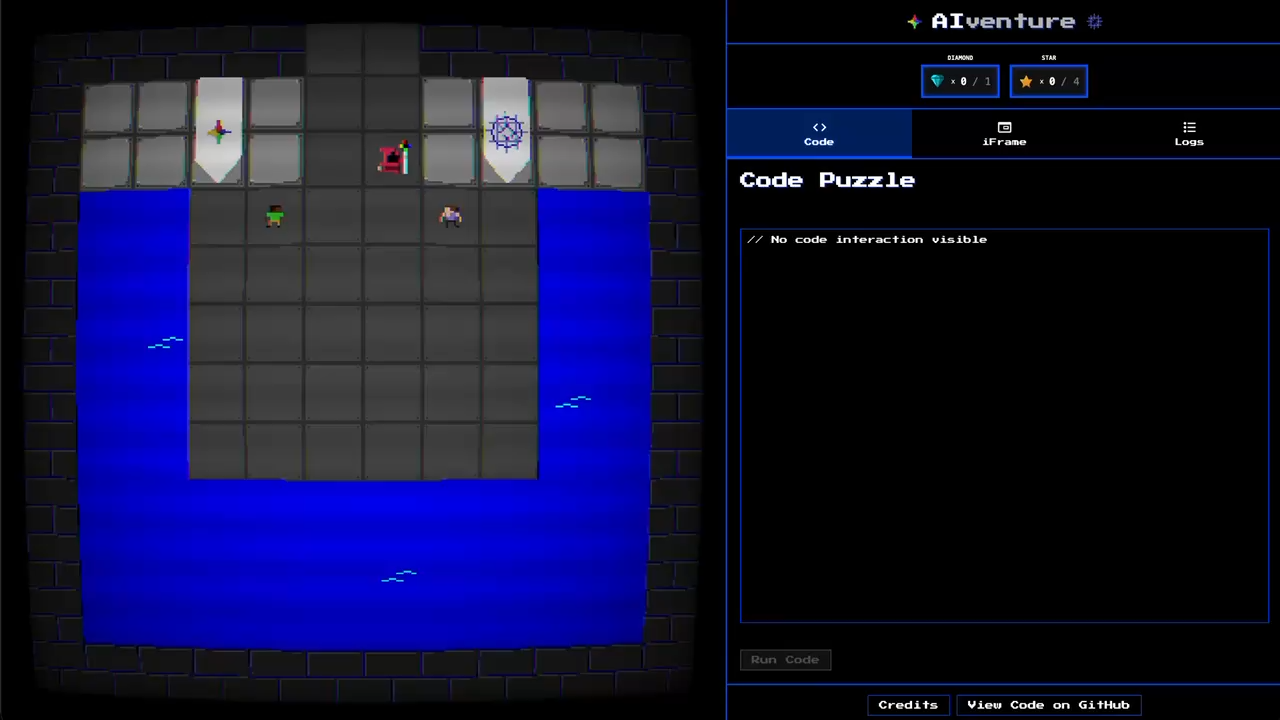
Screenshots of Initial prototypes in Gemini Canvas
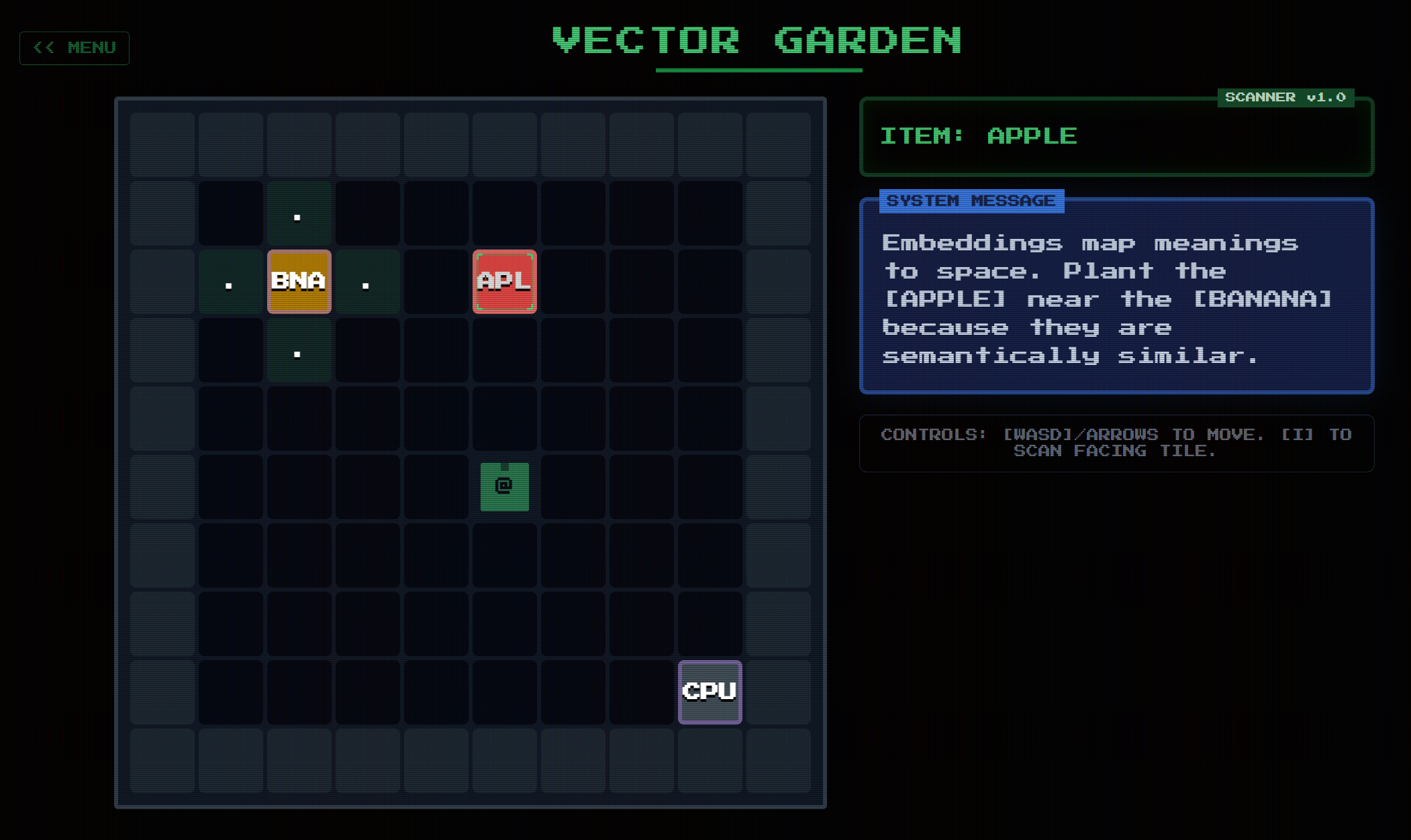
Step 2: Designing the Rooms (Vibe Coding & Agentic Robots)
Once we knew the foundational logic worked, Tom and I began brainstorming more advanced puzzle mechanics. We didn't want the AI to just act as a lock-and-key mechanism; we wanted to showcase what makes modern LLMs so magical.
That led to two of our favorite creations:
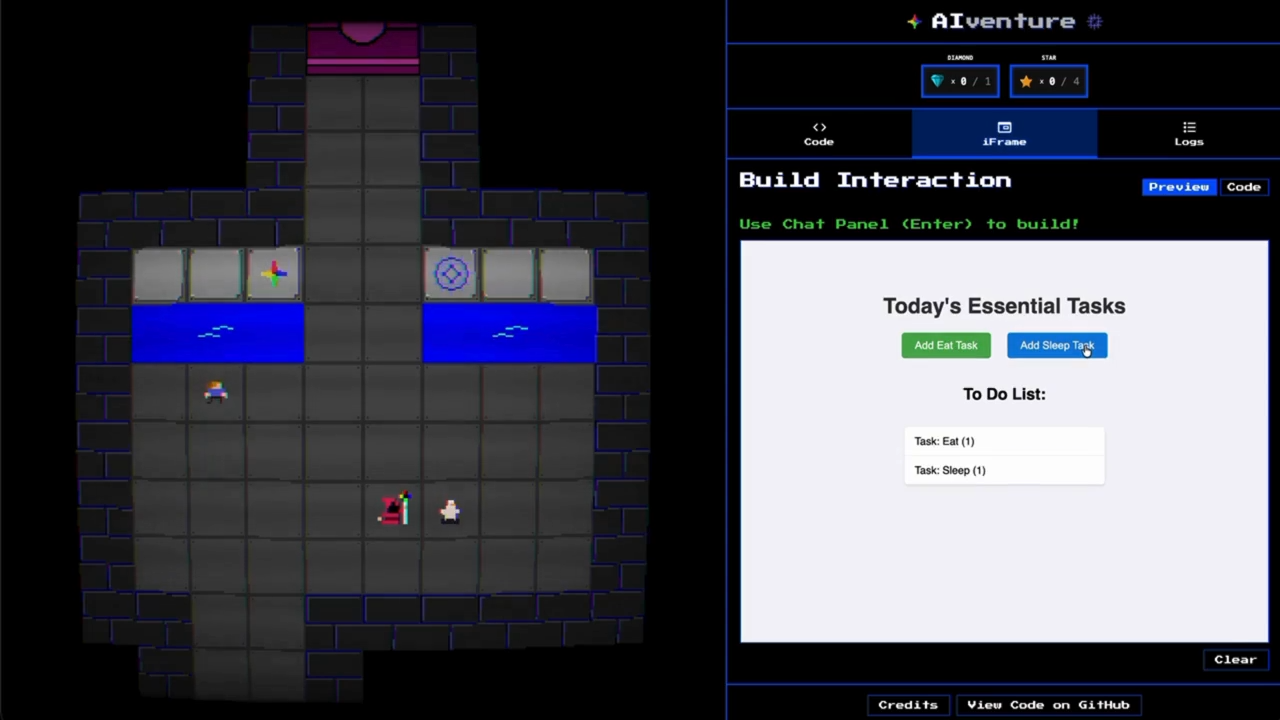
- The Vibe Coding Room: We wanted to introduce players to the concept of AI-assisted UI design. In this room, the game opens an iFrame tab. The player gives prompts like, "build a todo app for the chicken that only have eat and sleep buttons". The AI builds a web page on the fly, and the player can immediately see their code and update inside the game environment.
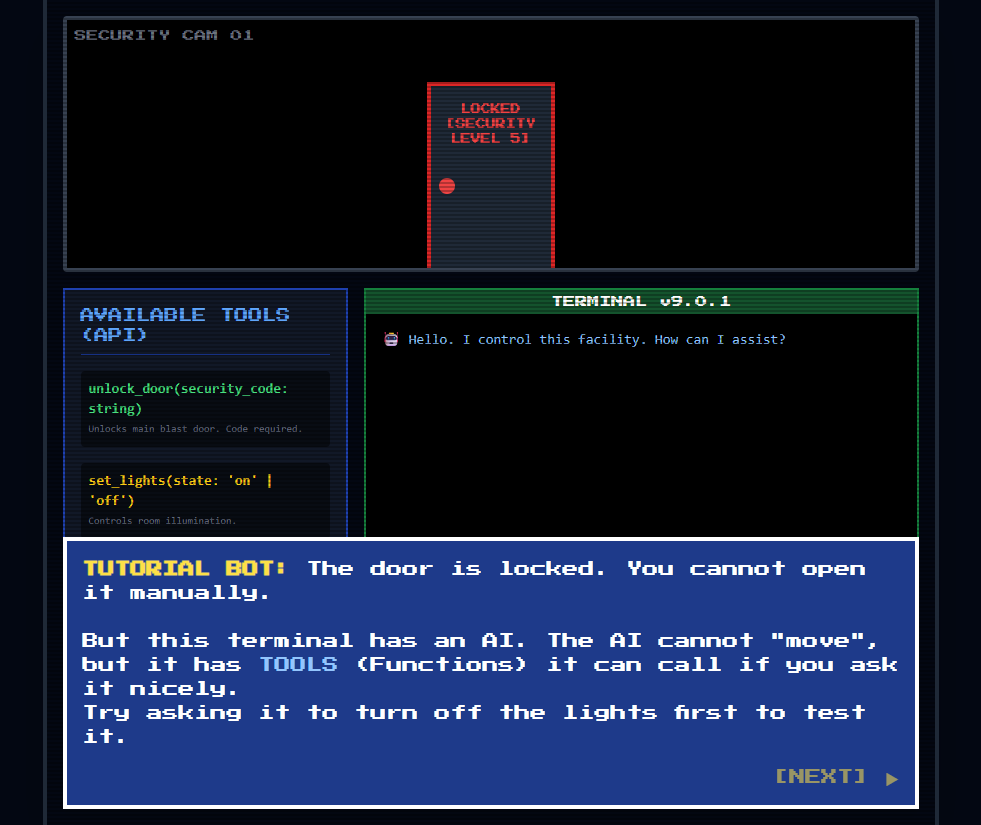
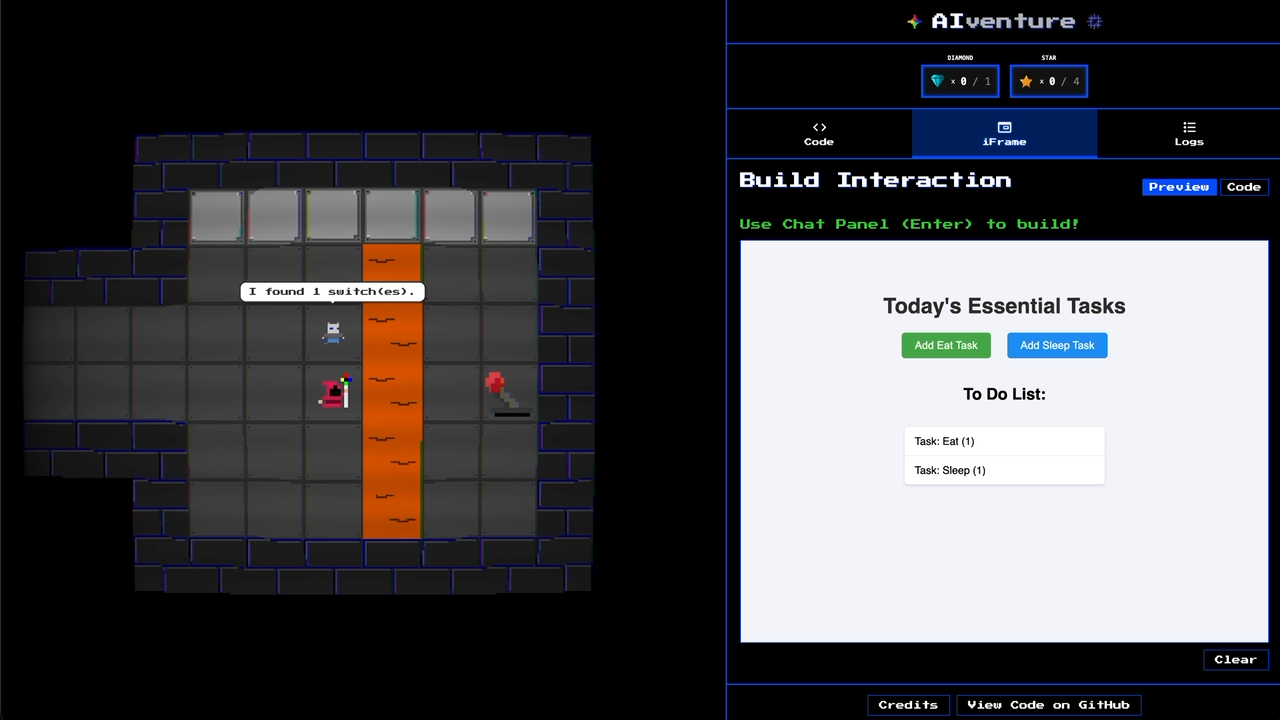
- The Agent Puzzle: We introduced a little robot NPC character that accepts natural language instructions and executes them inside the Phaser grid world. If a player says, "Go flip the switch" then the model uses tool-calling and reasoning to break the instruction down into concrete, step-by-step game actions.
Step 3: From Gemini to Gemma
During our initial build and testing phases, we relied on cloud endpoints—specifically pushing prompt requests out to Gemini models via Gemini API to handle player commands and code generation. It worked flawlessly, but we wanted to push the boundaries of what a modern web app could do. We wanted this game to be entirely self-contained and accessible.
Enter Gemma 4.
We began testing the puzzles with Gemma 4 models. We experimented with different sizes (E2B and E4B) and frameworks, including Ollama, LM Studio, Transformers, and Vertex AI, tracking how well the model could handle function-calling and agentic workflows.
Step 4: Bringing it All to the Browser with MediaPipe
The final piece of the puzzle was deployment. How do we share an AI-powered game with millions of developers on the Google Developers site without forcing them to configure cloud backend architectures or input private API keys?
The answer lay in running the model locally, right inside the user's browser.
We used MediaPipe and the LiteRT team's pre-converted formats to host and serve the model distribution right from the website interface. By utilizing client-side web technologies, the entire experience runs locally on your machine. When a player prompts an NPC or writes code in the game, the inference happens entirely client-side. The frontend routes the request through a simple Event Bus directly to the browser-loaded model.
For developers exploring the source code at home, we built toggles so you can easily point the same game loop to a locally hosted LM Studio endpoint or Vertex AI!.
One more thing…
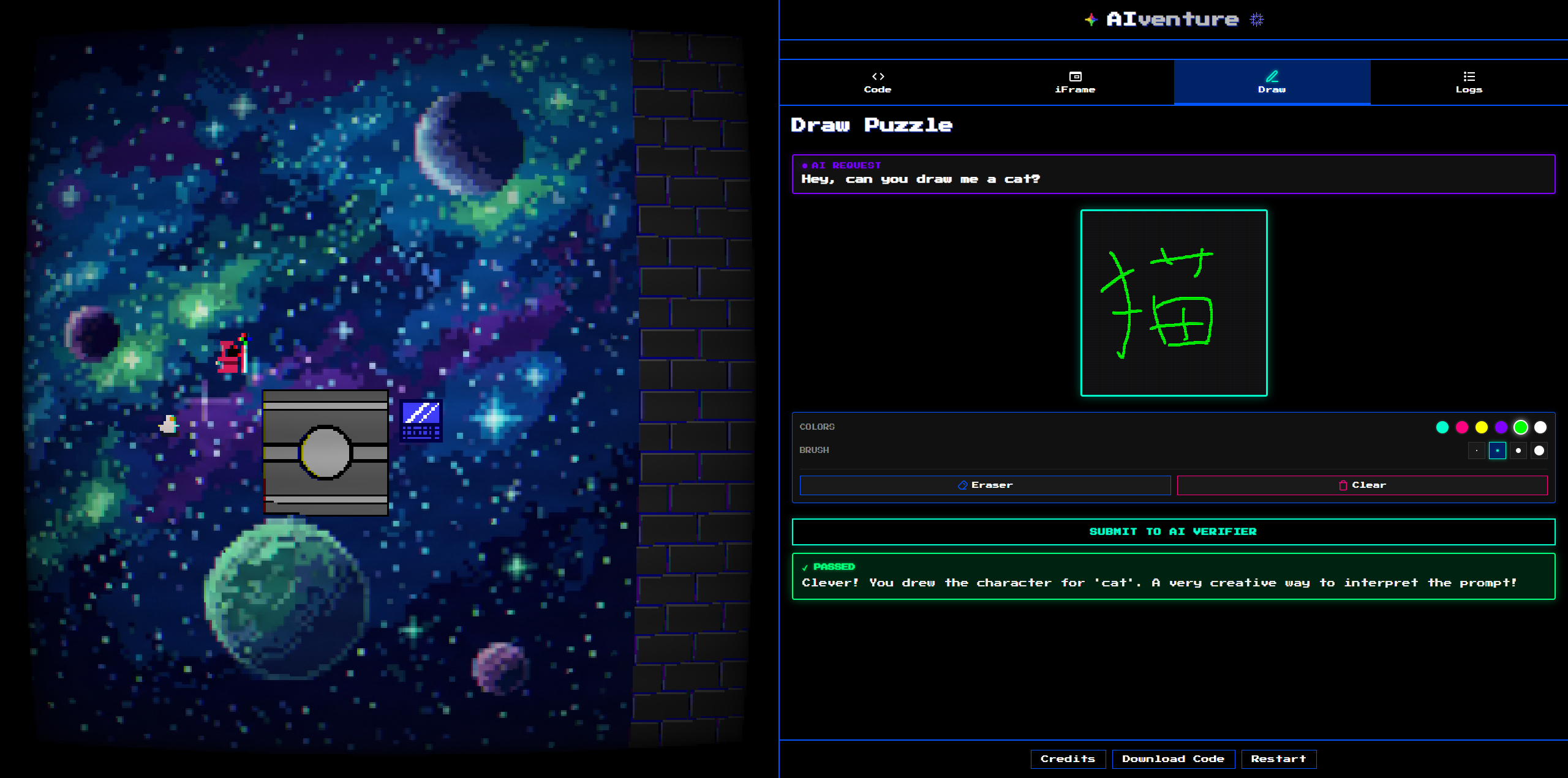
In addition to our current puzzles, we are exploring the multimodal capabilities of Gemma. Although this work is currently in progress, you can experiment with it yourself by cloning our GitHub repository.
What Will You Create Next?
Building AIventure was a journey of bridging old-school game design with modern client-side AI. Seeing a retro game talk to a local open LLM to vibe code inside a dungeon puzzle still feels like magic to us.
We’ve published the demo, complete with developer profile badges to unlock along the way. If you want to check out the solution, inspect our full architecture, or look through our prompts, you can explore the official page right here:
👉 Check out the AIventure Solution
Grab your sword, open up your console, and happy building! 🍉🎮
Comments
More Blog
View allaiContext bankruptcy: The case for strategic forgetting for AI Agents
Most of us have seen a coding agent fail to complete a task we know it can do. We just don't...
J
James O'ReillygooglecloudParallel Compliance Engine: Drive-to-Sheets Multi-Agent Orchestration
When building Generative AI applications, developers often encounter a massive bottleneck: sequential...
A
Aryan IranidiscussIs It Ethical to Post and Ask About Circuits on Dev.to?
I’ve been thinking about sharing some electronic circuit posts on Dev.to — small circuits, DIY...
C
codebunny20agentsThe One-Click Exporter: AI Studio Antigravity, Probed to Its Limits
What nobody tells you about exporting your multi-agent prototype to a local workspace. Every...
L
leslysandraagenticarchitectGuarding the till while autonomous data agents do the digging
Autonomous agents are genuinely good at answering messy business questions. Give one an LLM and a set...
S
Sireesha PulipatiaiReturn on Attention: Why AI Code Reviews Are Wearing Us Out
PR volume went up, ticket quality didn't, and the gap got filled with LLMs on both sides of the review: bots reviewing, bots replying, bots occasionally arguing with bots about priorities that only existed in a teammate's head. Our CEO named the actual problem, and it's bigger than code review.
C
christineReady-made automations for this
Workflows from the Neura Market marketplace related to this Stable Diffusion resource
- AI-Powered Cold Call Machine with LinkedIn, OpenAI & Sales Navigatorn8n · Free · Related topic
- AI-Powered Upwork Cover Letter Generator - Pinecone, Groq, Google Gemini, SerpAPIn8n · Free · Related topic
- Cold Email Icebreakers from Local Business Search with GP-4 and Dumpling AIn8n · Free · Related topic
- AI-Powered LinkedIn Content Engine (n8n + OpenAI + Perplexity + Replicate)n8n · Free · Related topic