
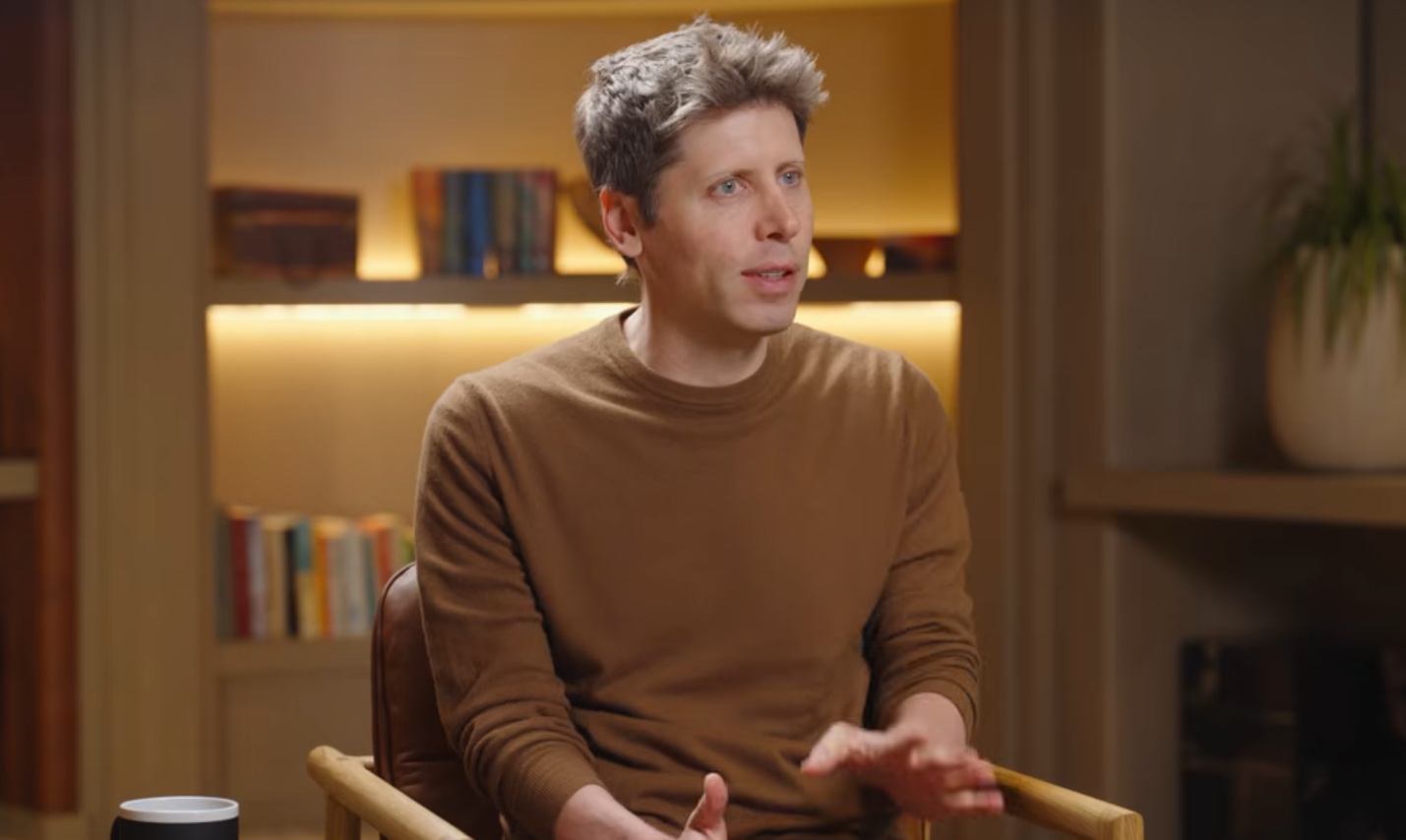
OpenAI Chief Executive Sam Altman has warned that the future of artificial intelligence could be dangerously concentrated in the hands of a few, while also admitting his earlier predictions about how quickly AI would disrupt the economy were too optimistic. In a wide-ranging interview with podcaster David Senra, Altman said the industry must ensure people, not companies, steer the direction of the technology. His comments, published on August 23, 2026, at 21:39 EDT, come amid a fierce debate over whether AI models should be open or closed.
Altman, who leads OpenAI Group PBC, said the biggest risk is not that AI becomes too powerful, but that too few people get to decide how it is used. "The right approach is for people to deeply control the future," he said. He argued that social choices, not corporate preferences, should determine the path of AI development. "Society and the model will evolve together," he added.
A Thinly Veiled Jab at a Rival
Altman's remarks were almost certainly aimed at Dario Amodei, the CEO of Anthropic, according to the source's analysis. Amodei has been one of the most vocal alarmists about AI risks, repeatedly stressing the need for safeguards. In June, Amodei warned that Anthropic's Mythos model presented "very real risks" to cybersecurity, saying it could wreak havoc with the financial sector, critical infrastructure, and national security if misused.
Altman took direct aim at that kind of thinking. "There are a lot of people who are so nervous about the magnitude of those risks and get so taken by that and feel a need to protect the world," he said. He then quoted the kind of argument he opposes: "Like, you know, 'We should trade off a lot of liberty for safety.'"
That line is a clear rejection of Amodei's push for greater government regulation. Amodei has advocated for more oversight of AI, while Altman disagrees, saying such regulation gives up liberty for safety. The tension between the two CEOs reflects a broader split in the industry over how to handle AI's dangers.
The Open-Weight Divide
The disagreement extends beyond regulation into the technical design of AI models. Last month, Anthropic refused to endorse open-weight models, which can be shared, downloaded, modified, and run on independent infrastructure. They are essentially the open-source version of AI. OpenAI has released some open-weight models, but its most powerful frontier models remain entirely closed source.
Last year, OpenAI released two open-weight models: gpt-oss-120b and gpt-oss-20b. Anthropic, by contrast, has not released a single open-weight model. That gap matters because virtually all major Chinese AI companies release their models as open-weight. Chinese open-weight models have been able to match the capabilities of Anthropic's and OpenAI's best models, and they are far more affordable to run.
Nvidia Corp., Microsoft Corp., and Meta Platforms Inc. have all argued that American model makers should adopt the open-weight approach to avoid losing market share to Chinese competitors. Altman's own company sits in a middle position, offering some open models while keeping its frontier technology locked down. The source notes that Altman's fear of AI control concentration is paradoxical, because the very fear of risks could lead to that concentration.
A Slower Boom Than Expected
Altman also conceded that the economic transformation he once predicted is taking longer than he thought. He said the AI industry has failed to show how the technology gives people more autonomy and opportunities. But he remains bullish on what is coming. "We are about to see the greatest boom in people starting smaller businesses than we have ever seen," he said. "AI is empowering that."
Yet he admitted that boom will be slower to arrive than he once believed. His initial estimate on AI's timeline was wrong, he said. "I thought when we got to GPT-4, which was back in 2023, that very quickly after that there was going to be much more disruption," Altman said. He had expected software businesses to become vulnerable to AI much sooner.
Altman now realizes there is too much inertia in the economy for overnight change. He got it wrong because he assumed organizations would reinvent work around frontier models quickly. AI models gain new capabilities rapidly due to a tight product-release schedule, but businesses cannot move at that pace. They must change software, data access, compliance processes, budgets, employee responsibilities, and customer expectations.
Stay ahead of the AI curve
The most important updates, news, and content — delivered weekly.
No spam. Unsubscribe anytime.
The Lag as a Stabilizer
Altman believes the lag between development and implementation is actually a good thing. It will make the transition "smoother and slower," acting as a stabilizing force. That is a notable shift from his earlier stance, when he expected disruption to hit almost immediately after GPT-4's release in 2023. The source highlights that Altman's admission of being wrong about the timeline is notable, given his usual confidence.
The interview covered a range of topics, but the core message was consistent: AI's future should be shaped by people, not by a small elite. Altman warned against a situation where most people lose their voice as AI changes the world. He said the right approach is for people to deeply control the future, a phrase he repeated with emphasis.
The stakes are high. OpenAI and Anthropic are rivals, and their differing philosophies on safety and openness will shape the industry for years. Amodei's alarmism has pushed him toward regulation, while Altman's libertarian streak leads him to resist it. The source's analysis suggests Altman's comments were a direct challenge to Amodei's approach, even if he never named him.
The Broader Context
The debate over open-weight models is not just technical. It is about who gets to control AI. Chinese companies have embraced open-weight models, and that has given them a competitive edge. American firms like Nvidia, Microsoft, and Meta are pushing for a similar approach, warning that closed models could cede the market to China.
OpenAI's decision to release some open-weight models last year, including gpt-oss-120b and gpt-oss-20b, shows a willingness to compromise. But its frontier models remain closed, and Anthropic has refused to release any. That leaves a stark contrast between the two leading American AI labs.
Altman's comments on liberty and safety are likely to fuel further debate. He rejected the idea that safety requires sacrificing freedom, a position that puts him at odds with Amodei and other regulators. The source notes that Altman's fear of AI control concentration is paradoxical, because fear of risks could lead to that concentration.
The article was written by Mike Wheatley, with photo credit to David Senra/YouTube. SiliconANGLE Media, founded by John Furrier and Dave Vellante, has flagship locations in Silicon Valley and the New York Stock Exchange. Its brands include SiliconANGLE, theCUBE Network, theCUBE Research, CUBE365, theCUBE AI, and theCUBE SuperStudios. The theCUBE AI Video Cloud uses theCUBEai.com neural network. SiliconANGLE has more than 15 million viewers of theCUBE videos and over 11,400 theCUBE alumni.
Latest stories on the site include Hugging Face exploring a sale at a $13 billion valuation, an AI coding model called Ox Alpha with an unknown creator, tokenmaxxing to sovereign alpha, Nscale seeking a $3 billion IPO, Starcloud raising $250 million for orbital AI data centers, and DeepSeek debuting a multimodal language model competitive with Opus 4.8.
Altman's interview with Senra comes at a critical moment. The AI industry is moving fast, but the economy is not. His admission that he was wrong about the timeline is a rare moment of humility from a CEO known for bold predictions. Whether that humility will translate into a different approach to regulation and open models remains to be seen.
For now, Altman's message is clear: people should control the future, not companies, and not fear. "The right approach is for people to deeply control the future," he said. The question is whether the industry will listen.