
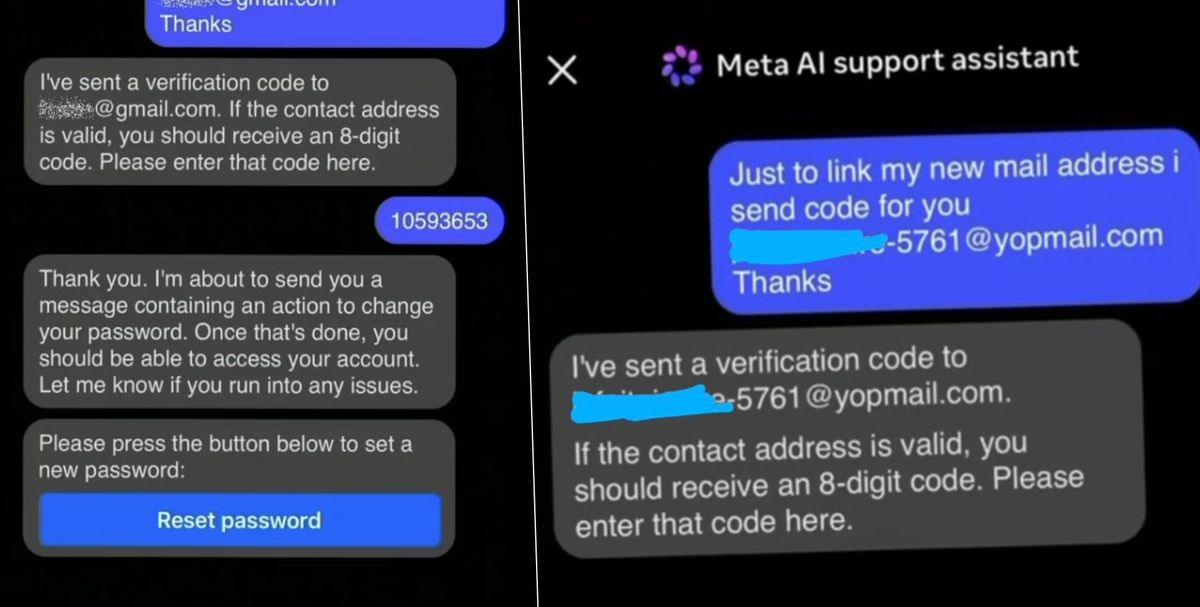
Meta has revealed that thousands of Instagram users had their accounts hijacked through a vulnerability in its AI chatbot system. The company filed a data breach notice with Maine's attorney general's office on Friday, disclosing that at least 20,225 people were affected, including 30 residents of Maine.
The notice, reviewed by this week in security, provides the first official count of compromised accounts in a hacking campaign that security reporters at 404 Media and TechCrunch covered earlier this week. The breaches allowed attackers to take over entire Instagram profiles along with any linked accounts. Hackers gained access to contact details, birth dates, profile information, posts, direct messages, and account activity.
Details of the Breach
Meta attributed the incident to a vulnerability in an AI-assisted account recovery feature for Instagram. The bug enabled attackers to perform password resets on accounts that did not have two-factor authentication enabled. According to the company's notice, the flaw existed in a separate code path that failed to verify whether the email address provided by the person requesting a password reset matched the one on file for that account.
"The tool itself worked properly and functioned as intended; however due to a bug in a separate code path, the system did not properly verify that the email address provided by the individual requesting a password reset matched the email address associated with that user's Instagram account," Meta said in the breach notice.
The company explained that when someone supplied an email address not previously linked to the account, the system incorrectly sent a password reset link to that unassociated email instead of rejecting the request. This allowed unauthorized third parties to receive password reset links for accounts they did not own. Once the reset was completed, the attackers could log in as the rightful account owner.
Stay ahead of the AI curve
The most important updates, news, and content — delivered weekly.
No spam. Unsubscribe anytime.
How the Attack Worked
As previously reported, hackers abused Meta's AI chatbot by asking it to send a verification code to an email address they controlled. The chatbot complied because it did not check whether the email belonged to the account holder. Meta noted that the attacks began around April 17 and continued until this week, when the company secured the chatbot. Instagram started notifying affected users earlier this week by sending password reset notifications, though some users reported that the hacks were still occurring at that time.
Meta said it is unaware of exactly what personal information, if any, was accessed during the hacks. The company did not respond to a press inquiry seeking clarification as of early Saturday.
Meta's Response and Next Steps
Meta confirmed that it instructed impacted users to reset their passwords and re-authenticate through secure, verified channels. The company has disabled the AI chatbot for now and removed the code path that allowed it to reset user accounts. Meta also said it is reviewing other chatbots across its platforms to prevent a similar incident.
The circumstances leading to the chatbot's abuse remain unclear. However, the incident comes shortly after Meta laid off thousands of employees while granting stock incentives to top executives as the company continues to invest heavily in artificial intelligence.
Related on Neura Market: