
Agent Skills: The Open Format for Extending AI Agents
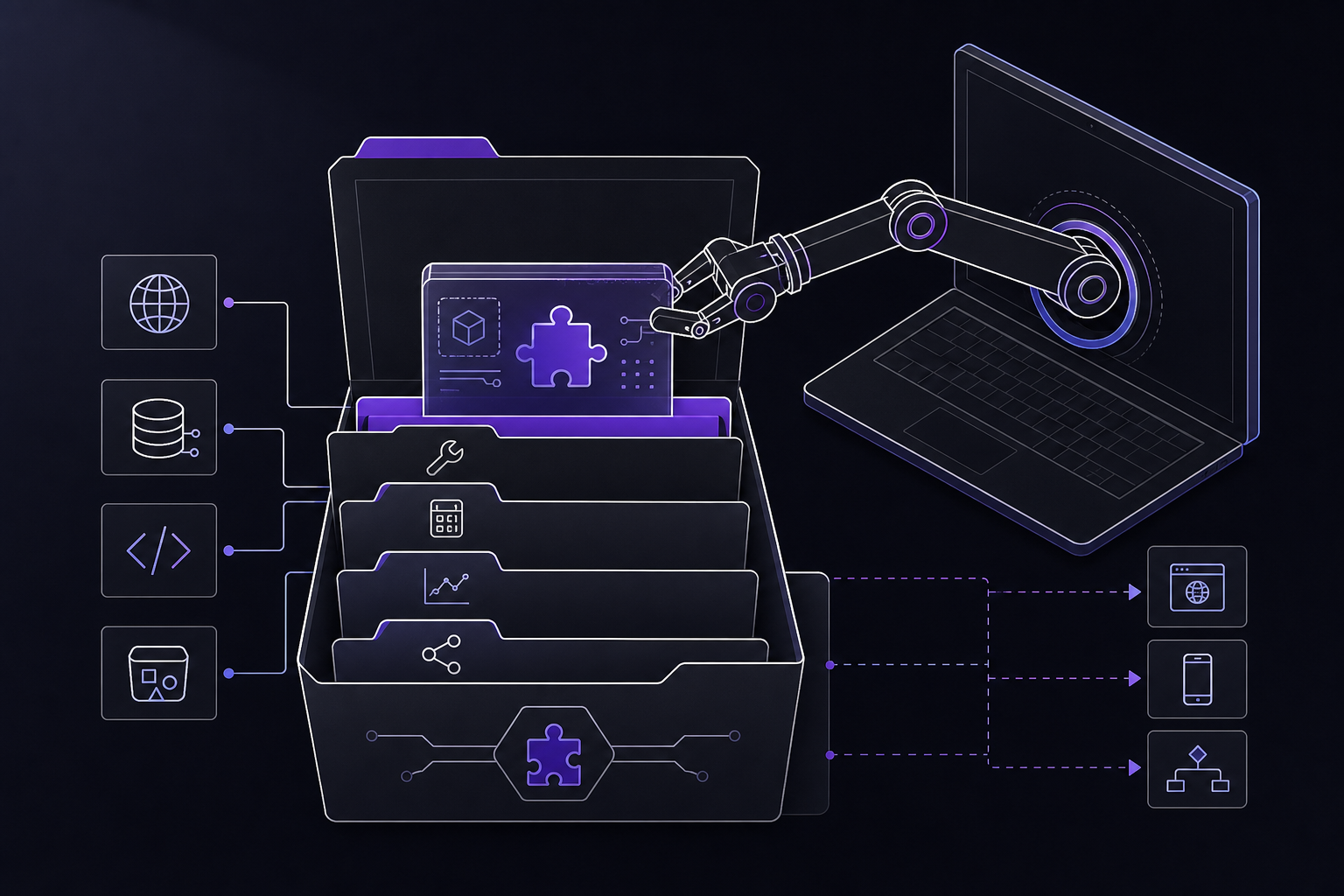
Agent Skills is a lightweight, open format for packaging specialized knowledge and workflows into folders that any compatible AI agent can load on demand. If you build or use AI agents and need them to reliably handle domain-specific tasks, legal reviews, data pipelines, or presentation formatting, this format gives you a portable, version-controlled way to extend their capabilities without vendor lock-in.
What it does
Agent Skills turns procedural knowledge into a reusable, auditable package. Instead of hoping an agent guesses the right steps, you write explicit instructions in a SKILL.md file, bundle any scripts, reference docs, or templates alongside it, and let the agent load only what it needs when a task matches the skill's description. The result is repeatable, consistent behavior across different agent products that support the standard.
Before you start
You need a text editor and a file system. No special tools or runtimes are required to create a skill. The format is folder-based and works with any version control system you already use. To use a skill with an agent, you need a client that supports the Agent Skills format. See the Client Showcase for a list of compatible products.
Skill folder structure
Every skill is a folder with a required SKILL.md file and optional subdirectories for supporting resources. The standard layout looks like this:
my-skill/
├── SKILL.md          # Required: metadata + instructions
├── scripts/          # Optional: executable code
├── references/       # Optional: documentation
├── assets/           # Optional: templates, resources
└── ...               # Any additional files or directories
The SKILL.md file is the only mandatory piece. It contains metadata (at minimum a name and description) and the instructions the agent follows. The other directories are conventions, not requirements. You can add any files or folders that make sense for your use case.
How agents load skills
Agents use progressive disclosure to keep context usage low. The process has three stages:
-
Discovery: At startup, the agent reads only the name and description of each available skill. This is enough to know when a skill might be relevant.
-
Activation: When a user's task matches a skill's description, the agent reads the full
SKILL.mdinstructions into its context. -
Execution: The agent follows the instructions, optionally running bundled scripts or loading referenced files as needed.
Because full instructions load only when a task calls for them, an agent can keep many skills available with a small context footprint.
When not to use it
Agent Skills are designed for procedural knowledge and domain-specific context. They are not a replacement for general-purpose training data or fine-tuning. If your agent needs to learn a broad capability from scratch, a skill is the wrong tool. Skills work best when you have a repeatable, well-defined task that benefits from explicit instructions and bundled resources.
Limits and gotchas
- The format is open and community-driven. There is no single vendor guaranteeing compatibility. Always test a skill with your target client.
- Skills are only as good as the instructions you write. Ambiguous or incomplete
SKILL.mdfiles will produce unreliable results. - The standard does not define how agents discover skills on disk or over a network. That is left to each client implementation.
- Scripts in the
scripts/directory must be executable by the agent's runtime environment. The format does not specify a language or sandbox.
What pairs with this
The Agent Skills format was originally developed by Anthropic and released as an open standard. The community discusses improvements on GitHub and Discord. For a complete reference, see the format specification.
The #1 AI Newsletter
The most important ai updates, guides, and fixes — one weekly email.
No spam, unsubscribe anytime. Privacy policy