
Agent Skills Specification: Portable SKILL.md Format for AI Agents
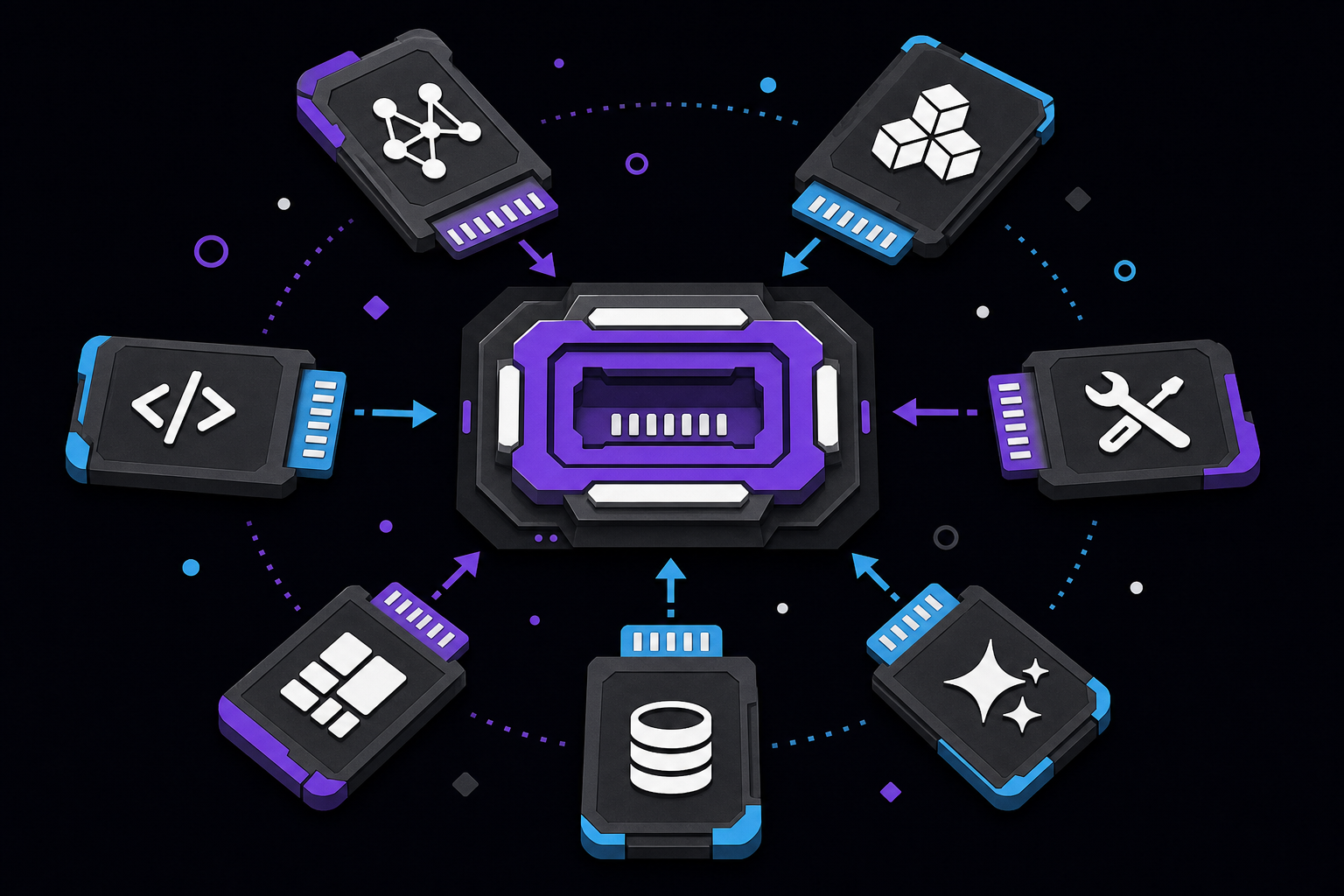
The Agent Skills specification defines a portable, directory-based format for packaging AI agent capabilities. If you build or maintain agent skills that need to work across different agent products, this is the standard you follow. It covers the required SKILL.md file, optional directories for scripts and references, naming rules, and validation.
What it does
The specification gives you a single, predictable way to describe what a skill does, how an agent should use it, and what files it needs. An agent product reads the SKILL.md frontmatter at startup to learn which skills are available, then loads the full instructions only when a task activates the skill. This progressive loading keeps context usage low while still making detailed instructions accessible on demand.
Before you start
- A skill is a directory. At minimum it must contain a
SKILL.mdfile. - The
namefield in frontmatter must match the parent directory name exactly. - Names are restricted to lowercase letters, numbers, and hyphens. No consecutive hyphens, no leading or trailing hyphens.
- The
descriptionfield is required and must be 1-1024 characters. - For validation, install the skills-ref library.
Directory structure
A skill directory looks like this:
skill-name/
├── SKILL.md          # Required: metadata + instructions
├── scripts/          # Optional: executable code
├── references/       # Optional: documentation
├── assets/           # Optional: templates, resources
└── ...               # Any additional files or directories
You can add any other files or directories you need. The spec only mandates SKILL.md.
SKILL.md format
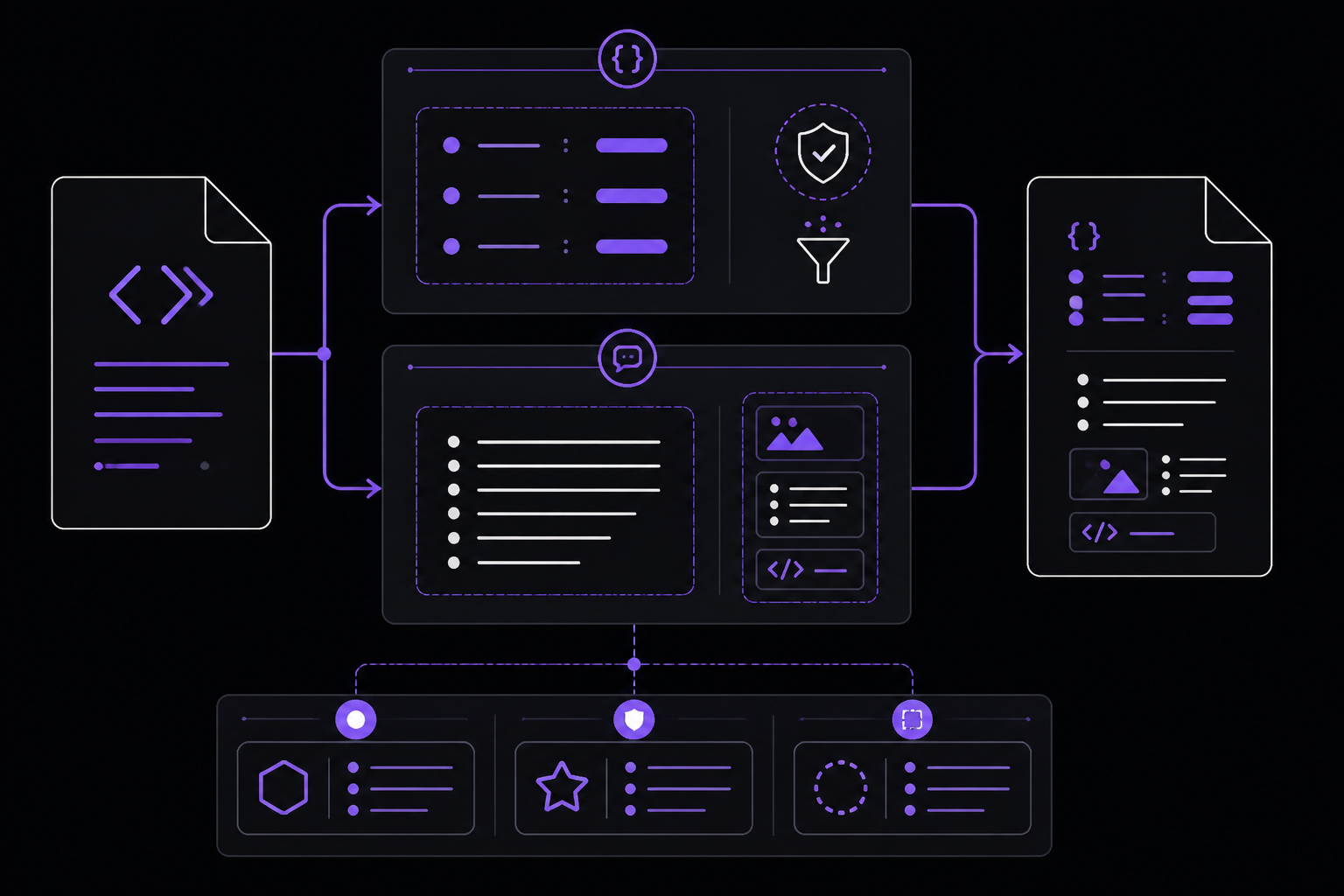
The file starts with YAML frontmatter (between --- delimiters) followed by Markdown body content.
Frontmatter fields
| Field | Required | Constraints |
|---|---|---|
name | Yes | Max 64 characters. Lowercase letters, numbers, and hyphens only. Must not start or end with a hyphen. |
description | Yes | Max 1024 characters. Non-empty. Describes what the skill does and when to use it. |
license | No | License name or reference to a bundled license file. |
compatibility | No | Max 500 characters. Indicates environment requirements (intended product, system packages, network access, etc.). |
metadata | No | Arbitrary key-value mapping for additional metadata. |
allowed-tools | No | Space-separated string of pre-approved tools the skill may use. (Experimental) |
Minimal example:
---
name: skill-name
description: A description of what this skill does and when to use it.
---
Example with optional fields:
---
name: pdf-processing
description: Extract PDF text, fill forms, merge files. Use when handling PDFs.
license: Apache-2.0
metadata:
  author: example-org
  version: "1.0"
---
name field
The required name field:
- Must be 1-64 characters
- May only contain unicode lowercase alphanumeric characters (
a-z,0-9) and hyphens (-) - Must not start or end with a hyphen (
-) - Must not contain consecutive hyphens (
--) - Must match the parent directory name
Valid examples:
name: pdf-processing
name: data-analysis
name: code-review
Invalid examples:
name: PDF-Processing # uppercase not allowed
name: -pdf # cannot start with hyphen
name: pdf--processing # consecutive hyphens not allowed
description field
The required description field:
- Must be 1-1024 characters
- Should describe both what the skill does and when to use it
- Should include specific keywords that help agents identify relevant tasks
Good example:
description: Extracts text and tables from PDF files, fills PDF forms, and merges multiple PDFs. Use when working with PDF documents or when the user mentions PDFs, forms, or document extraction.
Poor example:
description: Helps with PDFs.
license field
The optional license field:
- Specifies the license applied to the skill
- We recommend keeping it short (either the name of a license or the name of a bundled license file)
Example:
license: Proprietary. LICENSE.txt has complete terms
compatibility field
The optional compatibility field:
- Must be 1-500 characters if provided
- Should only be included if your skill has specific environment requirements
- Can indicate intended product, required system packages, network access needs, etc.
Examples:
compatibility: Designed for Claude Code (or similar products)
compatibility: Requires git, docker, jq, and access to the internet
compatibility: Requires Python 3.14+ and uv
Most skills do not need the compatibility field.
metadata field
The optional metadata field:
- A map from string keys to string values
- Clients can use this to store additional properties not defined by the Agent Skills spec
- We recommend making your key names reasonably unique to avoid accidental conflicts
Example:
metadata:
  author: example-org
  version: "1.0"
allowed-tools field
The optional allowed-tools field:
- A space-separated string of tools that are pre-approved to run
- Experimental. Support for this field may vary between agent implementations
Example:
allowed-tools: Bash(git:*) Bash(jq:*) Read
Body content
The Markdown body after the frontmatter contains the skill instructions. There are no format restrictions. Write whatever helps agents perform the task effectively.
Recommended sections:
- Step-by-step instructions
- Examples of inputs and outputs
- Common edge cases
Note that the agent will load this entire file once it's decided to activate a skill. Consider splitting longer SKILL.md content into referenced files.
Optional directories
scripts/
Contains executable code that agents can run. Scripts should:
- Be self-contained or clearly document dependencies
- Include helpful error messages
- Handle edge cases gracefully
Supported languages depend on the agent implementation. Common options include Python, Bash, and JavaScript.
references/
Contains additional documentation that agents can read when needed:
REFERENCE.md- Detailed technical referenceFORMS.md- Form templates or structured data formats- Domain-specific files (
finance.md,legal.md, etc.)
Keep individual reference files focused. Agents load these on demand, so smaller files mean less use of context.
assets/
Contains static resources:
- Templates (document templates, configuration templates)
- Images (diagrams, examples)
- Data files (lookup tables, schemas)
Progressive disclosure
Agents load skills progressively, pulling in more detail only as a task calls for it. Skills should be structured to take advantage of this:
- Metadata (~100 tokens): The
nameanddescriptionfields are loaded at startup for all skills - Instructions (< 5000 tokens recommended): The full
SKILL.mdbody is loaded when the skill is activated - Resources (as needed): Files (e.g. those in
scripts/,references/, orassets/) are loaded only when required
Keep your main SKILL.md under 500 lines. Move detailed reference material to separate files.
File references
When referencing other files in your skill, use relative paths from the skill root:
See [the reference guide](references/REFERENCE.md) for details.

Run the extraction script:
scripts/extract.py
Keep file references one level deep from SKILL.md. Avoid deeply nested reference chains.
Validation
Use the skills-ref reference library to validate your skills:
skills-ref validate ./my-skill
This checks that your SKILL.md frontmatter is valid and follows all naming conventions.
When not to use it
If your agent product does not support the Agent Skills format, or if you are building a one-off script that will never be shared or reused, this specification adds unnecessary structure. The spec is designed for portable, multi-product skills.
Limits and gotchas
- The
namefield must match the parent directory name. Renaming one without the other breaks the skill. - Consecutive hyphens in the name are forbidden, even though they look similar to valid single hyphens.
- The
allowed-toolsfield is experimental. Not all agent implementations will honour it, and behaviour may change. - The
compatibilityfield is optional and most skills do not need it. Only add it when your skill has specific environment requirements. - Keep
SKILL.mdunder 500 lines. Longer files waste context and defeat the purpose of progressive loading. - File references should stay one level deep from
SKILL.md. Deeply nested reference chains are discouraged.
Related resources
- skills-ref validation library
- The Agent Skills project homepage
The #1 AI Newsletter
The most important ai updates, guides, and fixes — one weekly email.
No spam, unsubscribe anytime. Privacy policy